LIBER X · CAPUT 12
CROWS. BIRDS OF ILL OMEN. AT WHAT SEASONS THEY ARE NOT INAUSPICIOUS
Latine · Mayhoff 1906
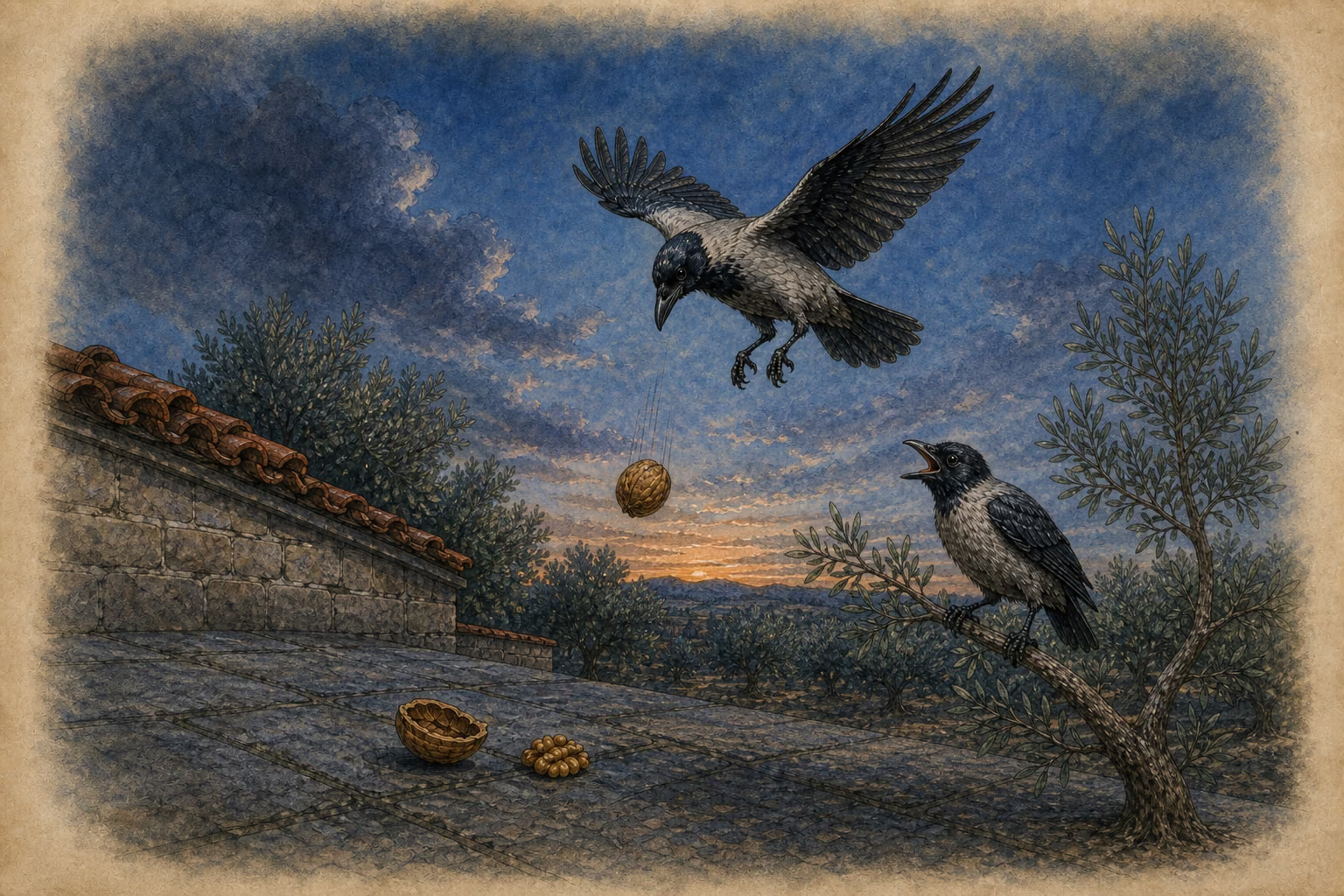
cornices et alio pabulo, ut quae duritiam nucis rostro repugnantem volantes in altum in saxa tegulasve iaciant iterum ac saepius, done quassatam perfringere queant. ipsa ales est inauspicatae garrulitatis, a quibusdam tamen laudata. ab arcturi sidere ad hirundinum adventum notatur eam in Minervae lucis templisque raro, alicubi omnino non aspici, sicut Athenis; * inauspicatissima fetus tempore, hoc est post solstitium. *praeterea sola haec etiam volantes pullos aliquamdiu pascit*. ceterae omnes ex eodem genere pellunt nidis pullos ac volare cogunt, sicut et corvi, qui et ipsi non came tantum aluntur. sed robustos quoque fetus suos fugant longius; itaque parvis in vicis non plus bina coniugia sunt, circa Crannonem quidem Thessaliae singula perpetuo. genitores suboli loco cedunt.
Diversa in hac et supradicta alite quaedam. corvi ante solstitium generant; iidem aegrescunt sexagenis diebus, siti maxime, ante quam fici coquantur autumno. cornix ab eo tempore corripitur morbo.
Corvi pariunt, cum plurimum, quinos. ore eos parere aut coire vulgus arbitratur ideoque gravidas, si ederint corvinum ovum, per os partum reddere atque in totum difficulter parere, si tecto inferantur. Aristoteles negat: non Hercule magis quam in Aegypto ibim, sed illam exosculationem, quae saepe cernitur, qualem in columbis esse. corvi in auspiciis soli videntur intellectum habere significationum suarum. nam cum Medi hospites occisi sunt, omnes e Peloponneso et Attica regione volaverunt. pessima eorum significatio, cum gluttiunt vocem velut strangulati.
Vncos ungues et nocturnae aves habent, ut noctuae, bubo, ululae. omnium horum hebetes interdiu oculi. bubo, funebris et maxime abominatus publicis praecipue auspiciis, deserta incolit nec tantum desolata, sed dira etiam et inaccessa, noctis monstrum, nec cantu aliquo vocalis, sed gemitu. itaque in urbibus aut omnino in luce visus dirum ostentum est. privatorum domibus insidentem plurium scio non fuisse feralem. volat numquam quo libuit, sed traversus aufertur. Capitolii cellam ipsam intravit Sexto Palpellio Histro L. Pedanio cos., propter quod nonis Martiis urbs lustrata est eo anno.
English · Bostock & Riley 1855–57
Crows, again, have another kind of food. Nuts being too hard for their beak to break, the crow flies to a great height, and then lets them fall again and again upon the stones or tiles beneath, until at last the shell is cracked, after which the bird is able to open them. This is a bird with a very ill-omened garrulity, though it has been highly praised by some. It is observed, that from the rising of the constellation Arcturus until the arrival of the swallow, it is but rarely to be seen about the sacred groves and temples of Minerva; in some places, indeed, not at all, Athens for instance. In addition to these facts, it is the only one that continues to feed its young for some time after they have begun to fly. The crow is most inauspicious at the time of incubation, or, in other words, just after the summer solstice.
All the other birds of the same kind drive their young ones from their nest, and compel them to fly; the raven, for instance, which not only feeds on flesh, but even drives its young, when able to fly, to a still greater distance. Hence it is that in small hamlets there are never more than two pairs to be found; and in the neighbourhood of Crannon, in Thessaly, never more than one, the parents always quitting the spot to give place to their offspring. There have been some differences observed between this and the bird last mentioned. Ravens breed before the summer solstice, and continue in bad health for sixty days—being afflicted with a continual thirst more particularly—before the ripening of the fig in autumn; while, on the other hand, the crow is attacked by disease after that period. The raven lays, at most, but five eggs. It is a vulgar belief, that they couple, or else lay, by means of the beak; and that, consequently, if a pregnant woman happens to eat a raven’s egg, she will be delivered by the mouth. It is also believed, that if the eggs are even so much as brought beneath the roof, a difficult labour will be the consequence. Aristotle denies it, and assures us in all good faith that there is no more truth in this than in the same story about the ibis in Egypt; he says that it is nothing else but that same sort of billing that is so often seen in pigeons. Ravens are the only birds that seem to have any comprehension of the meaning of their auspices; for when the guests of Medus were assassinated, they all took their departure from Peloponnesus and the region of Attica. They are of the very worst omen when they swallow their voice, as if they were being choked.
The birds of the night also have crooked talons, such as the owlet, the horned owl, and the screech-owl, for instance; the sight of all of which is defective in the day-time. The horned owl is especially funereal, and is greatly abhorred in all auspices of a public nature: it inhabits deserted places, and not only desolate spots, but those of a frightful and inaccessible nature: the monster of the night, its voice is heard, not with any tuneful note, but emitting a sort of shriek. Hence it is that it is looked upon as a direful omen to see it in a city, or even so much as in the day-time. I know, however, for a fact, that it is not portentous of evil when it settles on the top of a private house. It cannot fly whither it wishes in a straight line, but is always carried along by a sidelong movement. A horned owl entered the very sanctuary of the Capitol, in the consulship of Sextus Palpelius Hister and L. Pedanius; in consequence of which, Rome was purified on the nones of March in that year.