LIBER X · CAPUT 18
THE WOOD-PECKER OF MARS
Latine · Mayhoff 1906
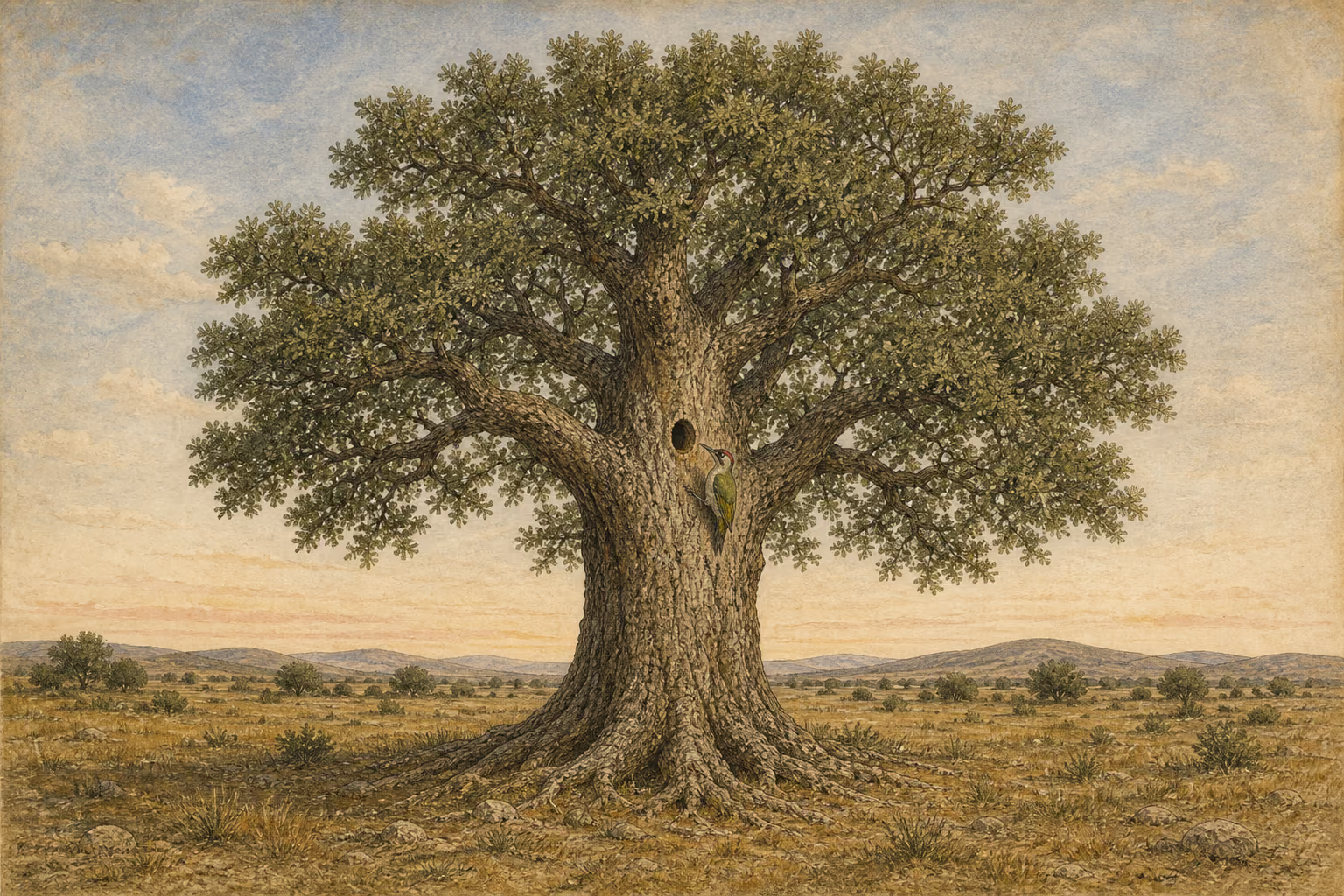
Sunt et parvae aves uncorum unguium, ut pici Martio cognomine insignes et in auspiciis magni. quo in genere arborum cavatores scandentes in subrectum felium modo, illi vero et supini, percussi corticis sono pabulum subesse intellegunt. pullos in cavis educant avium soli. adactos cavernis eorum a pastore cuneos admota quadam ab iis herba elabi creditur vulgo. Trebius auctor est clavum cuneumve adactum quanta libeat vi arbori, in qua nidum habeat, statim exilire cum crepitu arboris, cum insederit [clavo aut cuneo]. ipsi principales Latio sunt in auguriis a rege qui nomen huic avi dedit. unum eorum praescitum transire non queo. in capite praetoris urbani Aelii Tuberonis in foro iura pro tribunali reddentis sedit ita placide, ut manu prehenderetur. respondere vates exitium imperio portendi, si dimitteretur, at si exanimaretur, praetori. et ille avem protinus concerpsit nec multo post implevit prodigium.
Vescuntur et glande in hoc genere pomisque multae, sed quae came tantum, non bibunt, excepto miluo, quod ipsum in auguriis dirum est.
English · Bostock & Riley 1855–57
There are some small birds also, which have hooked talons; the wood-pecker, for example, surnamed “of Mars,” of considerable importance in the auspices. To this kind belong the birds which make holes in trees, and climb stealthily up them, like cats; mounting with the head upwards, they tap against the bark, and learn by the sound whether or not their food lies beneath; they are the only birds that hatch their young in the hollows of trees. It is a common belief, that if a shepherd drives a wedge into their holes, they apply a certain kind of herb, immediately upon which it falls out. Trebius informs us that if a nail or wedge is driven with ever so much force into a tree in which these birds have made their nest, it will instantly fly out, the tree making a loud cracking noise the moment that the bird has lighted upon the nail or wedge.
These birds have held the first rank in auguries, in Latium, since the time of the king who has given them their name. One of the presages that was given by them, I cannot pass over in silence. A woodpecker came and lighted upon the head of Ælius Tubero, the City prætor, when sitting on his tribunal dispensing justice in the Forum, and showed such tameness as to allow itself to be taken with the hand; upon which the augurs declared that if it was let go, the state was menaced with danger, but if killed, disaster would befall the prætor; in an instant he tore the bird to pieces, and before long the omen was fulfilled.