LIBER X · CAPUT 42
BIRDS WHICH SPEAK—THE PARROT
Latine · Mayhoff 1906
minimae avium cardueles imperata faciunt, nec voce tantum, sed pedibus et ore pro manibus. est quae boum mugitus imitetur, in Arelatensi agro taurus appellata, alioquin parva est. equorum quoque hinnitus anthus nomine herbae pabulo adventu eorum pulsa imitatur, ad hunc modum se ulciscens.
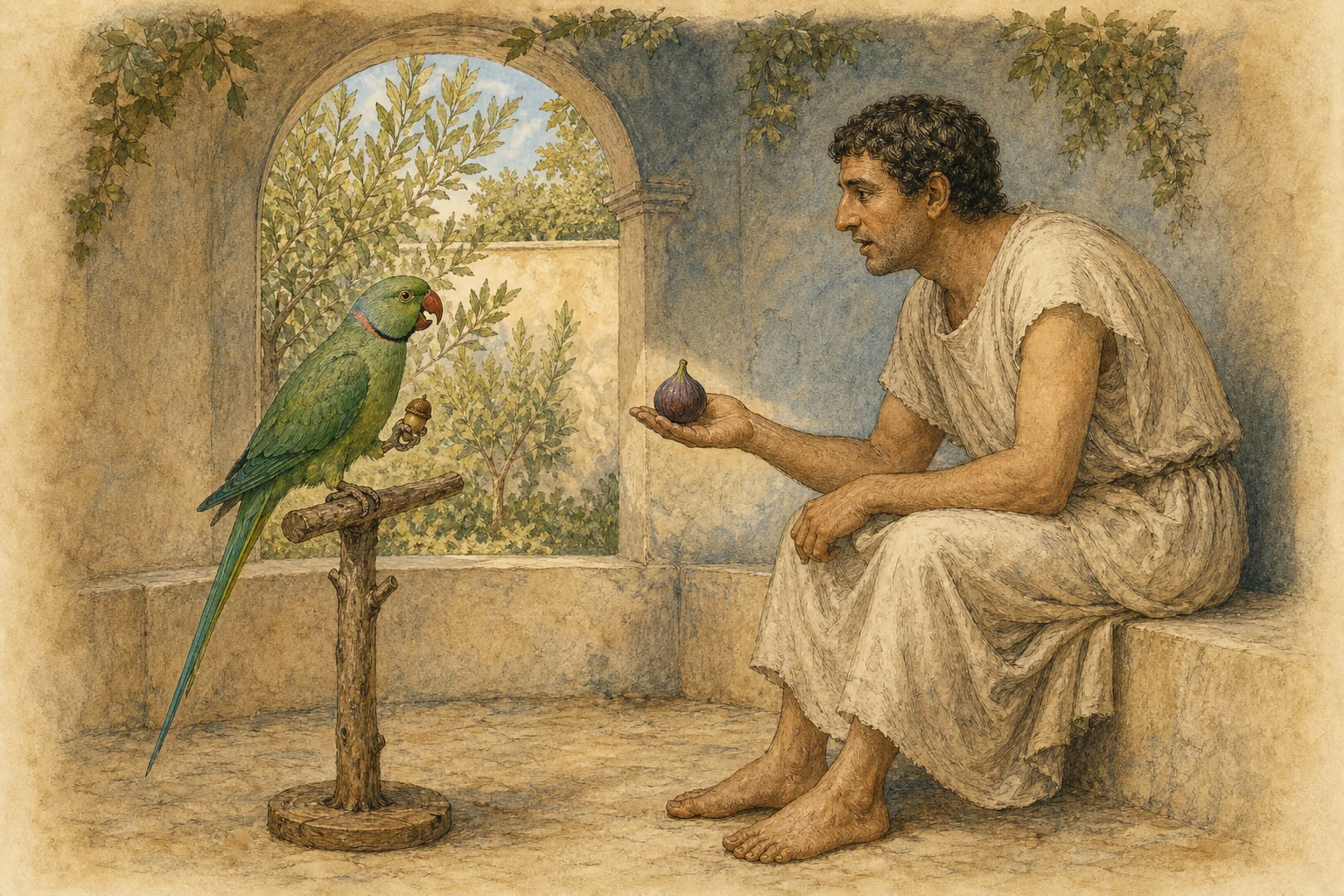
super omnia humanas voces reddunt, psittaci quidem etiam sermocinantes. India hanc avem mittit, siptacen vocat, viridem toto corpore, torque tantum miniato in cervice distinctam. imperatores salutat et quae accipit verba pronuntiat, in vino praecipue lasciva. capiti eius duritia eadem quae rostro. hoc, cum loqui discit, ferreo verberatur radio; non sentit aliter ictus. cum devolat, rostro se excipit, illi innititur levioremque ita se pedum infirmitati facit.
Minor nobilitas, quia non ex longinquo venit, sed expressior loquacitas certo generi picarum est. adamant verba quae loquantur nec discunt, sed diligunt meditantesque intra semet curam atque cogitationem, intentionem non occultant. constat emori victas difficultate verbi ac, nisi subinde eadem audiant, memoria falli quaerentesque mirum in modum hilarari, si interim audierint id verbum. nec vulgaris his forma, quamvis non spectanda: satis illis decoris in specie sermonis humani est. verum addiscere alias negant posse quam ex genere earum quae glande vescantur, et inter eas facilius quibus quini sint digiti in pedibus, ac ne eas quidem ipsas nisi primis duobus vitae annis. latiores linguae omnibus in suo cuique genere, quae sermonem imi- tantur humanum. quamquam id paene in omnibus contigit: Agrippina Claudii Caesaris turdum habuit, quod numquam ante, imitantem sermones hominum. cum haec proderem, habebant et Caesares iuvenes sturnum, item luscinias Graeco ac Latino sermone dociles, praeterea meditantes assidue et in diem nova loquentes, longiore etiam contextu. docentur secreto et ubi nulla alia vox misceatur, adsidente qui crebro dicat ea, quae condita velit, ac cibis blandiente.
English · Bostock & Riley 1855–57
The carduelis, which is the very smallest bird of any, will do what it is bid, not only with the voice but with the feet as well, and with the beak, which serves it instead of hands. There is one bird, found in the territory of Arelate, that imitates the lowing of oxen, from which circumstance it has received the name of “taurus.” In other respects it is of small size. Another bird, called the “anthus,” imitates the neighing of the horse; upon being driven from the pasture by the approach of the horses, it will mimic their voices—and this is the method it takes of revenging itself.
But above all, there are some birds that can imitate the human voice; the parrot, for instance, which can even converse. India sends us this bird, which it calls by the name of “sittaces;” the body is green all over, only it is marked with a ring of red around the neck. It will duly salute an emperor, and pronounce the words it has heard spoken; it is rendered especially frolicsome under the influence of wine. Its head is as hard as its beak; and this, when it is being taught to talk, is beaten with a rod of iron, for otherwise it is quite insensible to blows. When it lights on the ground it falls upon its beak, and by resting upon it makes itself all the lighter for its feet, which are naturally weak.
The magpie is much less famous for its talking qualities than the parrot, because it does not come from a distance, and yet it can speak with much more distinctness. These birds love to hear words spoken which they can utter; and not only do they learn them, but are pleased at the task; and as they con them over to themselves with the greatest care and attention, make no secret of the interest they feel. It is a well-known fact, that a magpie has died before now, when it has found itself mastered by a difficult word that it could not pronounce. Their memory, however, will fail them if they do not from time to time hear the same word repeated; and while they are trying to recollect it, they will show the most extravagant joy, if they happen to hear it. Their appearance, although there is nothing remarkable in it, is by no means plain; but they have quite sufficient beauty in their singular ability to imitate the human speech.
It is said, however, that it is only the kind of pie which feeds upon acorns that can be taught to speak; and that among these, those which have five toes on each foot can be taught with the greatest facility; but in their case even, only during the first two years of their life. The magpie has a broader tongue than is usual with most other birds; which is the case also with all the other birds that can imitate the human voice; although some individuals of almost every kind have the faculty of doing so.
Agrippina, the wife of Claudius Cæsar, had a thrush that could imitate human speech, a thing that was never known before. At the moment that I am writing this, the young Cæsars have a starling and some nightingales that are being taught to talk in Greek and Latin; besides which, they are studying their task the whole day, continually repeating the new words that they have learnt, and giving utterance to phrases even of considerable length. Birds are taught to talk in a retired spot, and where no other voice can be heard, so as to interfere with their lesson; a person sits by them, and continually repeats the words he wishes them to learn, while at the same time he encourages them by giving them food.