LIBER X · CAPUT 65
ANIMALS WHOSE ORIGIN IS STILL UNKNOWN
Latine · Mayhoff 1906
ex omnibus, quae perfectos fetus, sues tantum et numerosos edunt, nam plures contra naturam solidipedum aut bisulcorum.
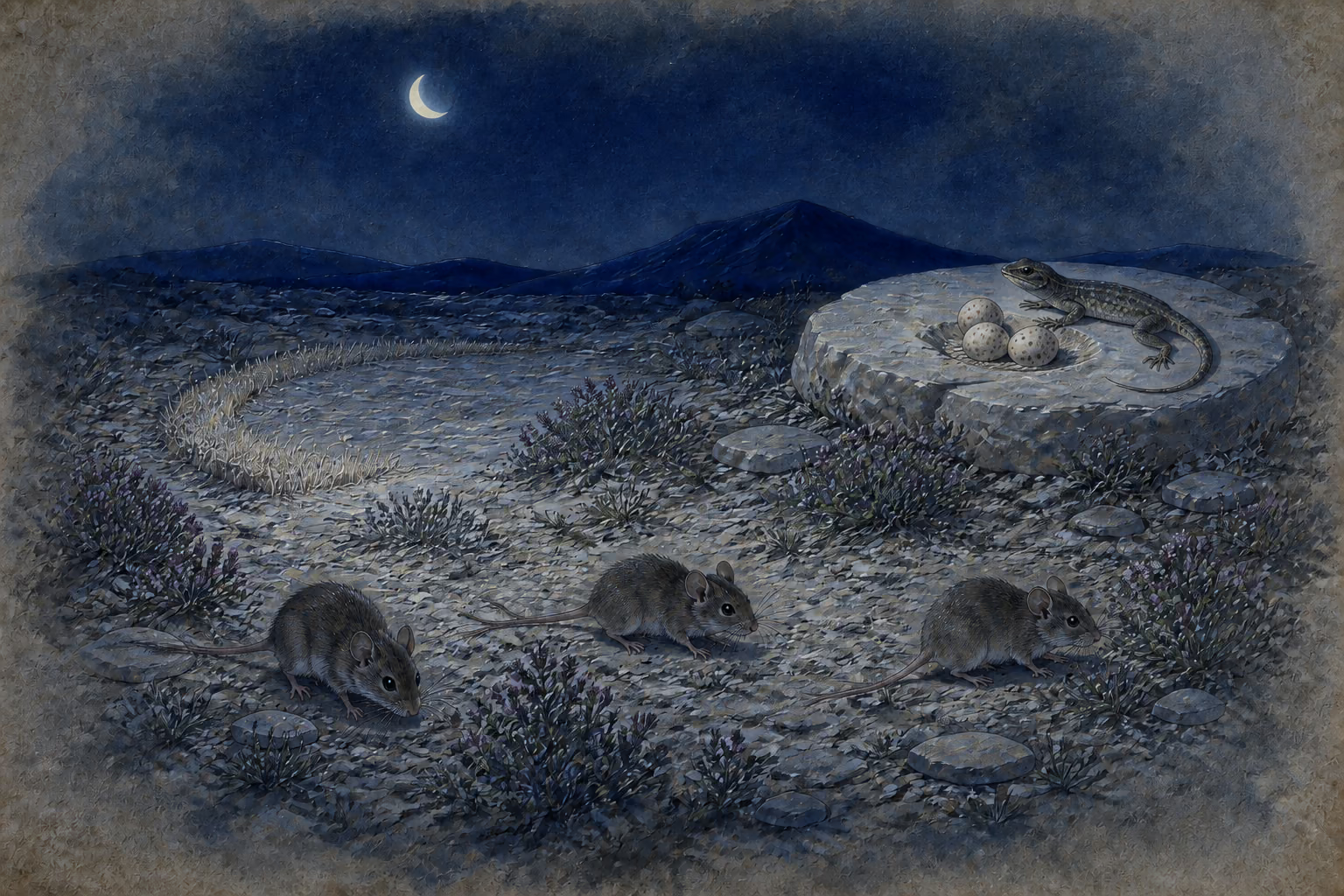
Super cuncta est murium fetus, haut sine cunctatione dicendus, quamquam sub auctore Aristotele et Alexandri Magni militibus. generatio eorum lambendo constare, non coitu, dicitur. ex una genitos CXX tradiderunt, apud Persas vero praegnantes in ventre parentis repertas. et salis gustatu fieri praegnantes opinantur. itaque desinit mirum esse unde vis tanta messes populetur murium agrestium, in quibus illud quoque adhuc latet, quonam modo illa multitudo repente occidat. nam nec exanimes reperiuntur neque extat qui murem hieme in agro effoderit. plurimi ita ad Troada proveniunt et iam inde fugaverunt incolas. proventus eorum siccitatibus. tradunt etiam obituris vermiculum in capite gigni. Aegypti muribus durus pilus sicut irenaceis. iidem bipedes ambulant ceu Alpini quoque. — Cum, diversi generis coiere animalia, ita demum generant, si tempus nascendi par habent.— Quadripedum ova gignentium lacertas ore parere, ut creditur vulgo, Aristoteles negat. neque incubant eaedem, oblitae quo sint in loco enixae, quoniam huic animal nulla memoria; itaque per se catuli erumpunt.
English · Bostock & Riley 1855–57
Of all those which produce their young in a perfect state, the swine is the only one that bears them in considerable numbers as well; and, indeed, several times in the year—a thing that is contrary to the usual nature of animals with a solid or cloven hoof.
But it is mice that surpass all the other animals in fecundity; and it is not without some hesitation that I speak of them, although I have Aristotle and some of the officers of Alexander the Great for my authority. It is said that these animals generate by licking one another, and not by copulation. They have related cases where a single female has given birth to one hundred and twenty young ones, and in Persia some were found, even pregnant themselves, while yet in the womb of the parent. It is believed also that these animals will become pregnant on tasting salt. Hence we find that we have no longer any reason to wonder how such vast multitudes of field-mice devastate the standing corn; though it is still a mystery, with reference to them, in what way it is that such multitudes die so suddenly; for their dead bodies are never to be found, and there is not a person in existence that has ever dug up a mouse in a field during the winter. Multitudes of these animals visit Troas, and before this they have driven away the inhabitants in consequence of their vast numbers.
They multiply greatly during times of drought; it is said also that when they are about to die, a little worm grows in their head. The mice of Egypt have hard hairs, just like those of the hedge-hog. They walk on their hind feet, as also do those of the Alps. When two animals couple of different kinds, the union is only prolific if the time of gestation is the same in both. Among the oviparous quadrupeds, it is generally believed that the lizard brings forth by the mouth, though Aristotle denies the fact. These animals, too, do not sit upon their eggs, as they forget in what place they have laid them, being utterly destitute of memory; hence it is that the young ones are hatched spontaneously.