LIBER XI · CAPUT 28
THE WINGS OF INSECTS
Latine · Mayhoff 1906
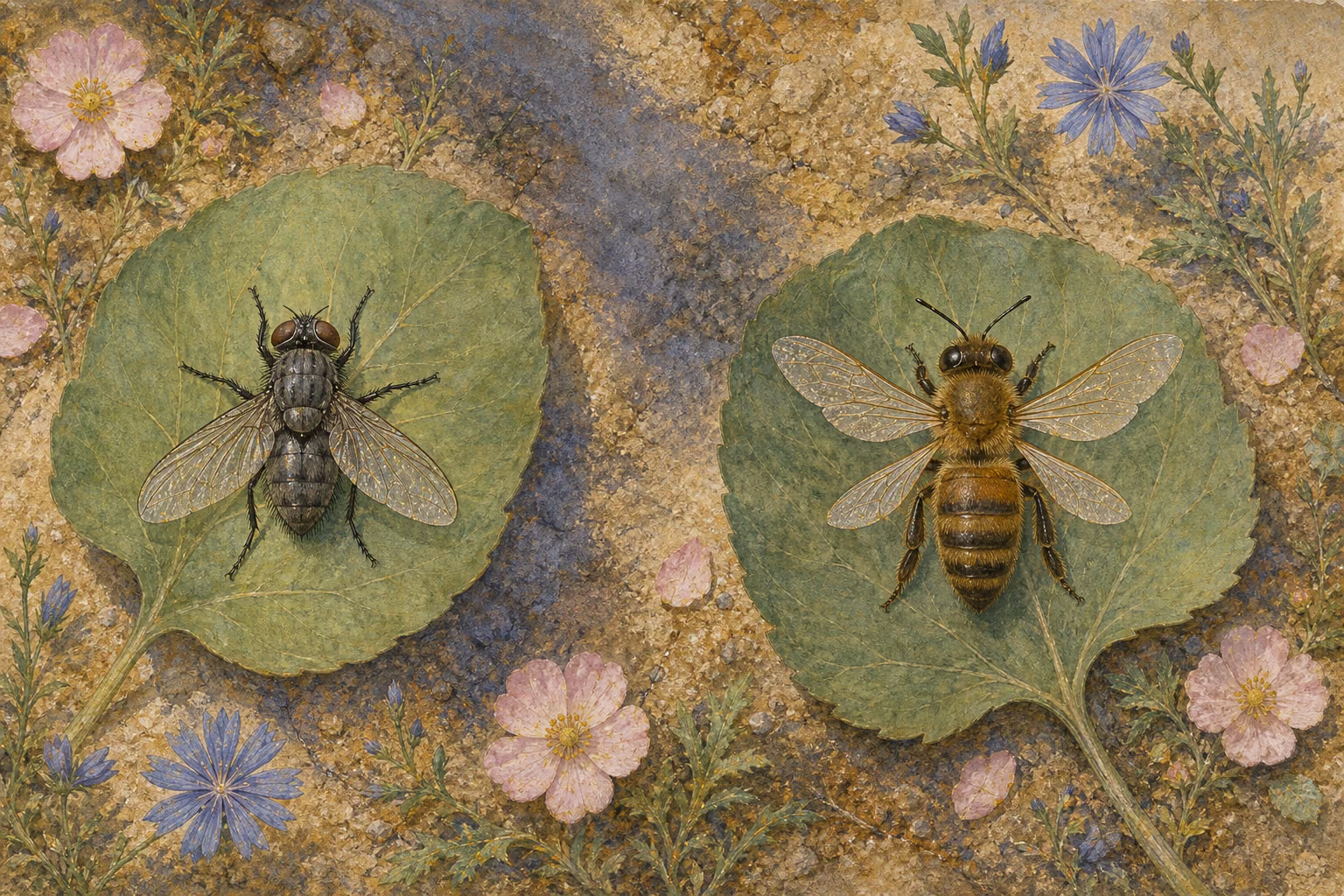
Insectorum autem quaedam binas gerunt pinnas, ut muscae, quaedam quaternas, ut apes. membranis et cicadae volant. quaternas habent quae aculeis in alvo armantur. nullum, cui telum in ore, pluribus quam binis advolat pinnis. illis enim ultionis causa datum est, his aviditatis. nullis eorum pinnae revivescunt avulsae. nullum, cui aculeus in alvo, bipinne est.
Quibusdam pinnarum tutelae crusta supervenit, ut scarabaeis, quorum tenuior fragiliorque pinna. his negatus aculeus, sed in quodam genere eorum grandi cornua praelonga, bisulca dentatis forcipibus in cacumine, cum libuit, ad morsum coeuntibus, infantium etiam remediis ex cervice suspenduntur; lucavos vocat hos Nigidius. aliud rursus eorum genus, qui e fimo ingentes pilas aversi pedibus volutant parvosque in iis contra rigorem hiemis vermiculos fetus sui nidulantur. volitant alii magno cum murmure aut mugitu, alii focos et prata crebris foraminibus excavant, nocturno stridore vocales. lucent ignium modo noctu laterum et clunium colore lampyrides, nunc pinnarum hiatu refulgentes, nunc vero conpressu obumbratae, non ante matura pabula aut post desecta conspicuae. e contrario tenebrarum alumna blattis vita, lucemque fugiunt in balinearum maxime umido vapore prognatae. fodiunt ex eodem genere rutili atque praegrandes scarabaei tellurem aridam favosque parvae et fistulosae modo spongiae medicate melle fingunt. in Threcia iuxta Olynthum locus est parvus, in quo unum hoc animal exanimatur, ob hoc Cantharolethrus appellatus. pinnae insectis omnibus sine scissura. nulli cauda nisi scorspion i. hic eorum solus et bracchia habet et in cauda spiculum; reliquorum quibusdam aculeus in ore, ut asilo, sive tabanum dici placet, item culici et quibusdam muscis, omnibus autem his in ore et pro lingua. sunt hi aculei quibusdam hebetes neque ad punctum, sed ad suctum, ut muscarum generi, in quo lingua evidens fistula est. nec sunt talibus dentes. aliis cornicula ante oculos praetenduntur ignava, ut papilionibus. quaedam insecta carent pinnis, ut scolopendra.
English · Bostock & Riley 1855–57
There are some insects which have two wings, flies, for instance; others, again, have four, like the bee. The wings of the grasshopper are membranous. Those insects which are armed with a sting in the abdomen, have four wings. None of those which have a sting in the mouth, have more than two wings. The former have received the sting for the purpose of defending themselves, the latter for the supplying of their wants. If pulled from off the body, the wings of an insect will not grow again; no insect which has a sting inserted in its body, has two wings only.
Some insects, for the preservation of their wings, are covered with a crust; the beetle, for instance, the wing of which is peculiarly fine and frail. To these insects a sting has been denied by Nature; but in one large kind we find horns of a remarkable length, two-pronged at the extremities, and forming pincers, which the animal closes when it is its intention to bite. These beetles are suspended from the neck of infants by way of remedy against certain maladies: Nigidius calls them “lucani.” There is another kind of beetle, again, which, as it goes backwards with its feet, rolls the dung into large pellets, and then deposits in them the maggots which form its young, as in a sort of nest, to protect them against the rigours of winter. Some, again, fly with a loud buzzing or a drony noise, while others burrow numerous holes in the hearths and out in the fields, and their shrill chirrup is to be heard at night.
The glow-worm, by the aid of the colour of its sides and haunches, sends forth at night a light which resembles that of fire; being resplendent, at one moment, as it expands its wings, and then thrown into the shade the instant it has shut them. These insects are never to be seen before the grass of the pastures has come to maturity, nor yet after the hay has been cut. On the other hand, it is the nature of the black beetle to seek dark corners, and to avoid the light: it is mostly found in baths, being produced from the humid vapours which arise therefrom. There are some beetles also, belonging to the same species, of a golden colour and very large size, which burrow in dry ground, and construct small combs of a porous nature, and very like sponge; these they fill with a poisonous kind of honey. In Thrace, near Olynthus, there is a small locality, the only one in which this animal cannot exist; from which circumstance it has received the name of “Cantharolethus.”
The wings of all insects are formed without any division in them, and they none of them have a tail, with the exception of the scorpion; this, too, is the only one among them that has arms, together with a sting in the tail. As to the rest of the insects, some of them have the sting in the mouth, the gad-fly for instance, or the “tabanus,” as some persons choose to call it: the same is the case, too, with the gnat and some kinds of flies. All these insects have their stings situate in the mouth instead of a tongue; but in some the sting is not pointed, being formed not for pricking, but for the purpose of suction: this is the case more especially with flies, in which it is clear that the tongue is nothing more than a tube. These insects, too, have no teeth. Others, again, have little horns protruding in front of the eyes, but without any power in them; the butterfly, for instance. Some insects are destitute of wings, such as the scolopendra, for instance.
Those insects which have feet, move sideways. Some of them have the hind feet longer than the fore ones, and curving outwards, the locust, for example.