LIBER XII · CAPUT 21
SERICHATUM AND GABALIUM
Latine · Mayhoff 1906
Eo comportatur et serichatum et gabalium, quae intra se consumunt Arabes, nostro orbi tantum nominibus cognita, sed cum cinnamo casiaque nascentia. pervenit tamen aliquando serichatum et in unguenta additur ab aliquis. permutatur in libras $X$ VI.
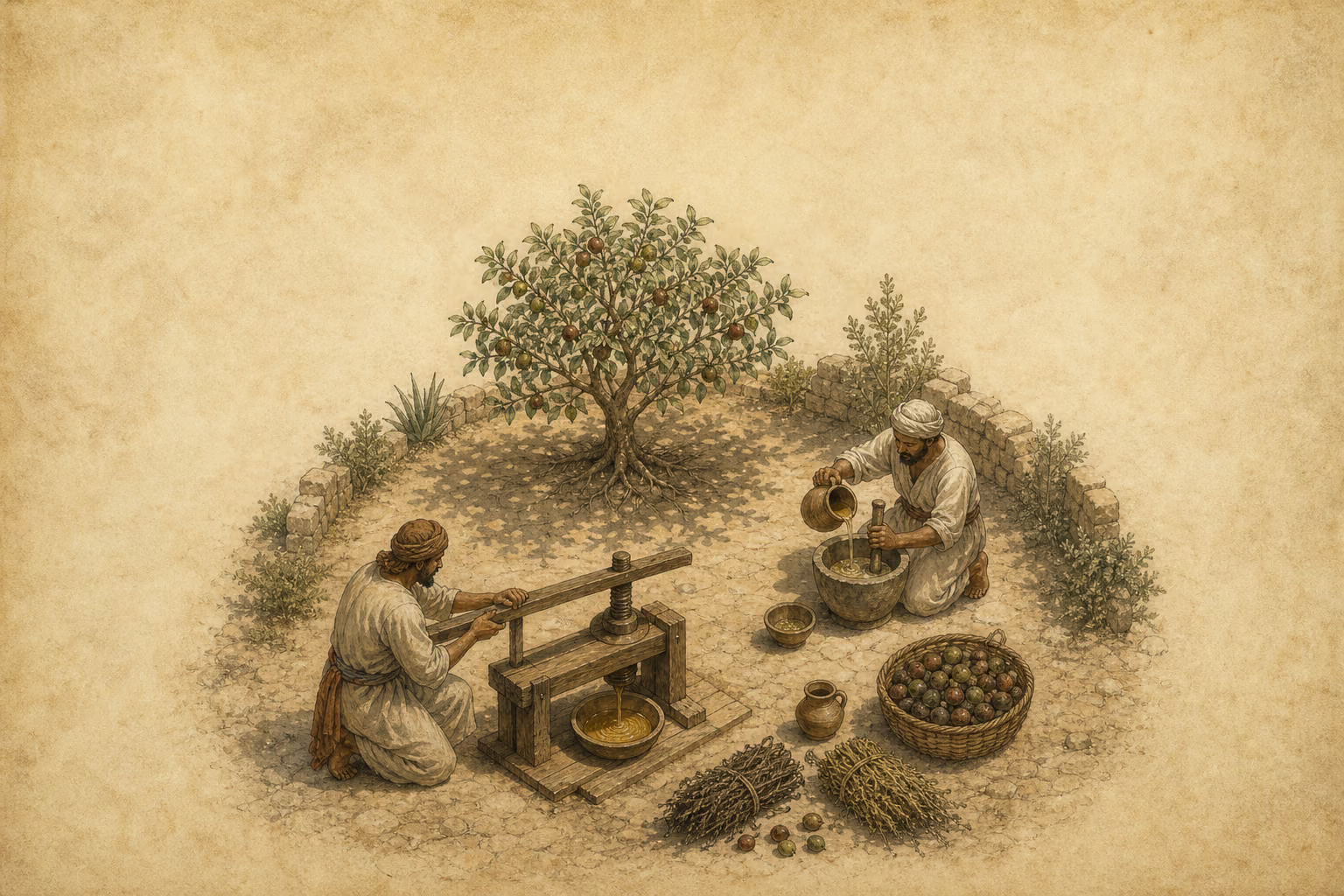
Myrobalanum Trogodytis et Thebaidi et Arabiae, quae Iudaeam ab Aegypto disterminat, commune est, nascen s id unguento, ut ipso nomine apparet, quo item indicatur et glandem esse. arbor est heliotropio, quam dicemus inter herbas, simili folio, fructus magnitudine abellanae nucis. ex his in Arabia nascens Syriaca appellatur et est candida, contra in Thebaide nigra. praefertur illa bonitate olei quod exprimitur, sd copia Thebaica. inter haec Trogodytica vilissima est. Sunt qui Aethiopicam his praeferant, glandem nigram nec pinguem, nucleoque gracili, sed liquore qui exprimitur odoratiore, nascentem in campestribus. Aegyp- tiam piuguiorem esse et crassiore cortice rubentem et, quamvis in palustribus nascatur, breviorem siccioremque; e diverso Arabicam viridem ac tenuiorem et, quoniam sit montuosa, spissiorem; longe autem optimam Petraeam ex quo diximus oppido, nigro cortice, nucleo candido. Unguentarii autem tantum cortices premunt, medici et nucleos, tundentes adfusa paulatim calida aqua.
English · Bostock & Riley 1855–57
Thither, too, are carried serichatum and gabalium, aromatics which the Arabians rear for their own consumption, and which are only known by name in our part of the world, though they grow in the same country as cinnamon and cassia. Still, however, serichatum does reach us occasionally, and is employed by some persons in the manufacture of unguents. It is purchased at the rate of six denarii per pound.
In the country of the Troglodytæ, the Thebais, and the parts of Arabia which separate Judæa from Egypt, myrobalanum is commonly found; it is provided by Nature for unguents, as from its very name would appear. From its name, also, it is evident that it is the nut of a tree, with a leaf similar to that of the heliotropium, which we shall have to mention when speaking of the herbs. The fruit of this tree is about the size of a filbert. The kind that grows in Arabia is known as Syriaca, and is white, while, on the other hand, that which grows in the Thebais is black: the former is preferred for the quality of the oil extracted from it, though that which is produced in the Thebais yields it in larger quantities. Among these various kinds, that which is sent from the country of the Troglodytæ is the worst of all. There are some persons who prefer that of Æthiopia to all of these, the nut of which is black, and not oleaginous; it has only a very small kernel, but the liquid which is extracted from it is more odoriferous than that of the other kinds; it grows, too, in a champaign, open country. It is said that the Egyptian nut is even more oleaginous, being of a reddish colour with a thicker shell, and that the plant, although it grows in wet, marshy spots, is shorter and drier than the other kinds. The Arabian nut, again, is said to be of a green colour and of smaller size, but harder and more compact, from the circumstance that it grows in mountainous districts. The best of all, however, is that of Petra, which comes from a city mentioned on a previous occasion; it has a black shell, but the kernel is white. The perfumers, however, only extract the juices from the shells; but medical men pound the kernels, pouring warm water on them, little by little, as they do it.