LIBER XIV · CAPUT 9
EIGHTEEN VARIETIES OF SWEET WINE. RAISIN-WINE AND HEPSEMA
Latine · Mayhoff 1906
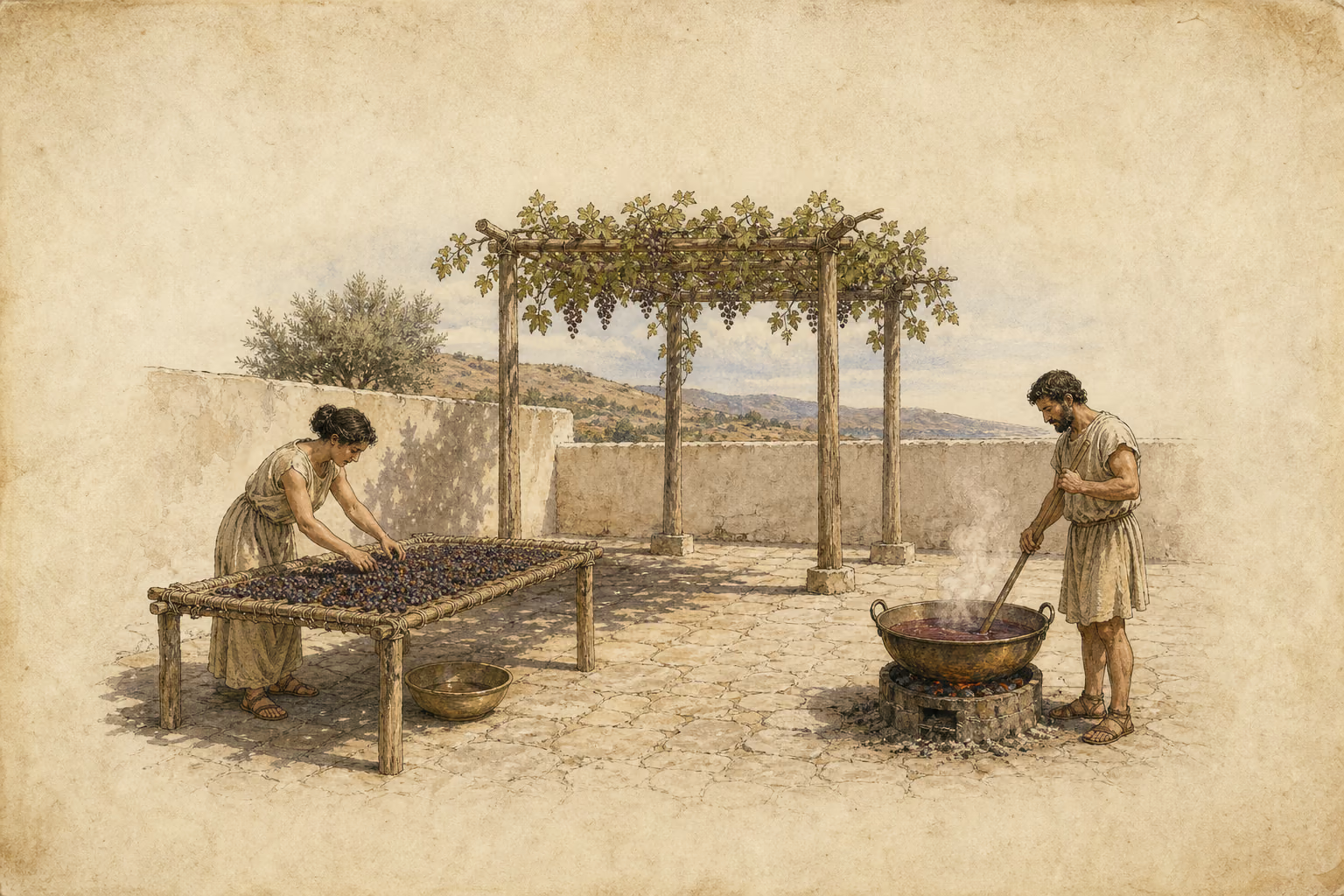
Vinum omne dulce minus odoratum; quo 20 tenuius, eo odoratius. colores vinis quattuor: albus, fulvus, sanguineus, niger. psithium et melampsithium passi genera sunt suo sapore, non vino, Scybelites vero mulsi, in Galatia nascens, et Haluntium in Sicilia. nam siraeum, quod alii hepsema, nostri sapam appellant, ingeni, non naturae, opus est musto usque ad terliam mensurae decocto. quod ubi factum ad dimidiam est, defrutum vocatur. omnia in adulterium mellis excogitata, sed priora uva terraque constant. passum a Cretico Cilicium probatur et Africum. et in Italia finitimisque provinciis fieri certum est ex uva quam Graeci psithiam vocant, nos apianam, item scripulam, diutius uvis in vite sole adustis aut ferventi oleo. quidam ex quacumque dulci, dum praecocta alba, faciunt siccantes sole, donec paulo amplius dimidium pondus supersit, tunsasque leniter exprimunt. dein quantum expressere adiciunt vinaceis aquae puteanae, ut et secundarium passum faciant. diligentiores eodem modo siccatis acinos eximunt ac sine sarmentis madefactos vino excellenti, donec intumescant, premunt — et hoc genus ante cetera laudant — ac simili modo aqua addita secundarium faciunt. medium inter dulcia vinumque est quod Graeci aigleucos vocant, hoc est semper mustum. id evenit cura, quoniam fervere prohibetur — sic appellant musti in vina transitum —; ergo mergunt e lacu protinus aqua cados, done bruma transeat et consuetudo fiat algendi. est etiamnum aliud genus per se, quod vocat dulce Narbonensis provincia et in ea maxime Voconti. adservatur eius gratia uva diutius in vite pediculo intorto. ab aliis ipse palmes inciditur ad medullam, ab aliis uva torretur in tegulis, omnia ex helvennaca vite. his adiciunt aliqui quod vocant diachyton, uvis in sole siccatis loco cluso per dies septem in cratibus, totidem pedes a terra alte, noctibus ab umore defensis, octavo die calcatis: ita fieri optimi odoris saporisque. e dulci genere est et melitites; distat a mulso, quod fit emusto, cum quinque congiis austeri musti congio mellis et salis cyatho subfervefactis. austerum, sed inter haec genera poni debet et protropum; ita appellatur a quibusdam mustum sponte defluens ante quam calcentur uvae. hoc protinus diffusum in lagonis suis defervere passi postea in sole XL diebus torrent aestatis secutae ipso canis ortu.
English · Bostock & Riley 1855–57
All the luscious wines have but little aroma: the thinner the wine the more aroma it has. The colours of wines are four, white, brown, blood-coloured, and black. Psythium and melampsythium are varieties of raisin-wine which have the peculiar flavour of the grape, and not that of wine. Scybelites is a wine grown in Galatia, and Aluntium is a wine of Sicily, both of which have the flavour of mulsum. As to siræum, by some known as “hepsema,” and which in our language is called “sapa,” it is a product of art and not of Nature, being prepared from must boiled down to one-third: when must is boiled down to one-half only, we give it the name of “defrutum.” All these mixtures have been devised for the adulteration of honey. As to those varieties which we have previously mentioned, their merits depend upon the grape, and the soil in which it is grown. Next after the raisin-wine of Crete, those of Cilicia and Africa are held in the highest esteem, both in Italy as well as the adjoining provinces. It is well known that it is made of a grape to which the Greeks have given the name of “stica,” and which by us is called “apiana:” it is also made of the scirpula. The grapes are left on the vine to dry in the sun, or else are boiled in the dolium. Some persons make this wine of the sweet and early white grape: they leave the grapes to dry in the sun, until they have lost pretty nearly half their weight, after which they crush them and subject them to a gentle pressure. They then draw off the juice, and add to the pulp that is left an equal quantity of well-water, the product of which is raisin-wine of second quality. The more careful makers not only do this, but take care also after drying the grapes to remove the stalks, and then steep the raisins in wine of good quality until they swell, after which they press them. This kind of raisin-wine is preferred to all others: with the addition of water, they follow the same plan in making the wine of second quality.
The liquor to which the Greeks give the name of “aigleucos,” is of middle quality, between the sirops and what is properly called wine; with us it is called “semper mustum.” It is only made by using great precaution, and taking care that the must does not ferment; such being the state of the must in its transformation into wine. To attain this object, the must is taken from the vat and put into casks, which are immediately plunged into water, and there left to remain until the winter solstice is past, and frosty weather has made its appearance. There is another kind, again, of natural aigleucos, which is known in the province of Narbonensis by the name of “dulce,” and more particularly in the district of the Vocontii. In order to make it, they keep the grape hanging on the tree for a considerable time, taking care to twist the stalk. Some, again, make an incision in the bearing shoot, as deep as the pith, while others leave the grapes to dry on tiles. The only grape, however, that is used in these various processes is that of the vine known as the “helvennaca.”
Some persons add to the list of these sweet wines that known as “diachyton.” It is made by drying grapes in the sun, and then placing them for seven days in a closed place upon hurdles, some seven feet from the ground, care being taken to protect them at night from the dews: on the eighth day they are trodden out: this method, it is said, produces a liquor of exquisite bouquet and flavour. The liquor known as melitites is also one of the sweet wines: it differs from mulsum, in being made of must; to five congii of rough-flavoured must they put one congius of honey, and one cyathus of salt, and they are then brought to a gentle boil: this mixture is of a rough flavour. Among these varieties, I ought to place what is known as “protropum;” such being the name given by some to the must that runs spontaneously from the grapes before they are trodden out. Directly it flows it is put into flaggons, and allowed to ferment; after which it is left to ripen for forty days in a summer sun, about the rising of the Dog-star.