LIBER XV · CAPUT 20
THREE VARIETIES OF THE MEDLAR
Latine · Mayhoff 1906
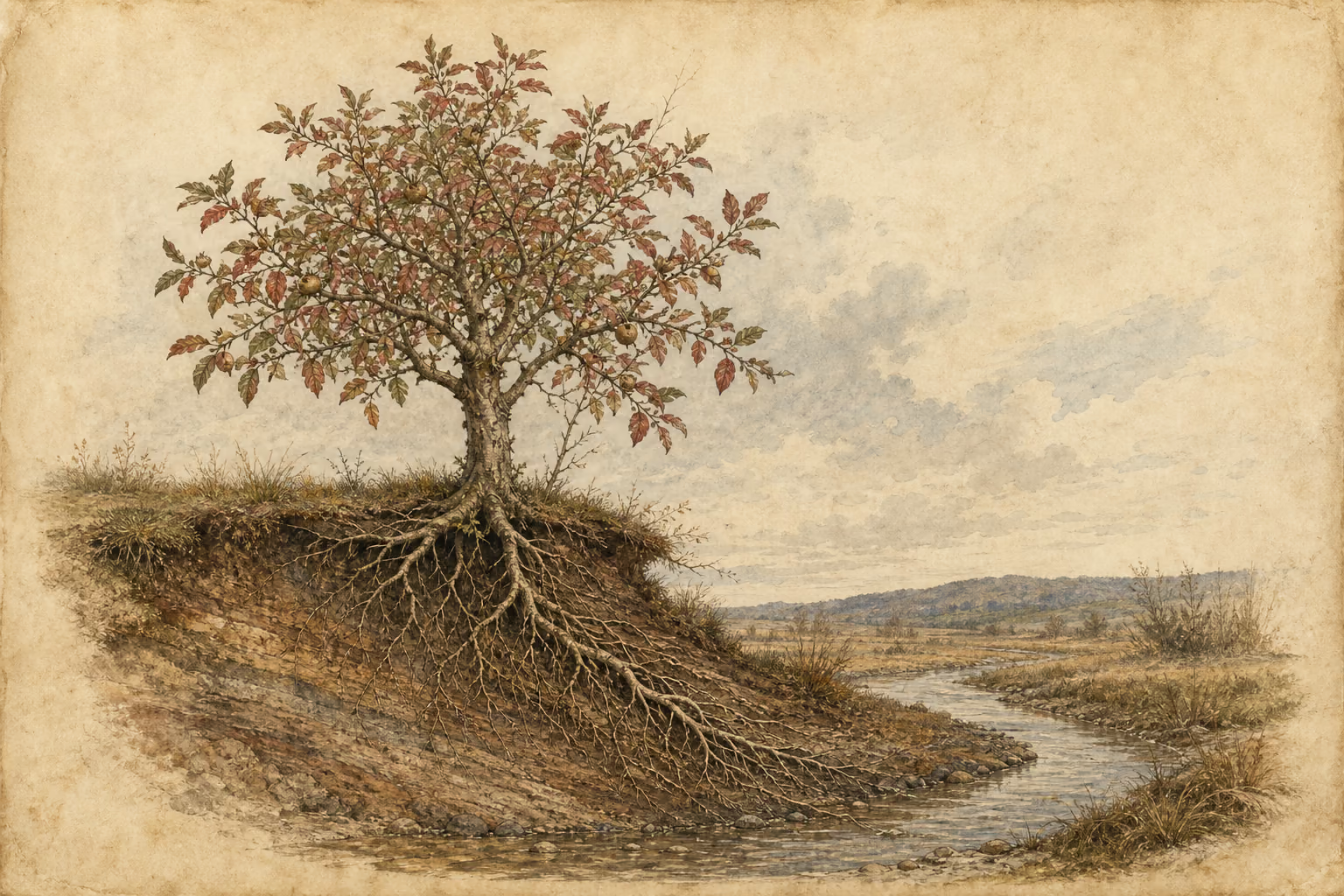
Malorum pirorumque generi adnumerentur iure mespila atque sorva. mespilis tria genera: anthedon, setania; tertium degenerat, anthedoni tamen similius, quod Gallicum vocant. setaniae maius pomum candidiusque, acini molliore ligno; ceteris minus pomum, sed odore praestantius et quod diutius servetur. arbor ipsa de amplissimis. folia ante quam decidant rubescunt; radices multae atque altae et ideo inexstirpabiles. non fuit haec arbor in Italia Catonis aevo.
English · Bostock & Riley 1855–57
The medlar and the sorb ought in propriety to be ranked under the head of the apple and the pear. Of the medlar there are three varieties, the anthedon, the setania, and a third of inferior quality, which bears a stronger resemblance to the anthedon, and is known as the Gallic kind. The setania is the largest fruit, and the palest in colour; the woody seed in the inside of it is softer, too, than in the others, which are of smaller size than the setania, but superior to it in the fragrance of their smell, and in being better keepers. The tree itself is one of very ample dimensions: the leaves turn red before they fall: the roots are numerous, and penetrate remarkably deep, which renders it almost impossible to grub it up. This tree did not exist in Italy in Cato’s time.