LIBER II · CAPUT 100
THE POWER OF THE SUN
Latine · Mayhoff 1906
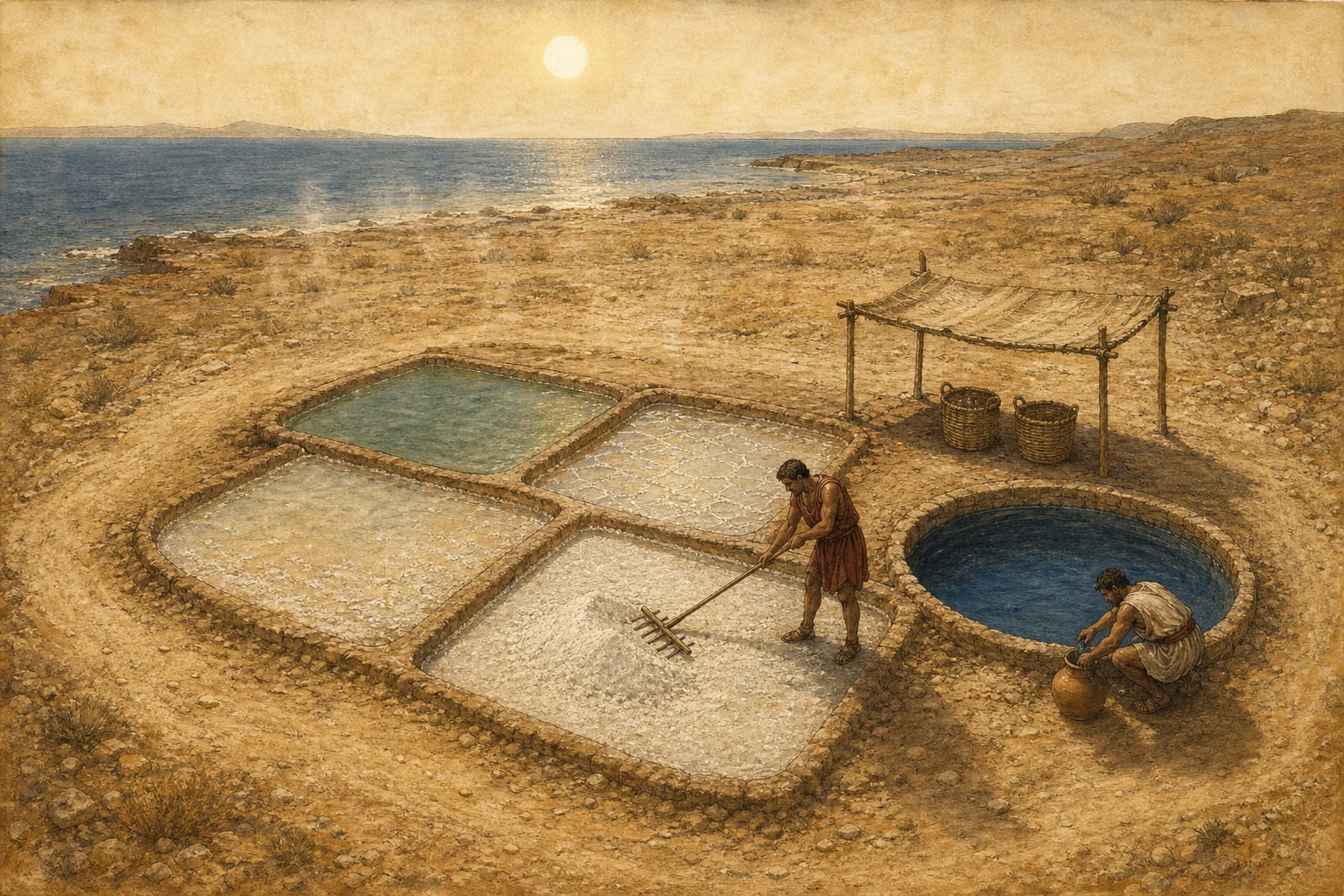
itaque solis ardore siccatur liquor, et hoc esse masculum sidus accepimus, torrens cuncta sorbensque. sic mari late patenti saporem incoqui salis, aut quia exhausto inde dulci tenuique, quod facillime trahat vis ignea, omne asperius crassiusque linquatur — ideo summam aequorum aquam dulciorem profunda; hanc esse veriorem causam asperi saporis quam quod mare terrae sudor sit aeternus — 5 aut quia plurimus ex arido misceatur illi vapor aut quia terrae natura sicut medicatas aquas inficiat. est in exemplis Dionysio Siciliae tyranno, cum pulsus est ea potentia, accidisse prodigium, ut uno die in portu dulcesceret mare.
English · Bostock & Riley 1855–57
Fluids are dried up by the heat of the sun; we have therefore regarded it as a masculine star, burning up and absorbing everything.
Hence it is that the widely-diffused sea is impregnated with the flavour of salt, in consequence of what is sweet and mild being evaporated from it, which the force of fire easily accomplishes; while all the more acrid and thick matter is left behind; on which account the water of the sea is less salt at some depth than at the surface. And this is a more true cause of the acrid flavour, than that the sea is the continued perspiration of the land, or that the greater part of the dry vapour is mixed with it, or that the nature of the earth is such that it impregnates the waters, and, as it were, medicates them. Among the prodigies which have occurred, there is one which happened when Dionysius, the tyrant of Sicily, was expelled from his kingdom; that, for the space of one day, the water in the harbour became sweet.