LIBER II · CAPUT 103
THE WONDERS OF FOUNTAINS AND RIVERS
Latine · Mayhoff 1906
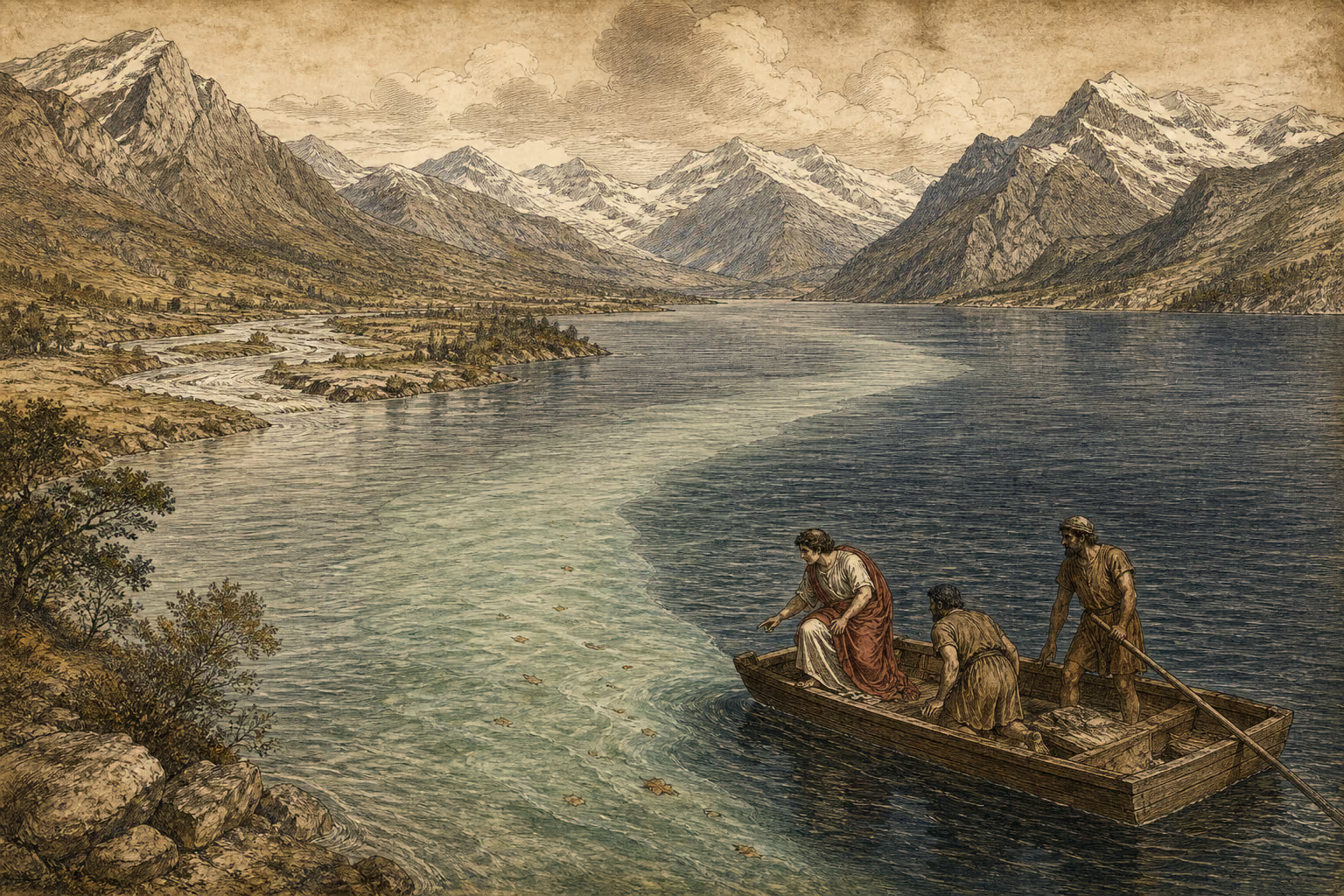
mirabilius id faciunt aquae dulces iuxta mare ut fistulis emicantes. nam nec aquarum natura miraculis cessat. dulces mari invehuntur, leviores haut dubie; ideo et marinae, quarum natura gravior, magis invecta sustinent. quaedam vero et dulces inter se supermeant alias, ut in Fucino lacu invectusPitonius amnis, in Lario Addua, in Verbanno Ticinus, in Benaco Mincius, in Sebinno Ollius, in Lemanno Rhodanus: hic trans Alpis, superiores in Italia, multorum milium transitu hospitali suas tantum nec largiores quam intulere aquas evehentes. proditum hoc et in Oronte amne Syriae multisque aliis. quidam vero odio maris ipsa subeunt vada, sicut Arethusa, fons Syracusanus, in quo redduntur iacta in Alpheum, qui per Olympiam fluens Peloponnesiaco litori infunditur. subeunt terras rursusque redduntur Lycus in Asia, Erasinus in Argolica, Tigris in Mesopotamia et, quae in Aesculapi fonte Athenis mersa sunt, in Phalerico redduntur. et in Atinate campo fluvius mersus post XX milia passuum exit et in Aquileiensi Timavus. nihil in Asphaltite ludaeae lacu, qui bitumen gignit, mergi potest nec in Armeniae maioris Aretissa; is quidem nitrosus pisces alit. in Sallentino iuxta oppidum Manduriam lacus, ad margines plenus, neque exhaustis aquis minuitur neque infusis augetur. in Ciconum flumine et in Piceno lacu Velino lignum deiectum lapideo cortice obducitur et in Surio Colchidis flumine adeo, ut lapidem plerumque durans adhuc integat cortex. similiter in flumine Silero ultra Surrentum non virgulta modo inmersa, verum et folia lapidescunt, alias salubri potu eius aquae. in exitu paludis Reatinae saxum crescit [et in Rubro mari oleae virentesque frutices enascuntur].
Sed fontium plurimorum natura mira est fervore, idque etiam in iugis Alpium ipsoque in mari inter Italiam et Aenariam in Baiano sinu et in Liri fluvio multisque aliis. nam dulcis haustus in mari plurimis locis, ut ad Chelidonias insulas et Aradum et in Gaditano oceano. Patavinorum aquis calidis herbae virentes innascuntur, Pisanorum ranae, ad Vetulonios in Etruria non procul a mari pisces. in Casinate fluvius appellatur Scatebra, frigidus, abundantior aestate; in eo, ut in Arcadia Stymphali, nascuntur aquatiles musculi. in Dodone Iovis fons, cum sit gelidus et inmersas faces extinguat, si extinctae admoveantur, accendit. idem meridie semper deficit, qua de causa ἀναπαυόμενον vocant, mox increscens ad medium noctis exuberat, ab eo rursus sensim deficit. in Illyricis supra fontem frigidum expansae vestes accenduntur. Iovis Hammonis stagnum, interdiu frigidum, noctibus fervet. in Trogodytis fons Solis appellatur dulcis et circa meridiem maxime frigidus; mox paulatim tepescens ad noctis media fervore et amaritudine infestatur.
Padi fons mediis diebus aestivis velut interquiescens semper aret. in Tenedo insula fons semper a tertia noctis hora in sextam ab aestivo solstitio exundat, et in Delo insula Inopus fons eodem quo Nilus modo ac ac om.FR1Ea pariter cum eo decrescit augeturve. contra Timavum amnem insula parva in mari est cum fontibus calidis, qui pariter cum aestu maris crescunt minuunturque. in agro Pitinate trans Appenninum fluvius Novanus, omnibus solstitiis torrens, bruma siccatur.
In Falisco omnis aqua pota candidos boves facit, in Boeotia amnis Melas oves nigras, Cephisus ex eodem lacu profluens albas, rursus nigras Penius rufasque iuxta Ilium Xanthus, unde et nomen amni. in Ponto fluvius Axiaces rigat campos, in quibus pastae nigro lacte equae gentem alunt. in Reatino fons Neminie appellatus alio atque alio loco exoritur, annonae mutationem significans. Brundisi in portu fons incorruptas praestat aquas navigantibus. Lyncestis aqua quae vocatur acidula vini modo temulentos facit; item in Paphlagonia et in agro Caleno. Andro in nsula templo Liberi patris fontem nonis Ianuariis semper vini saporem fundere Mucianus ter consul credit. diesθεοδοσία vocatur. iuxta Nonacrim in Arcadia Styx, nec odore differens nec colore, pota ilico necat; item in Liberoso Taurorum colle tres fontes sine remedio, sine dolore mortiferi. in Carrinensi Hispaniae agro duo fontes iuxta fluunt, alter omnia respuens, alter obsorbens. in eadem gente alius aurei coloris omnes ostendit pisces, nihil extra illam aquam differentes. in Comensi iuxta Larium lacum fons largus horis singulis semper intumescit ac residit. in Cydonea insula ante Lesbum fons calidus vere tantum fluit. lacus Sannaus in Asia circa nascente absinthio inficitur. Colophone in Apollinis Clarii specu lacuna est, cuius potu mira redduntur oracula, bibentium breviore vita. amnes retro fluere et nostra vidit aetas Neronis principis supremis, sicut in rebus eius rettulimus.
Iam omnes fontes aestate quam hieme gelidiores esse quem fallit? sicut illa permira, naturae opera, aes ac plumbum in massa mergi, dilatatum fluitare, eiusdemque ponderis alia sidere, alia invehi, onera in aqua facilius moveri, Syrium lapidem quamvis grandem innatare eundemque comminutum mergi, recentia cadavera ad vadum labi, intumescentia attolli, inania vasa baud facilius quam plena extrahi; pluvias salinis aquas dulciores esse quam reliquas, nec fieri salem nisi admixtis dulcibus; marinas tardius gelari, celerius accendi; hieme mare calidius esse, autumnale salsius; omne oleo tranquillari, et ob id urinantes ore spargere, quoniam mitiget naturam asperam, lucemque deportet; nives in alto mari non cadere; cum omnis aqua deorsum feratur, exilire fontes atque etiam in Aetnae radicibus, flagrantis in tantum, ut quinquagena, centena milia passuum harenas flammarum globo eructet. namque et ignium, quod est naturae quartum elementum, reddamus aliqua miracula, sed primum ex aquis.
English · Bostock & Riley 1855–57
It is very remarkable that fresh water should burst out close to the sea, as from pipes. But there is no end to the wonders that are connected with the nature of waters. Fresh water floats on sea water, no doubt from its being lighter; and therefore sea water, which is of a heavier nature, supports better what floats upon it. And, in some places, different kinds of fresh water float upon each other; as that of the river which falls into the Fucinus; that of the Addua into the Larius; of the Ticinus into the Verbanus; of the Mincius into the Benacus; of the Ollius into the Sevinus; and of the Rhone into the Leman lake (this last being beyond the Alps, the others in Italy): all which rivers passing through the lakes for many miles, generally carry off no more water than they bring with them. The same thing is said to occur in the Orontes, a river of Syria, and in many others.
Some rivers, from a real hatred of the sea, pass under it, as does Arethusa, a fountain of Syracuse, in which the substances are found that are thrown into the Alpheus; which, after flowing by Olympia, is discharged into the sea, on the shore of the Peloponnesus. The Lycus in Asia, the Erasinus in Argolis, and the Tigris in Mesopotamia, sink into the earth and burst out again. Substances which are thrown into the fountain of Æsculapius at Athens are cast up at the fountain of Phalerum. The river which sinks into the ground in the plain of Atinum comes up again at the distance of twenty miles, and the Timavus does the same in Aquileia.
In the lake Asphaltites, in Judæa, which produces bitumen, no substance will sink, nor in the lake Arethusa, in the Greater Armenia: in this lake, although it contains nitre, fish are found. In the country of the Salentini, near the town of Manduria, there is a lake full to the brim, the waters of which are never diminished by what is taken out of it, nor increased by what is added. Wood, which is thrown into the river of the Cicones, or into the lake Velinus in Picenum, becomes coated with a stony crust, while in the Surius, a river of Colchis, the whole substance becomes as hard as stone. In the same manner, in the Silarus, beyond Surrentum, not only twigs which are immersed in it, but likewise leaves are petrified; the water at the same time being proper for drinking. In the stream which runs from the marsh of Reate there is a rock, which continues to increase in size, and in the Red Sea olive-trees and green shrubs are produced.
There are many springs which are remarkable for their warmth. This is the case even among the ridges of the Alps, and in the sea itself, between Italy and Ænaria, as in the bay of Baiæ, and in the Liris and many other rivers. There are many places in which fresh water may be procured from the sea, as at the Chelidonian Isles, and at Arados, and in the ocean at Gades. Green plants are produced in the warm springs of Padua, frogs in those of Pisa, and fish in those of Vetulonia in Etruria, which is not far from the sea. In Casinas there is a cold river called Scatebra, which in summer is more full of water. In this, as in the river Stymphalis, in Arcadia, small water-mice are produced. The fountain of Jupiter in Dodona, although it is as cold as ice, and extinguishes torches that are plunged into it, yet, if they be brought near it, it kindles them again. This spring always becomes dry at noon, from which circumstance it is called Ἀναπαυόμενον: it then increases and becomes full at midnight, after which it again visibly decreases. In Illyricum there is a cold spring, over which if garments are spread they take fire. The pool of Jupiter Ammon, which is cold during the day, is warm during the night. In the country of the Troglodytæ, what they call the Fountain of the Sun, about noon is fresh and very cold; it then gradually grows warm, and, at midnight, becomes hot and saline.
In the middle of the day, during summer, the source of the Po, as if reposing itself, is always dry. In the island of Tenedos there is a spring, which, after the summer solstice, is full of water, from the third hour of the night to the sixth. The fountain Inopus, in the island of Delos, decreases and increases in the same manner as the Nile, and also at the same periods. There is a small island in the sea, opposite to the river Timavus, containing warm springs, which increase and decrease at the same time with the tides of the sea. In the territory of Pitinum, on the other side of the Apennines, the river Novanus, which during the solstice is quite a torrent, is dry in the winter.
In Faliscum, all the water which the oxen drink turns them white; in Bœotia, the river Melas turns the sheep black; the Cephissus, which flows out of a lake of the same name, turns them white; again, the Peneus turns them black, and the Xanthus, near Ilium, makes them red, whence the river derives its name. In Pontus, the river Astaces waters certain plains, where the mares give black milk, which the people use in diet. In Reate there is a spring called Neminia, which rises up sometimes in one place and sometimes in another, and in this way indicates a change in the produce of the earth. There is a spring in the harbour of Brundisium that yields water which never becomes putrid at sea. The water of the Lyncestis, which is said to be acidulous, intoxicates like wine; this is the case also in Paphlagonia and in the territory of Calenum. In the island of Andros, at the temple of Father Bacchus, we are assured by Mucianus, who was thrice consul, that there is a spring, which, on the nones of January, always has the flavour of wine; it is called Διὸς Θεοδοσία. Near Nonacris, in Arcadia, the Styx, which is not unlike it either in odour or in colour, instantly destroys those who drink it. Also in Librosus, a hill in the country of the Tauri, there are three springs which inevitably produce death, but without pain. In the territory of the Carrinenses in Spain, two springs burst out close together, the one of which absorbs everything, the other throws them out. In the same country there is another spring, which gives to all the fish the appearance of gold, although, when out of the water, they do not differ in any respect from other fish. In the territory of Como, near the Larian lake, there is a copious spring, which always swells up and subsides again every hour. In the island of Cydonea, before Lesbos, there is a warm fountain, which flows only during the spring season. The lake Sinnaus, in Asia, is impregnated with wormwood, which grows about it. At Colophon, in the cave of the Clarian Apollo, there is a pool, by the drinking of which a power is acquired of uttering wonderful oracles; but the lives of those who drink of it are shortened. In our own times, during the last years of Nero’s life, we have seen rivers flowing backwards, as I have stated in my history of his times.
And indeed who can be mistaken as to the fact, that all springs are colder in summer than in winter, as well as these other wonderful operations of nature; that copper and lead sink when in a mass, but float when spread out; and of things that are equally heavy, some will sink to the bottom, while others will remain on the surface; that heavy bodies are more easily moved in water; that a stone from Scyros, although very large, will float, while the same, when broken into small pieces, sinks; that the body of an animal, newly deprived of life, sinks, but that, when it is swelled out, it floats; that empty vessels are drawn out of the water with no more ease than those that are full; that rain-water is more useful for salt-pits than other kinds of water; that salt cannot be made, unless it is mixed with fresh water; that salt water freezes with more difficulty, and is more readily heated; that the sea is warmer in winter and more salt in the autumn; that everything is soothed by oil, and that this is the reason why divers send out small quantities of it from their mouths, because it smoothes any part which is rough and transmits the light to them; that snow never falls in the deep part of the sea; that although water generally has a tendency downwards, fountains rise up, and that this is the case even at the foot of Ætna, burning as it does, so as to force out the sand like a ball of flame to the distance of 150 miles?
And now I must give an account of some of the wonders of fire, which is the fourth element of nature; but first those produced by means of water.