LIBER II · CAPUT 18
THE REASON WHY THE STARS ARE OF DIFFERENT COLOURS
Latine · Mayhoff 1906
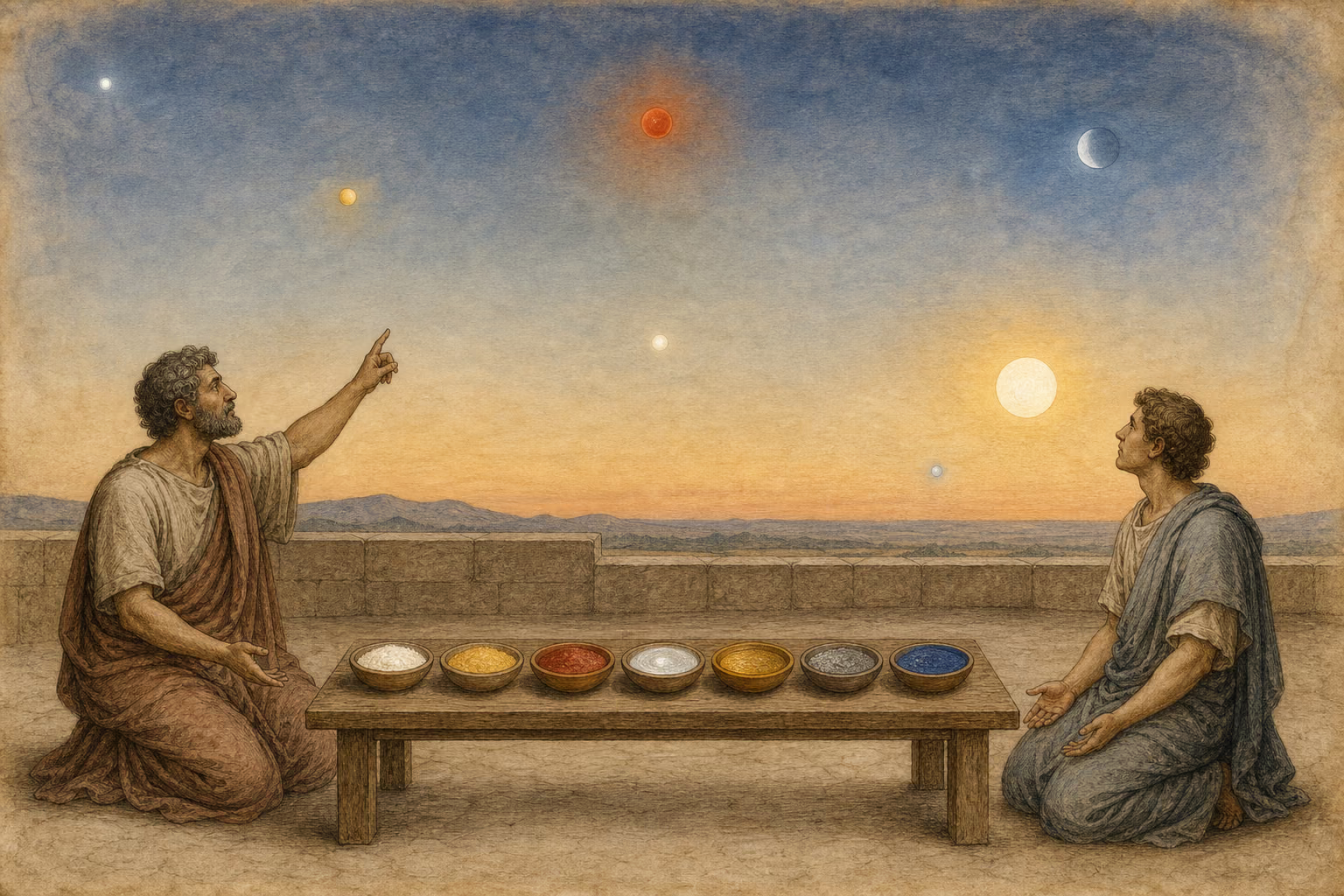
Colores ratio altitudinum temperat, siquidem earum similitudinem trahunt, in quarum aëra venere subeundo, tinguitque adpropinquantes utralibet alieni meatus circulus, frigidior in pallorem, ardentior in ruborem, ventosus in horrorem, sol atque commissurae apsidum extremaeque orbitae atram in obscuritatem. suus quidem cuique color est: Saturno candidus, Iovi clarus, Marti igneus, Lucifero candens, Vesperi refulgens, Mercurio radians, lunae blandus, soli, cum oritur, ardens, postea radians, his causis conexo visu et earum quae caelo continentur. namque modo multitude conferta inest circa dimidios orbes lunae, placida nocte leniter inlustrante eas, modo raritas, ut fugisse miremur, plenilunio abscondente aut cum solis suprave dictarum radii visus praestrinxere nostros. et ipsa autem luna ingruentium solis radiorum haut dubie differentias sentit, hebetante cetero inflexos mundi convexitate eos praeterquam ubi recti angulorum conpetant ictus. itaque in quadrato solis dividua est, in triquetro seminani ambitur orbe, inpletur autem in adverso, rursusque minuens easdem effigies paribus edit intervallis, simili ratione qua super solem tria sidera.
English · Bostock & Riley 1855–57
The difference of their colour depends on the difference in their altitudes; for they acquire a resemblance to those planets into the vapour of which they are carried, the orbit of each tinging those that approach it in each direction. A colder planet renders one that approaches it paler, one more hot renders it redder, a windy planet gives it a lowering aspect, while the sun, at the union of their apsides, or the extremity of their orbits, completely obscures them. Each of the planets has its peculiar colour; Saturn is white, Jupiter brilliant, Mars fiery, Lucifer is glowing, Vesper refulgent, Mercury sparkling, the Moon mild; the Sun, when he rises, is blazing, afterwards he becomes radiating. The appearance of the stars, which are fixed in the firmament, is also affected by these causes. At one time we see a dense cluster of stars around the moon, when she is only half-enlightened, and when they are viewed in a serene evening; while, at another time, when the moon is full, there are so few to be seen, that we wonder whither they are fled; and this is also the case when the rays of the sun, or of any of the above-mentioned bodies, have dazzled our sight. And, indeed, the moon herself is, without doubt, differently affected at different times by the rays of the sun; when she is entering them, the convexity of the heavens rendering them more feeble than when they fall upon her more directly. Hence, when she is at a right angle to the sun, she is half-enlightened; when in the trine aspect, she presents an imperfect orb, while, in opposition, she is full. Again, when she is waning, she goes through the same gradations, and in the same order, as the three stars that are superior to the sun.