LIBER II · CAPUT 43
OF THUNDER AND LIGHTNING
Latine · Mayhoff 1906
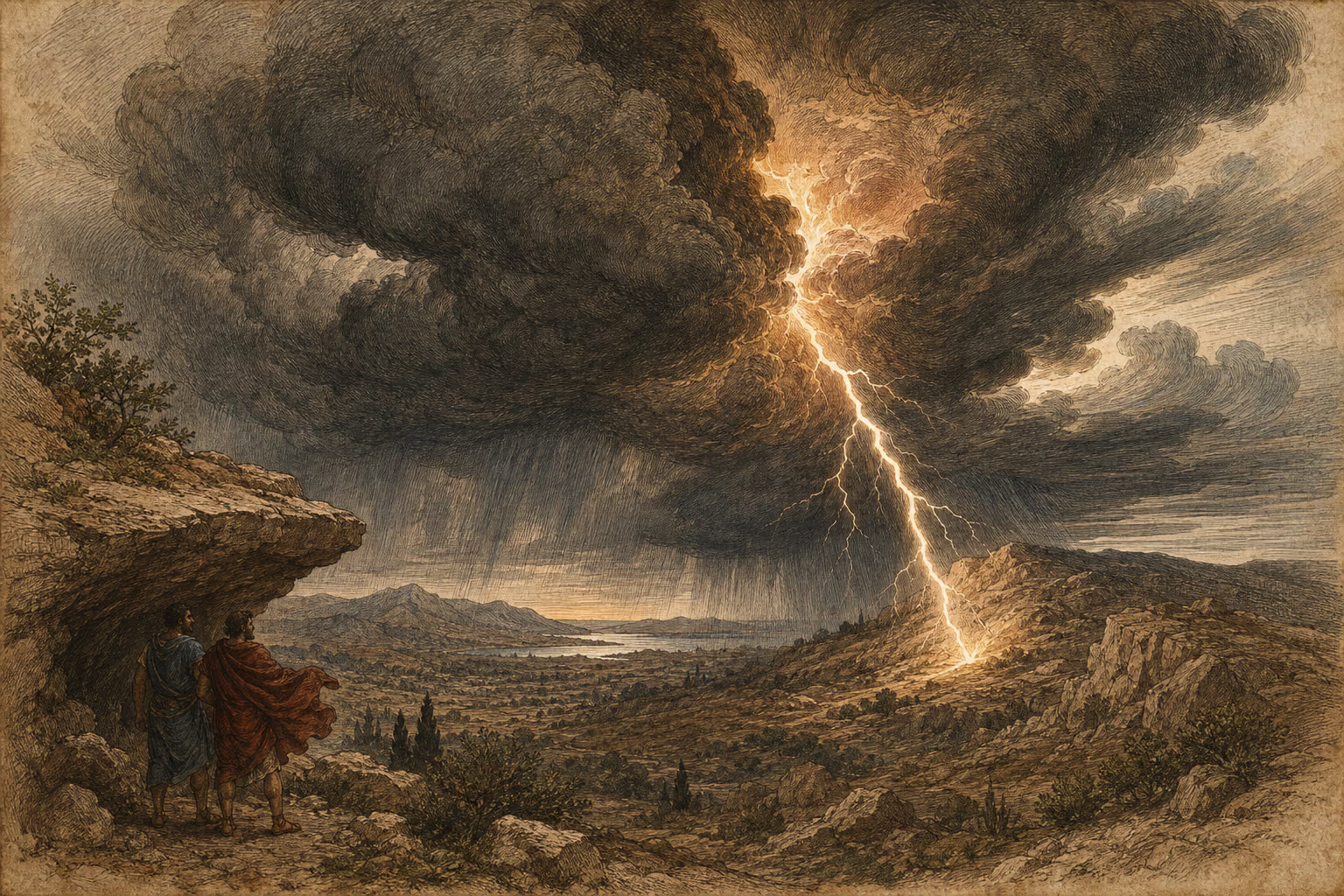
Igitur non eam infitias posse in has et ignes superne stellarum decidere, quales sereno saepe cernimus, quorum ictu concuti aëra verum est, quando et tela vibrata stridunt, cum vero in nubem perveniunt, vaporem dissonum gigni, ut candente ferro in aquam demerso, et fumidum verticem volvi. hinc nasci procellas et, si in nube luctetur flatus aut vapor, tonitrua edi; si erumpat ardens, fulmina; si longiore tractu nitatur, fulgetras. his findi nubem, illis perrumpi, et esse tonitrua inpactorum ignium plagas, ideoque protinus coruscare igneas nubium rimas. posse et repulsu siderum depressum qui a terra meaverit spiritum nube cohibitum tonare, natura strangulante sonitum, dum rixetur, edito fragore, cum erumpat, ut in membrana spiritu intenta. posse et attritu, dum praeceps feratur, ilium, quisquis est, spiritum accendi. posse et conflictu nubium elidi, ut duorum lapidum, scintillantibus fulgetris. sed haec omnia esse fortuita. hinc bruta fulmina et vana, ut quae nullam habeant rationem naturae. his percuti montes, his maria, omnesque alios inritos iactus. illa vero fatidica ex alto statisque de causis et ex suis venire sideribus.
Simili modo ventos vel potius flatus posse et arido siccoque anhelitu terrae gigni non negaverim, posse et aquis aëra exspirantibus, qui neque in nebulam densetur nec crassescat in nubes, posse et solis inpulsu agi, quoniam ventus. haut aliud intellegatur quam fluctus aëris, pluribusque etiam modis. namque et e fluminibus ac nivibus et e mari videmus, et quidem tranquillo, et alios, quos vocant altanos, e terra consurgere. qui, cum e mari redeunt, tropaei vocantur, si pergunt, apogei.
English · Bostock & Riley 1855–57
It cannot therefore be denied, that fire proceeding from the stars which are above the clouds, may fall on them, as we frequently observe on serene evenings, and that the air is agitated by the impulse, as darts when they are hurled whiz through the air. And when it arrives at the cloud, a discordant kind of vapour is produced, as when hot iron is plunged into water, and a wreath of smoke is evolved. Hence arise squalls. And if wind or vapour be struggling in the cloud, thunder is discharged; if it bursts out with a flame, there is a thunderbolt; if it be long in forcing out its way, it is simply a flash of lightning. By the latter the cloud is simply rent, by the former it is shattered. Thunder is produced by the stroke given to the condensed air, and hence it is that the fire darts from the chinks of the clouds. It is possible also that the vapour, which has risen from the earth, being repelled by the stars, may produce thunder, when it is pent up in a cloud; nature restraining the sound whilst the vapour is struggling to escape, but when it does escape, the sound bursting forth, as is the case with bladders that are distended with air. It is possible also that the spirit, whatever it be, may be kindled by friction, when it is so violently projected. It is possible that, by the dashing of the two clouds, the lightning may flash out, as is the case when two stones are struck against each other. But all these things appear to be casual. Hence there are thunderbolts which produce no effect, and proceed from no immediate actual cause; by these mountains and seas are struck, and no injury is done. Those which prognosticate future events proceed from on high and from stated causes, and they come from their peculiar stars.
In like manner I would not deny that winds, or rather sudden gusts, are produced by the arid and dry vapours of the earth; that air may also be exhaled from water, which can neither be condensed into a mist, nor compressed into a cloud; that it may be also driven forward by the impulse of the sun, since by the term ‘wind’ we mean nothing more than a current of air, by whatever means it may be produced. For we observe winds to proceed from rivers and bays, and from the sea, even when it is tranquil; while others, which are named Altani, rise up from the earth; when they come back from the sea they are named Tropæi, but if they go straight on, Apogæi.