LIBER II · CAPUT 45
VARIOUS OBSERVATIONS RESPECTING WINDS
Latine · Mayhoff 1906
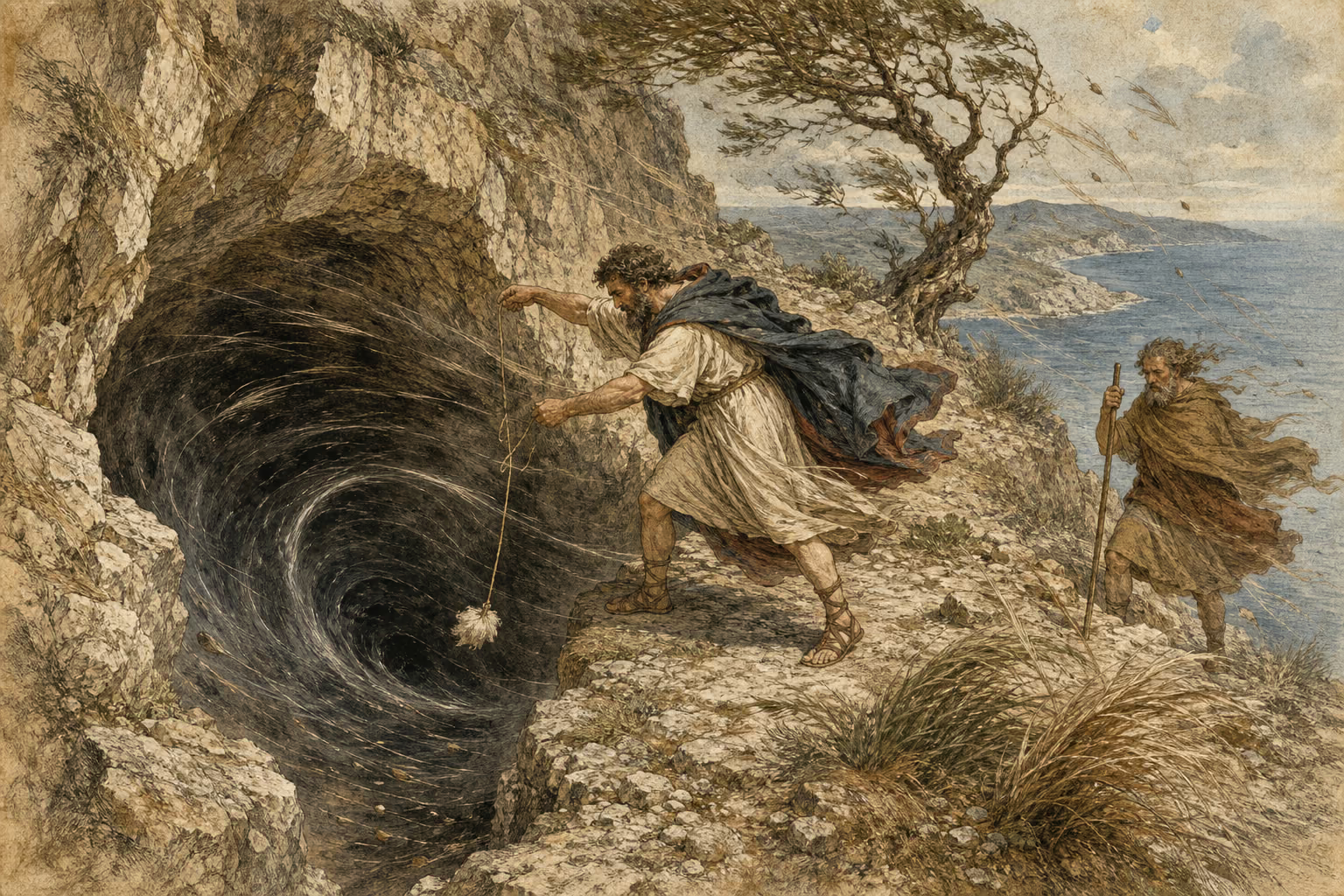
iam quidem et specus, qualis in Dalmatia ore vasto, praeceps hiatu, in quem deiecto levi pondere quamvis tranquillo die turbini similis emicat procella; nomen loco est Senta. quin et in Cyrenaica provincia rupes quaedam austro traditur sacra, quam profanum sit attrectari hominis manu, confestim austro volvente harenas. in domibus etiam multis madefacta inclusa opacitate conceptacula auras suas habent. adeo causa non deest.
Sed plurimum interest, flatus sit an ventus. illos statos atque perspirantes, quos non tractus aliquis, verum terrae sentiunt, qui non aura, non procella, sed, mares appellatione quoque ipsa, venti sunt, sive adsiduo mundimotu et contrario siderum occursu nascuntur, sive hic est ille generabilis rerum naturae spiritus huc illuc tamquam in utero aliquo vagus, sive disparili errantium siderum ictu radiorumque multiformi iactu flagellatus aër, sive a suis sideribus exeunt his propioribus sive ab illis caelo adfixis cadunt, palam est illos quoque legem habere naturae non ignotam, etiamsi nondum percognitam.
English · Bostock & Riley 1855–57
There are certain caves, such as that on the coast of Dalmatia, with a vast perpendicular chasm, into which, if a light weight only be let down, and although the day be calm, a squall issues from it like a whirlwind. The name of the place is Senta. And also, in the province of Cyrenaica, there is a certain rock, said to be sacred to the south wind, which it is profane for a human hand to touch, as the south wind immediately rolls forwards clouds of sand. There are also, in many houses, artificial cavities, formed in the walls, which produce currents of air; none of these are without their appropriate cause.
But there is a great difference between a gale and a wind. The former are uniform and appear to rush forth; they are felt, not in certain spots only, but over whole countries, not forming breezes or squalls, but violent storms. Whether they be produced by the constant revolution of the world and the opposite motion of the stars, or whether they both of them depend on the generative spirit of the nature of things, wandering, as it were, up and down in her womb, or whether the air be scourged by the irregular strokes of the wandering stars, or the various projections of their rays, or whether they, each of them, proceed from their own stars, among which are those that are nearest to us, or whether they descend from those that are fixed in the heavens, it is manifest that they are all governed by a law of nature, which is not altogether unknown, although it be not completely ascertained.