LIBER II · CAPUT 47
THE DIFFERENT KINDS OF WINDS
Latine · Mayhoff 1906
Veteres quattuor omnino servavere per totidem mundi partes — ideo nec Homerus plures nominat —hebeti, ut mox iudicatum est, ratione; secuta aetas octo addidit nimis subtili atque concisa. proximis inter utramque media placuit, ad brevem ex numerosa additis quattuor. sunt ergo bini in quattuor caeli partibus, ab oriente aequinoctiali subsolanus, ab oriente brumali vulturnus. illum apelioten, hunc Graeci eurum appellant. a meridie auster et ab occasu brumali Africus; notum et Liba nominant. ab occasu aequinoctiali favonius, ab occasu solstitiali corus; zephyrum et argesten vocant. a septentrionibus septentrio, interque eum et exortum solstitialem aquilo, aparctias et boreas dicti. numerosior ratio quattuor his interiecerat, thrascian media regione inter septentrionem et occasum solstitialem, itemque caecian media inter aquilonem et exortum aequinoctialem ab ortu solstitiali, Phoenica media regione inter ortum brumalem et meridiem, item inter Liba et notum conpositum ex utroque medium inter meridiem et hibernum occidentem Libonotum. nec finis. alii quippe mesen nomine etiamnum addidere inter borean et caecian, et inter eurum notumque euronotum. sunt etiam quidam peculiares quibusque gentibus venti, non ultra certum procedentes tractum, ut Atheniensibus sciron, paulo ab argeste deflexus, reliquae Graeciae ignotus. aliubi flatus idem Olympias vocatur. consuetudo omnibus his nominibus argesten intellegit. caecian aliqui vocant Hellespontian, et eosdem alii aliter. item in Narbonensi provincia clarissimus ventorum est circius nec ulloomnium violentia inferior Ostiam plerumque secto Ligustico mari perferens. idem non modo in reliquis partibus caeli ignotus est, sed ne Viennam quidem eiusdem provinciae urbem attingens: paucis ante milibus iugi modici occursu tantus ille ventorum coercitus! et austros in Aegyptum penetrare negat Fabianus. quo fit manifesta lex naturae, ventis etiam et tempore et fine dicto.
Ver ergo aperit navigantibus maria, cuius in principio favonii hibernum molliunt caelum sole aquarii XXV obtinente partem. is dies sextus Februarias ante idus. conpetit ferme et hoc omnibus, quos deinde ponam, per singulas intercalationes uno die anticipantibus rursusque lustro sequenti ordinem servantibus. favonium quidam a. d. VIII kalendas Martias chelidonian vocant ab hirundinis visu, nonnulli vero ornithian, uno et LXX die post brumam ab adventu avium flantem per dies VIIII. favonio contrarius est quem subsolanum appellavimus. dat aestatem exortus vergiliarum in totidem partibus tauri VI diebus ante Maias idus, quod tempus austrinum est, huic vento septentrione contrario. ardentissimo autem aestatis tempore exoritur caniculae sidus sole primam partem leonis ingrediente, qui dies XV ante Augustas kalendas est. huius exortum diebus VIII ferme aquilones antecedunt, quos prodromos appellant. post biduum autem exortus iidem aquilones constantius perflant diebus XL. quos etesias appellant. mollire eos creditur solis vapor geminatus ardore sideris, nec ulli ventorum magis stati sunt. post eos rursus austri frequentes usque ad sidus arcturi, quod exoritur XI diebus ante aequinoctium autumni. cum hoc corns incipit. corns autumnat; huic est contrarius vulturnus. post id aequinoctium diebus fere IIII et XL vergiliarum occasus hiemem inchoat, quod tempus in III idus Novembres incidere consuevit; hoc est aquilonis hiberni multumque aestivo illi dissimilis, cuius ex adverso est Africus. ante brumam autem VII diebus totidemque post eam sternitur mare alcyonum feturae, unde nomen ii dies traxere. reliquum tempus hiemat. nec tamen saevitia tempestatum concludit mare. piratae primum coegere mortis periculo in mortem ruere et hiberna experiri maria; nunc idem avaritia cogit.
Ventorum frigidissimi sunt quos a septentrione diximus spirare et vicinus iis corus. hi et reliquos conpescunt et nubes abigunt. umidi Africus et praecipue auster Italiae. narrant et in Ponto caecian in se trahere nubes. sicci corus et vulturnus, praeterquam desinentes. nivales aquilo et septentrio. grandines septentrio inportat et corus. aestuosus auster, tepidi vulturnus et favonius. iidem subsolano sicciores, et in totum omnes a septentrione et occidente sicciores quam a meridie et oriente. saluberrimus autem omnium aquilo, noxius auster et magis siccus, fortassis quia umidus frigidior est. minus esurire eo spirante creduntur animantes. etesiae noctu desinunt fere et a tertia diei oriuntur. in Hispania et Asia ab oriente flatus est eorum, in Ponto ab aquilone, reliquis in partibus a meridie. spirant autem et a bruma, cum vocantur ornithiae, sed leniores et paucis diebus. permutant et duo naturam cum situ: auster Africae serenus, aquilo nubilus. omnes venti vicibus suis spirant, maiore ex parte autem ut contrarius desinenti incipiat. cum proximi cadentibus surgunt, a laevo latere in dextrum ut sol ambiunt. de ratione eorum menstrua quarta maxime luna decernit. isdem autem ventis in contrarium navigatur prolatis pedibus, ut noctu plerumque adversa vela concurrant. austro maiores fluctus eduntur quam aquilone, quoniam ille inferus ex imo mari spirat, hic summo. ideoque post austros noxii praecipue terrae motus. noctu auster, interdiu aquilo vehementior, et ab ortu flantes diuturniores sunt ab occasu flantibus. septentriones inpari fere desinunt numero, quae observatio et in aliis multis rerum naturae partibus valet; mares itaque existimantur inpares numeri. sol et auget et conprimit flatus: auget exoriens, occidens, conprimit meridianus aestivis temporibus. itaque medio diei aut noctis plerumque sopiuntur, quia aut nimio frigore aut aestu solvuntur. et imbribus venti sopiuntur. exspectantur autem maxime unde nubes discussae adaperuere caelum. omnium quidem — si libeat observare minimos ambitus — redire easdem vices quadriennio exacto Eudoxus putat, non ventorum modo, verum et reliquarum tempestatum magna ex parte. et est principium lustri eius semper intercalario anno caniculae ortu. de generalibus ventis haec.
English · Bostock & Riley 1855–57
The ancients reckoned only four winds (nor indeed does Homer mention more ) corresponding to the four parts of the world; a very poor reason, as we now consider it. The next generation added eight others, but this was too refined and minute a division; the moderns have taken a middle course, and, out of this great number, have added four to the original set. There are, therefore, two in each of the four quarters of the heavens. From the equinoctial rising of the sun proceeds Subsolanus, and, from his brumal rising, Vulturnus; the former is named by the Greeks Apeliotes, the latter Eurus. From the south we have Auster, and from the brumal setting of the sun, Africus; these were named Notos and Libs. From the equinoctial setting proceeds Favonius, and from the solstitial setting, Corus; these were named Zephyrus and Argestes. From the seven stars comes Septemtrio, between which and the solstitial rising we have Aquilo, named Aparctias and Boreas. By a more minute subdivision we interpose four others, Thrascias, between Septemtrio and the solstitial setting; Cæcias, between Aquilo and the equinoctial rising; and Phœnices, between the brumal rising and the south. And also, at an equal distance from the south and the winter setting, between Libs and Notos, and compounded of the two, is Libonotos. Nor is this all. For some persons have added a wind, which they have named Meses, between Boreas and Cæcias, and one between Eurus and Notos, named Euronotus.
There are also certain winds peculiar to certain countries, which do not extend beyond certain districts, as Sciron in Attica, deviating a little from Argestes, and not known in the other parts of Greece. In other places it is a little higher on the card and is named Olympias; but all these have gone by the name of Argestes. In some places Cæcias is named Hellespontia, and the same is done in other cases. In the province of Narbonne the most noted wind is Circius; it is not inferior to any of the winds in violence, frequently driving the waves before it, to Ostia, straight across the Ligurian sea. Yet this same wind is unknown in other parts, not even reaching Vienne, a city in the same province; for meeting with a high ridge of hills, just before it arrives at that district, it is checked, although it be the most violent of all the winds. Fabius also asserts, that the south winds never penetrate into Egypt. Hence this law of nature is obvious, that winds have their stated seasons and limits.
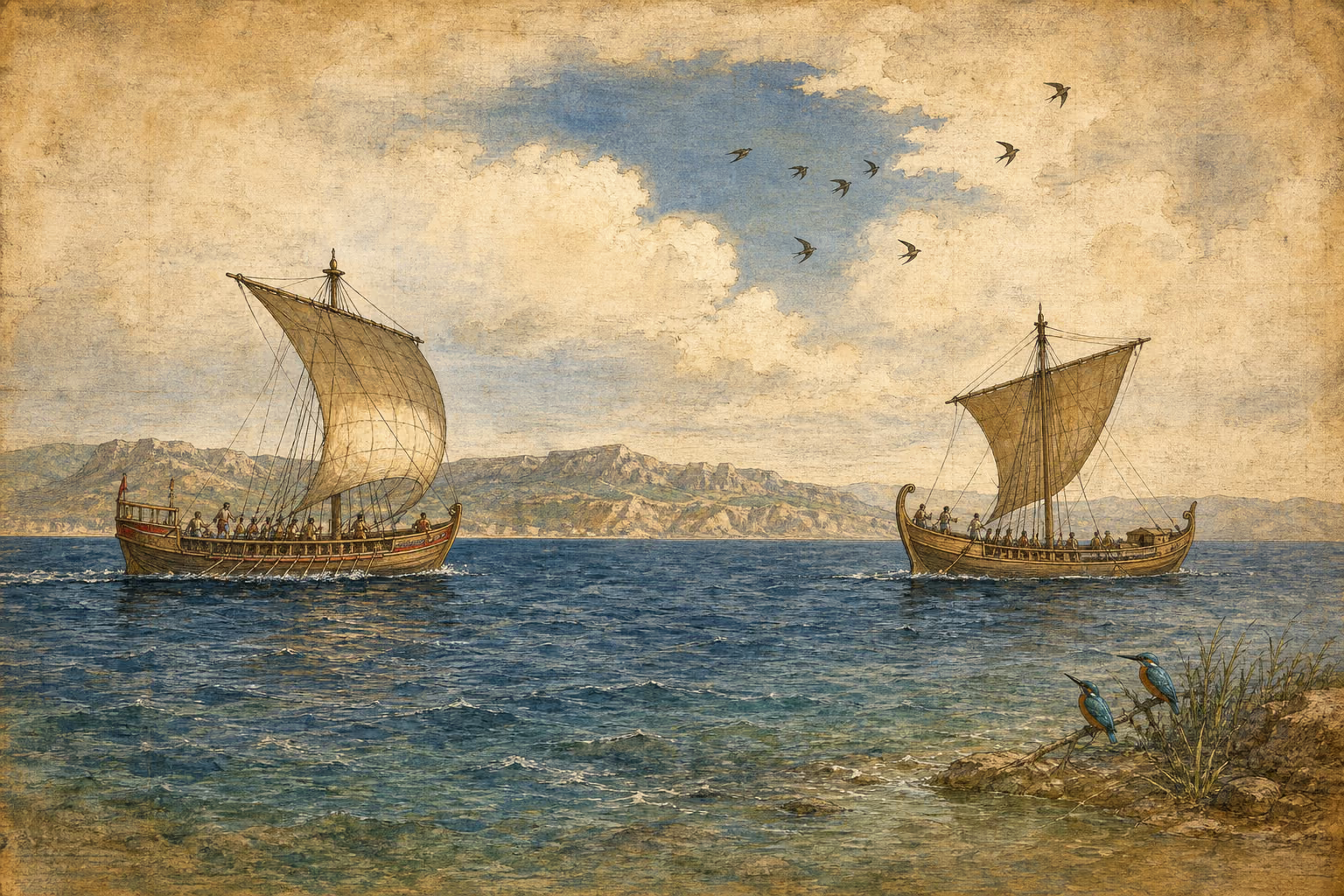
The spring opens the seas for the navigators. In the beginning of this season the west winds soften, as it were, the winter sky, the sun having now gained the 25th degree of Aquarius; this is on the sixth day before the Ides of February. This agrees, for the most part, with all the remarks that I shall subsequently make, only anticipating the period by one day in the intercalary year, and again, preserving the same order in the succeeding lustrum. After the eighth day before the Calends of March, Favonius is called by some Chelidonias, from the swallows making their appearance. The wind, which blows for the space of nine days, from the seventy-first day after the winter solstice, is sometimes called Ornithias, from the arrival of the birds. In the contrary direction to Favonius is the wind which we name Subsolanus, and this is connected with the rising of the Vergiliæ, in the 25th degree of Taurus, six days before the Ides of May, which is the time when south winds prevail: these are opposite to Septemtrio. The dog-star rises in the hottest time of the summer, when the sun is entering the first degree of Leo; this is fifteen days before the Calends of August. The north winds, which are called Prodromi, precede its rising by about eight days. But in two days after its rising, the same north winds, which are named Etesiæ, blow more constantly during this period; the vapour from the sun, being increased twofold by the heat of this star, is supposed to render these winds more mild; nor are there any which are more regular. After these the south winds become more frequent, until the appearance of Arcturus, which rises eleven days before the autumnal equinox. At this time Corus sets in; Corus is an autumnal wind, and is in the opposite direction to Vulturnus. After this, and generally for forty-four days after the equinox, at the setting of the Vergiliæ, the winter commences, which usually happens on the third of the Ides of November. This is the period of the winter north wind, which is very unlike the summer north wind, and which is in the opposite direction to Africus. For seven days before the winter solstice, and for the same length of time after it, the sea becomes calm, in order that the king-fishers may rear their young; from this circumstance they have obtained the name of the halcyon days; the rest of the season is winterly. Yet the severity of the storms does not entirely close up the sea. In former times, pirates were compelled, by the fear of death, to rush into death, and to brave the winter ocean; now we are driven to it by avarice.
Those are the coldest winds which are said to blow from the seven stars, and Corus, which is contiguous to them; these also restrain the others and dispel the clouds. The moist winds are Africus, and, still more, the Auster of Italy. It is said that, in Pontus, Cæcias attracts the clouds. The dry winds are Corus and Vulturnus, especially when they are about to cease blowing. The winds that bring snow are Aquilo and Septemtrio; Septemtrio brings hail, and so does Corus; Auster is sultry, Vulturnus and Zephyrus are warm. These winds are more dry than Subsolanus, and generally those which blow from the north and west are more dry than those which blow from the south and east. Aquilo is the most healthy of them all; Auster is unhealthy, and more so when dry; it is colder, perhaps because it is moist. Animals are supposed to have less appetite for food when this wind is blowing. The Etesiæ generally cease during the night, and spring up at the third hour of the day. In Spain and in Asia these winds have an easterly direction, in Pontus a northerly, and in other places a southerly direction. They blow also after the winter solstice, when they are called Ornithiæ, but they are more gentle and continue only for a few days. There are two winds which change their nature with their situation; in Africa Auster is attended with a clear sky, while Aquilo collects the clouds. Almost all winds blow in their turn, so that when one ceases its opposite springs up. When winds which are contiguous succeed each other, they go from left to right, in the direction of the sun. The fourth day of the moon generally determines their direction for the whole of the monthly period. We are able to sail in opposite directions by means of the same wind, if we have the sails properly set; hence it frequently happens that, in the night, vessels going in different directions run against each other. Auster produces higher waves than Aquilo, because the former blows, as it were, from the bottom of the sea, while the latter blows on the surface; it is therefore after south winds that the most mischievous earthquakes have occurred. Auster is more violent during the night, Aquilo during the day; winds from the east continue longer than from the west. The north winds generally cease blowing on the odd days, and we observe the prevalence of the odd numbers in many other parts of nature; hence it is that the odd numbers are generally looked upon as males. The sun sometimes increases and sometimes restrains winds; when rising and setting it increases them; while, when on the meridian, it restrains them during the summer. They are, therefore, generally lulled during the middle of the day and of the night, because they are abated either by excessive cold or heat; winds are also lulled by showers. We generally expect them to come from that quarter where the clouds open and allow the clear sky to be seen. Eudoxus supposes that the same succession of changes occurs in them after a period of four years, if we observe their minute revolutions; and this applies not only to winds, but to whatever concerns the state of the weather. He begins his lustrum at the rising of the dog-star, in the intercalary year. So far concerning winds in general.