LIBER II · CAPUT 54
GENERAL LAWS OF LIGHTNING
Latine · Mayhoff 1906
Fulgetrum prius cerni quam tonitrua audiri, cum simul fiant, certum est, nec mirum, quoniam lux sonitu velocior, ictum autem et sonitum congruere ita modulante natura, sed sonitum profecti esse fulminis, non inlati, etiamnum spiritum ociorem fulmine, ideo quati prius omne et adflari quam percuti, nec quemquam tangi qui prior viderit fulmen aut tonitrua audierit. laeva prospera existimantur, quoniam laeva parte mundi ortus est. nec tam adventus spectatur quam reditus, sive ab ictu resilit ignis sive opere confecto aut igne consumpto spiritus remeat. in sedecim partes caelum in eo spectu divisere Tusci. prima est a septemtrionibus ad aequinoctialem exortum, secunda ad meridiem, tertia ad aequinoctialem occasum, quarta obtinet quod est reliquum ab occasu ad septemtriones. has iterum in quaternas divisere partes, ex quibus octo ab exortu sinistras, totidem e contrario appellavere dextras. ex iis maxime dirae quae septemtriones ab occasu attingunt. itaque plurimum refert unde venerint fulmina et quo concesserint. optimum est in exortivas redire partes. ideo cum a prima caeli parte venerint et in eandem concesserint, summa felicitas portendetur, quale Sullae dictatori ostentum datum accepimus. cetera ad ipsius mundi portionem minus prospera aut dira. quaedam fulgura enuntiare non putant fas nec audire, praeterquam si hospiti indicentur ant parenti. magna huius observationis vanitas tacta Iunonis aede Romae deprehensa est Scauro consule, qui mox princeps fuit. noctu magis quam interdiu sine tonitribus fulgurat.
Vnum animal, hominem, non semper exstinguit, cetera ilico, hunc videlicet natura tribuente honorem, cum tot beluae viribus praestent. omnia contrarias incubant partes. homo, nisi convertatur in percussas, non respirat. superne icti considunt. vigilans ictus coniventibus oculis, dormiens patentibus reperitur. hominem ita exanimatum cremari fas non est, condi terra religio tradidit. nullum animal nisi exanimatum fulmine accenditur. vulnera fulminatorum frigidiora sunt reliquo corpore.
English · Bostock & Riley 1855–57
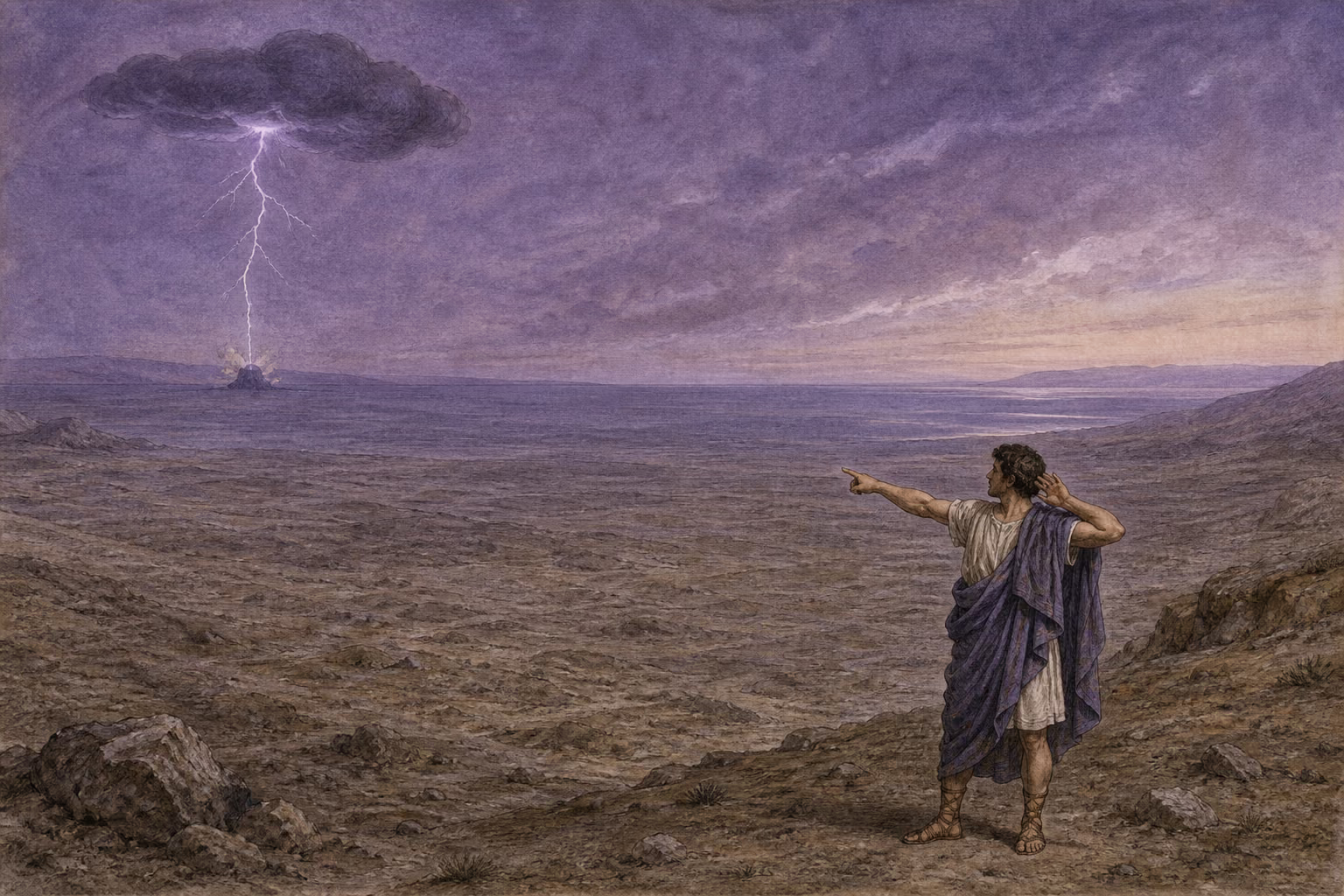
It is certain that the lightning is seen before the thunder is heard, although they both take place at the same time. Nor is this wonderful, since light has a greater velocity than sound. Nature so regulates it, that the stroke and the sound coincide; the sound is, however, produced by the discharge of the thunder, not by its stroke. But the air is impelled quicker than the lightning, on which account it is that everything is shaken and blasted before it is struck, and that a person is never injured when he has seen the lightning and heard the thunder. Thunder on the left hand is supposed to be lucky, because the east is on the left side of the heavens. We do not regard so much the mode in which it comes to us, as that in which it leaves us, whether the fire rebounds after the stroke, or whether the current of air returns when the operation is concluded and the fire is consumed. In relation to this object the Etrurians have divided the heavens into sixteen parts. The first great division is from north to east; the second to the south; the third to the west, and the fourth occupies what remains from west to north. Each of these has been subdivided into four parts, of which the eight on the east have been called the left, and those on the west the right divisions. Those which extend from the west to the north have been considered the most unpropitious. It becomes therefore very important to ascertain from what quarter the thunder proceeds, and in what direction it falls. It is considered a very favourable omen when it returns into the eastern divisions. But it prognosticates the greatest felicity when the thunder proceeds from the first-mentioned part of the heavens and falls back into it; it was an omen of this kind which, as we have heard, was given to Sylla, the Dictator. The remaining quarters of the heavens are less propitious, and also less to be dreaded. There are some kinds of thunder which it is not thought right to speak of, or even to listen to, unless when they have been disclosed to the master of a family or to a parent. But the futility of this observation was detected when the temple of Juno was struck at Rome, during the consulship of Scaurus, he who was afterwards the Prince of the Senate.
It lightens without thunder more frequently in the night than in the day. Man is the only animal that is not always killed by it, all other animals being killed instantly, nature having granted to him this mark of distinction, while so many other animals excel him in strength. All animals fall down on the opposite side to that which has been struck; man, unless he be thrown down on the parts that are struck, does not expire. Those who are struck directly from above sink down immediately. When a man is struck while he is awake, he is found with his eyes closed; when asleep, with them open. It is not considered proper that a man killed in this way should be burnt on the funeral pile; our religion enjoins us to bury the body in the earth. No animal is consumed by lightning unless after having been previously killed. The parts of the animal that have been wounded by lightning are colder than the rest of the body.