LIBER II · CAPUT 56
SHOWERS OF MILK, BLOOD, FLESH, IRON, WOOL, AND BAKED TILES
Latine · Mayhoff 1906
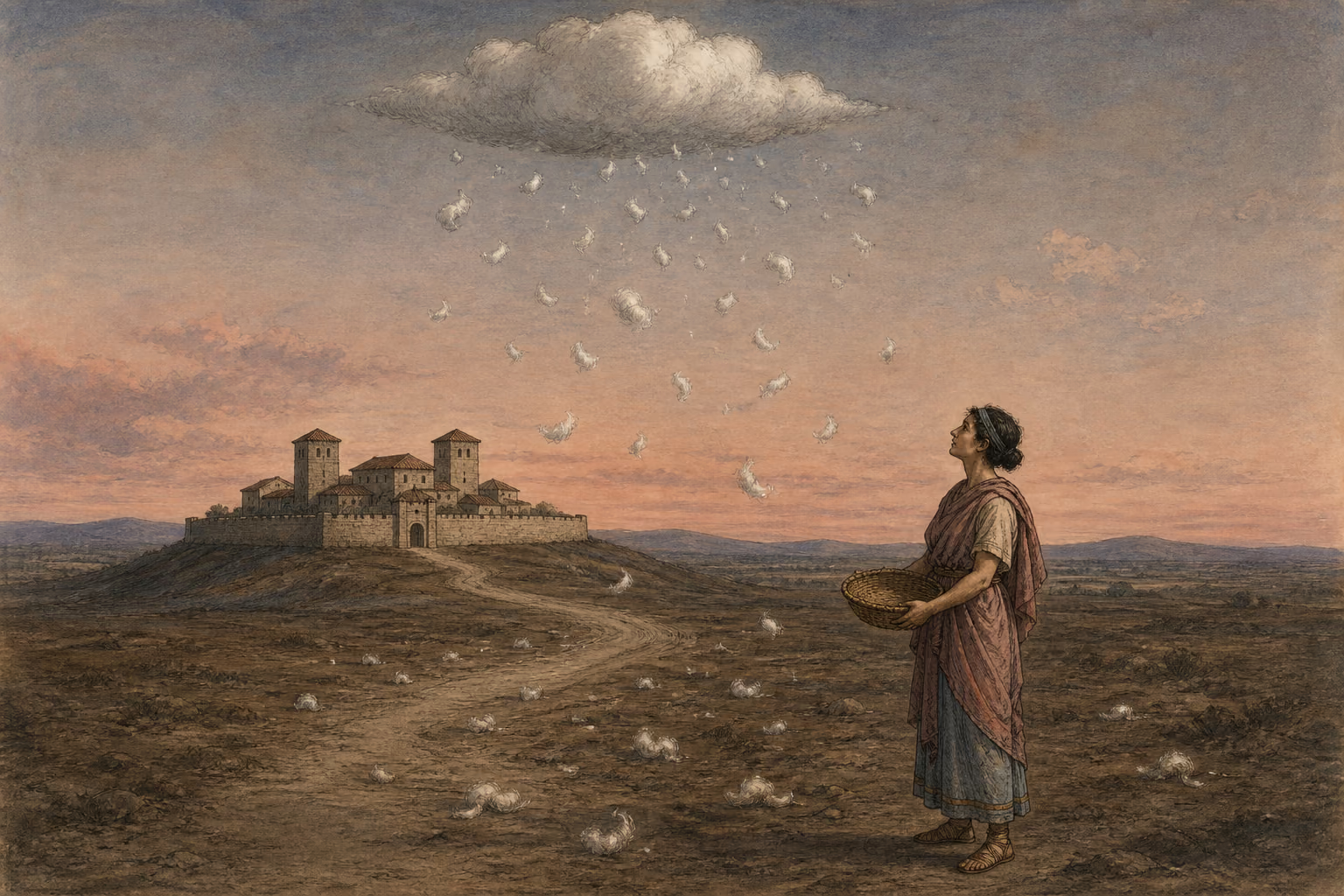
Praeter haec inferiore caelo relatum in monumenta est lacte et sanguine pluisse M'. Acilio C. Porcio cos. et saepe alias, sicut carne P. Volumnio Servio Sulpicio cos., exque ea non perputruisse quod non diripuissent aves, item ferro in Lucanis anno ante quam M. Crassus a Parthis interemptus est omnesque cum eo Lucani milites, quorum magnus numerus in exercitu erat. effigies quo pluit ferri spongiarum similis fuit. haruspices praemonuerunt superna volnera. L. autem Paulo C. Marcello cos. lana pluit circa castellum Carissanum, iuxta quod post annum T. Annius Milo occisus est. eodem causam dicente lateribus coctis pluisse in acta eius anni relatum est.
English · Bostock & Riley 1855–57
Besides these, we learn from certain monuments, that from the lower part of the atmosphere it rained milk and blood, in the consulship of M’ Acilius and C. Porcius, and frequently at other times. This was the case with respect to flesh, in the consulship of P. Volumnius and Servius Sulpicius, and it is said, that what was not devoured by the birds did not become putrid. It also rained iron among the Lucanians, the year before Crassus was slain by the Parthians, as well as all the Lucanian soldiers, of whom there was a great number in this army. The substance which fell had very much the appearance of sponge; the augurs warned the people against wounds that might come from above. In the consulship of L. Paulus and C. Marcellus it rained wool, round the castle of Carissanum, near which place, a year after, T. Annius Milo was killed. It is recorded, among the transactions of that year, that when he was pleading his own cause, there was a shower of baked tiles.