LIBER II · CAPUT 75
WHERE THE DAYS ARE THE LONGEST AND WHERE THE SHORTEST
Latine · Mayhoff 1906
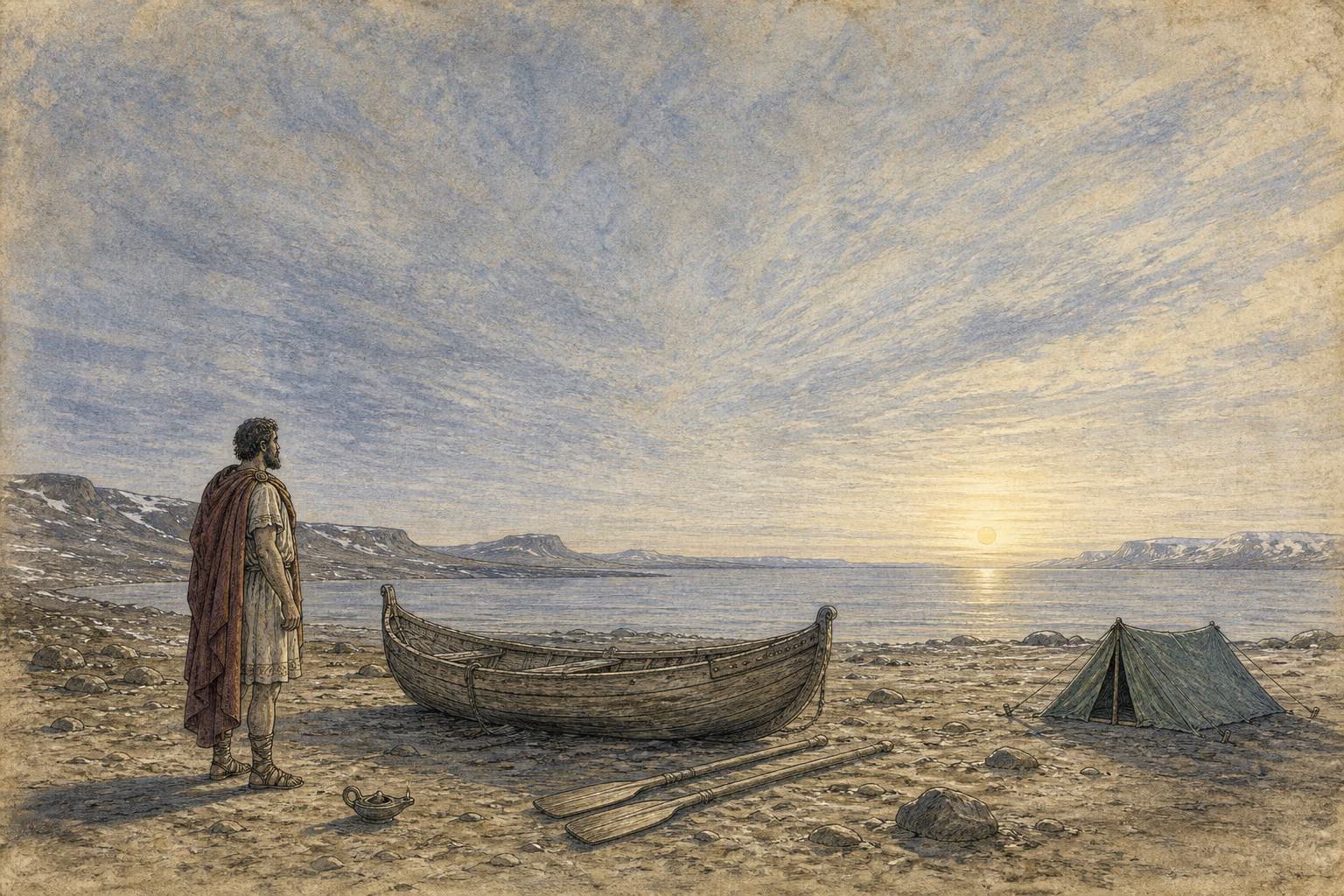
sic fit, ut vario lucis incremento in Meroë longissimus dies XII horas aequinoctiales et octo partes unius horae colligat, Alexandriae vero XIIII horas, in Italia XV, in Britannia XVII, ubi aestate lucidae noctes haut dubie se promittunt, id quod cogit ratio credi, solstiti diebus accedente sole propius verticem mundi angusto lucis ambitu subiecta terrae continuos dies habere senis mensibus noctesque e diverso ad brumam remoto. quod fieri in insula Thyle Pytheas Massiliensis scribit, sex dierum navigatione in septentrionem a Britannia distante, quidam vero et in Mona, quae distat a Camaloduno Britanniae oppido circiter CC, adfirmant.
English · Bostock & Riley 1855–57
Hence it follows, that in consequence of the daylight increasing in various degrees, in Meroë the longest day consists of twelve æquinoctial hours and eight parts of an hour, at Alexandria of fourteen hours, in Italy of fifteen, in Britain of seventeen; where the degree of light, which exists in the night, very clearly proves, what the reason of the thing also obliges us to believe, that, during the solstitial period, as the sun approaches to the pole of the world, and his orbit is contracted, the parts of the earth that lie below him have a day of six months long, and a night of equal length when he is removed to the south pole. Pytheas, of Marseilles, informs us, that this is the case in the island of Thule, which is six days’ sail from the north of Britain. Some persons also affirm that this is the case in Mona, which is about 200 miles from Camelodunum, a town of Britain.