LIBER II · CAPUT 85
IN WHAT PLACES THE SEA HAS RECEDED
Latine · Mayhoff 1906
Eadem nascentium causa terrarum est, cum idem ille spiritus adtollendo potens solo non valuit erumpere. nascuntur enim, nec fluminum tantum invectu, sicut Echinades insulae ab Acheloo amne congestae maiorque pars Aegypti a Nilo, in quam a Pharo insula noctis et diei cursum fuisse Homero credimus, nec recessu maris, sicuti olim Cerceis. quod accidisse et in Ambraciae portu decem milium passuum intervallo et Atheniensium quinque milium ad Piraeeum memoratur. et Ephesius quondam aedem Dianae adluebat. Herodoto quidem si credimus, mare fuit supra Memphim usque ad Aethiopum montes itemque a planis Arabiae, mare circa Ilium et tota Teuthranie quaque campos intulerit Maeander.
English · Bostock & Riley 1855–57
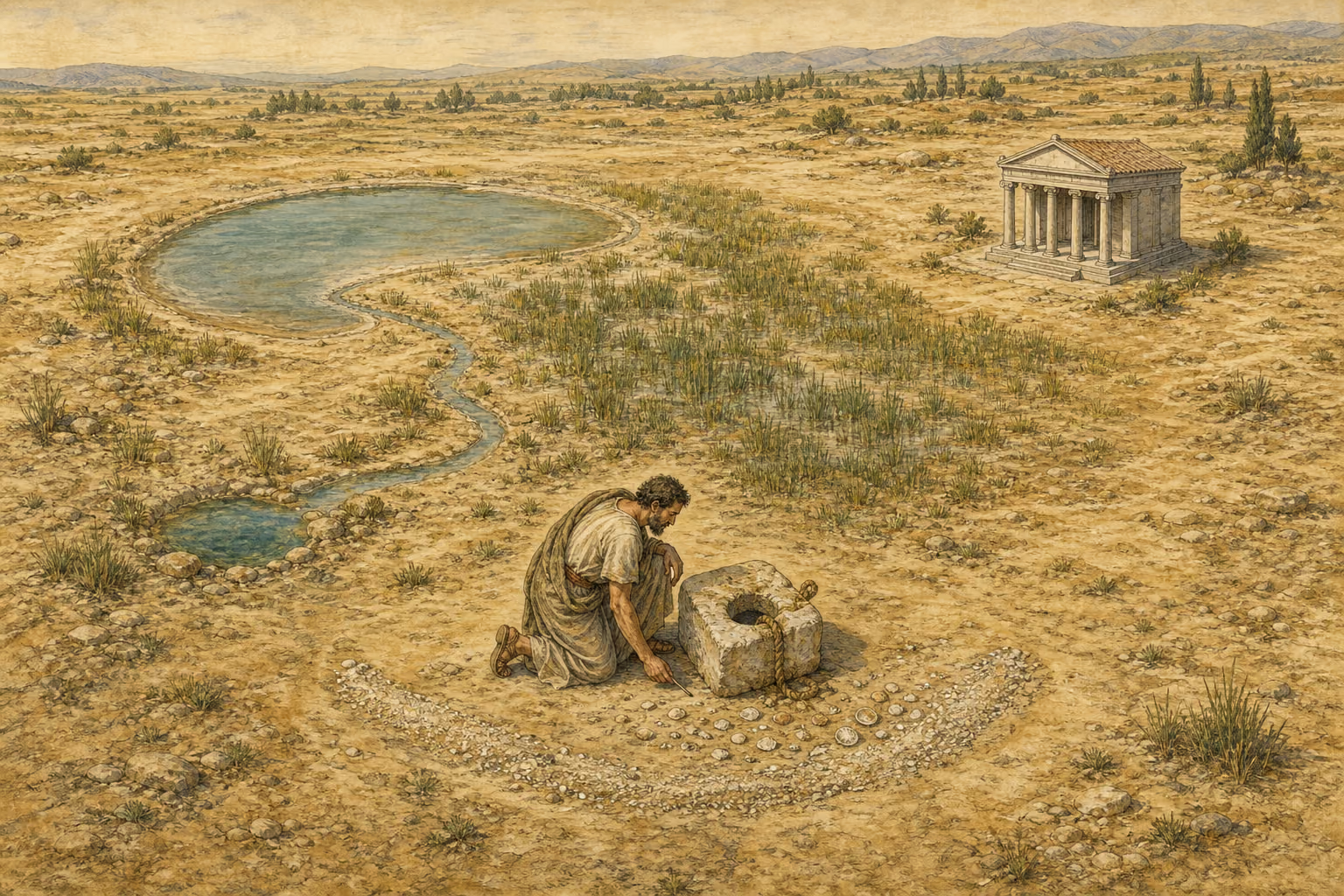
The same cause produces an increase of the land; the vapour, when it cannot burst out forcibly lifting up the surface. For the land is not merely produced by what is brought down the rivers, as the islands called Echinades are formed by the river Achelous, and the greater part of Egypt by the Nile, where, according to Homer, it was a day and a night’s journey from the main land to the island of Pharos; but, in some cases, by the receding of the sea, as, according to the same author, was the case with the Circæan isles. The same thing also happened in the harbour of Ambracia, for a space of 10,000 paces, and was also said to have taken place for 5000 at the Piræus of Athens, and likewise at Ephesus, where formerly the sea washed the walls of the temple of Diana. Indeed, if we may believe Herodotus, the sea came beyond Memphis, as far as the mountains of Æthiopia, and also from the plains of Arabia. The sea also surrounded Ilium and the whole of Teuthrania, and covered the plain through which the Mæander flows.