LIBER II · CAPUT 93
OF VENTS IN THE EARTH
Latine · Mayhoff 1906
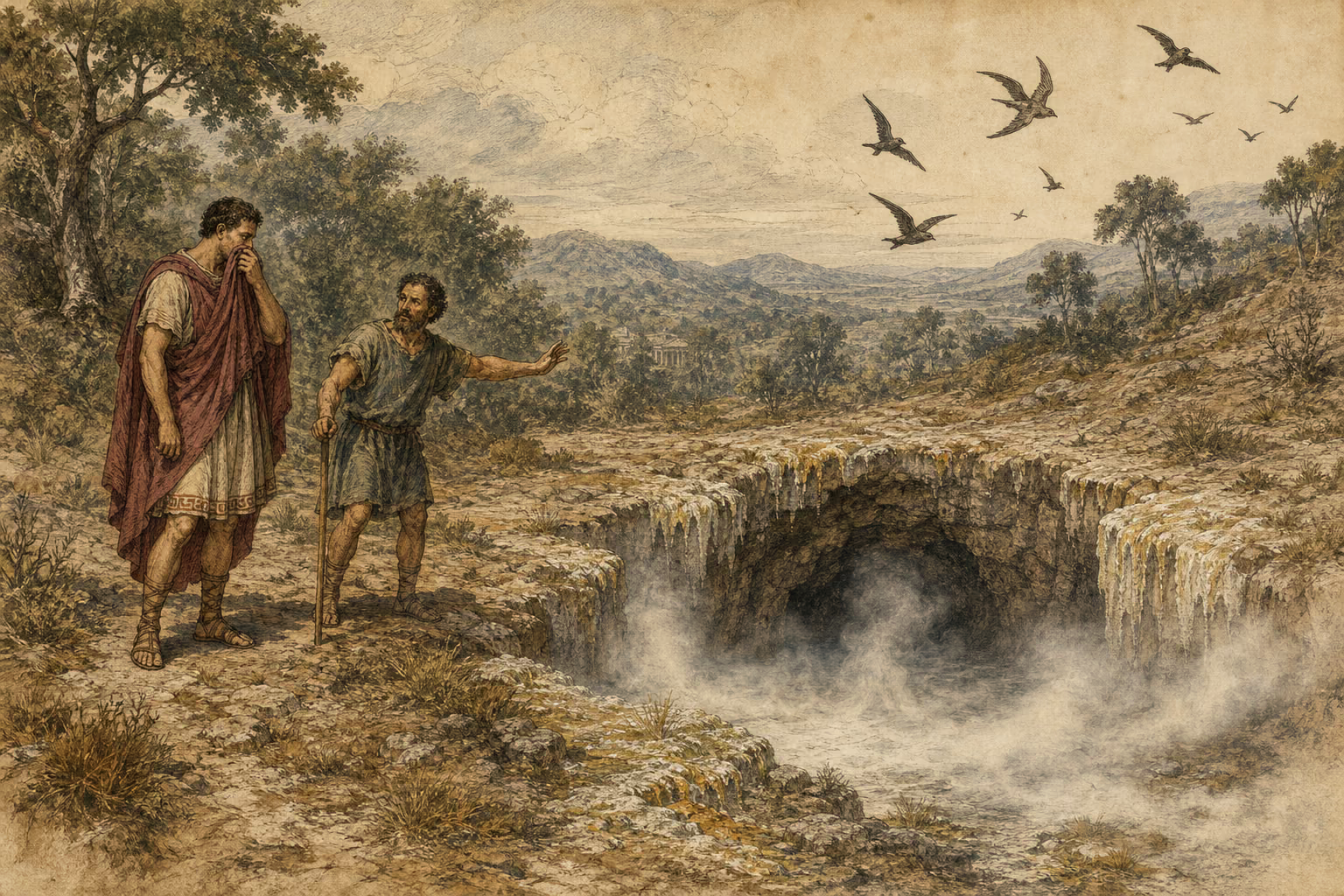
Motus enim terrae sileantur et quicquid est, ubi saltem busta urbium exstant, simul ut terrae miracula potius dicamus quam scelera naturae. et, Hercules, non caelestia enarratu difficiliora fuerint. metallorum opulentia tam varia, tam dives, tam fecunda, tot saeculis suboriens, cum tantum cotidie orbe toto populentur ignes, ruinae, naufragia, bella, fraudes, tantum vero luxuria et tot mortales conterant; gemmarum pictura tam multiplex, lapidum tam discolores maculae interque eos candor alicuius praeter lucem omnia excludens; medicatorum fontium vis; ignium tot locis emicantium perpetua tot saeculis incendia; spiritus letales aliubi aut scrobibus emissi aut ipso loci situ mortiferi, aliubi volucribus tantum, ut Soracte vicino urbi tractu, aliubi praeter hominem ceteris animantibus, nonnumquam et homini, ut in Sinuessano agro et Puteolano! spiracula vocant, alii Charonea, scrobes mortiferum spiritum exhalantes, item in Hirpinis Ampsancti ad Mephitis aedem locum, quem qui intravere moriuntur; simili modo Hierapoli in Asia, Matris tantum Magnae sacerdoti innoxium. aliubi fatidici specus, quorum exhalatione temulenti futura praecinant, ut Delphis nobilissimo oraculo. quibus in rebus quid possit aliud causae adferre mortalium quispiam quam diffusae per omne naturae subinde aliter atque aliter numen erumpens?
English · Bostock & Riley 1855–57
But let us say no more of earthquakes and of whatever may be regarded as the sepulchres of cities; let us rather speak of the wonders of the earth than of the crimes of nature. But, by Hercules! the history of the heavens themselves would not be more difficult to relate:—the abundance of metals, so various, so rich, so prolific, rising up during so many ages; when, throughout all the world, so much is, every day, destroyed by fire, by waste, by shipwreck, by wars, and by frauds; and while so much is consumed by luxury and by such a number of people:—the figures on gems, so multiplied in their forms; the variously-coloured spots on certain stones, and the whiteness of others, excluding everything except light:—the virtues of medicinal springs, and the perpetual fires bursting out in so many places, for so many ages:—the exhalation of deadly vapours, either emitted from caverns, or from certain unhealthy districts; some of them fatal to birds alone, as at Soracte, a district near the city; others to all animals, except to man, while others are so to man also, as in the country of Sinuessa and Puteoli. They are generally called vents, and, by some persons, Charon’s sewers, from their exhaling a deadly vapour. Also at Amsanctum, in the country of the Hirpini, at the temple of Mephitis, there is a place which kills all those who enter it. And the same takes place at Hierapolis in Asia, where no one can enter with safety, except the priest of the great Mother of the Gods. In other places there are prophetic caves, where those who are intoxicated with the vapour which rises from them predict future events, as at the most noble of all oracles, Delphi. In which cases, what mortal is there who can assign any other cause, than the divine power of nature, which is everywhere diffused, and thus bursts forth in various places?