LIBER XXI · CAPUT 30
EIGHT REMEDIES DERIVED FROM THE PARTHENIUM, LEUCANTHES, OR AMARACUS
Latine · Mayhoff 1906
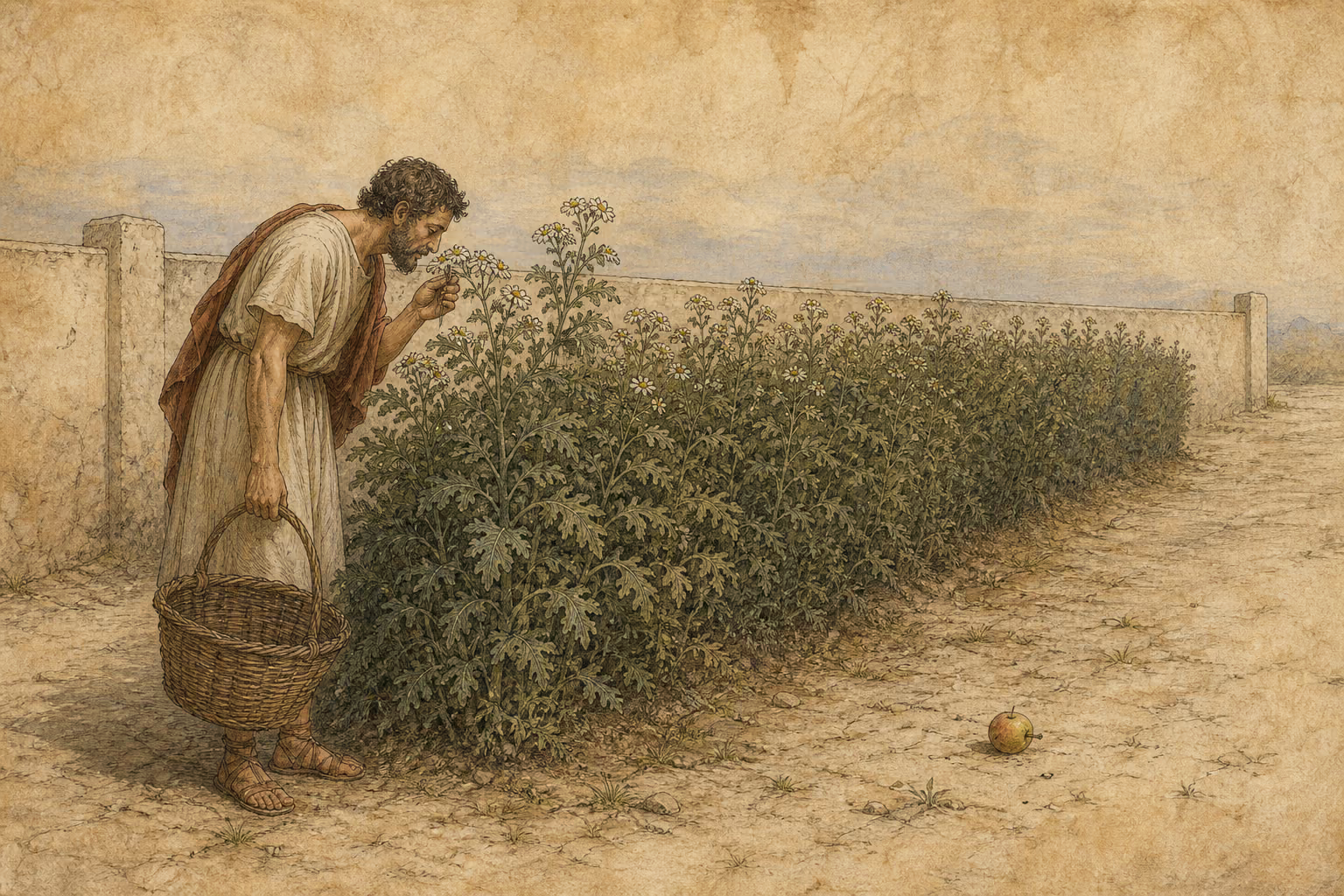
Parthenium alii leucanthes, alii amaracum vocant, Celsus apud nos perdicium et muralem. nascitur in hortorum saepibus, flore albo, odore mali, sapore amaro. ad insidendum decoctae in duritia vulvarum et inflammationibus...., sicca cum melle et aceto inposita detrahit bilem atram; ob hoc contra vertigines utilis et calculosis. inlinitur et sacro igni, item strumis cum axungia inveterata. Magi contra tertianas sinistra manu evelli eam iubent dicique, cuius causa vellatur, nec respicere, dein eius folium aegri linguae subicere, ut mox in cyatho aquae devoretur.
English · Bostock & Riley 1855–57
The parthenium is by some persons called the “leucanthes,” and by others the “amaracus.” Celsus, among the Latin writers, gives it the names of “perdicium” and “muralis.” It grows in the hedge-rows of gardens, and has the smell of an apple, with a bitter taste. With the decoction of it, fomentations are made for maladies of the fundament, and for inflammations and indurations of the uterus: dried and applied with honey and vinegar, it carries off black bile, for which reason it is considered good for vertigo and calculus in the bladder. It is employed as a liniment, also, for erysipelas, and, mixed with stale axle-grease, for scrofulous sores. For tertian fevers the Magi recommend that it should be taken up with the left hand, it being mentioned at the time for whom it is gathered, care being also taken not to look back while doing so: a leaf of it should be laid beneath the patient’s tongue, after which it must be eaten in a cyathus of water.