LIBER XXI · CAPUT 32
SIX MEDICINES DERIVED FROM THE CORCHORUS
Latine · Mayhoff 1906
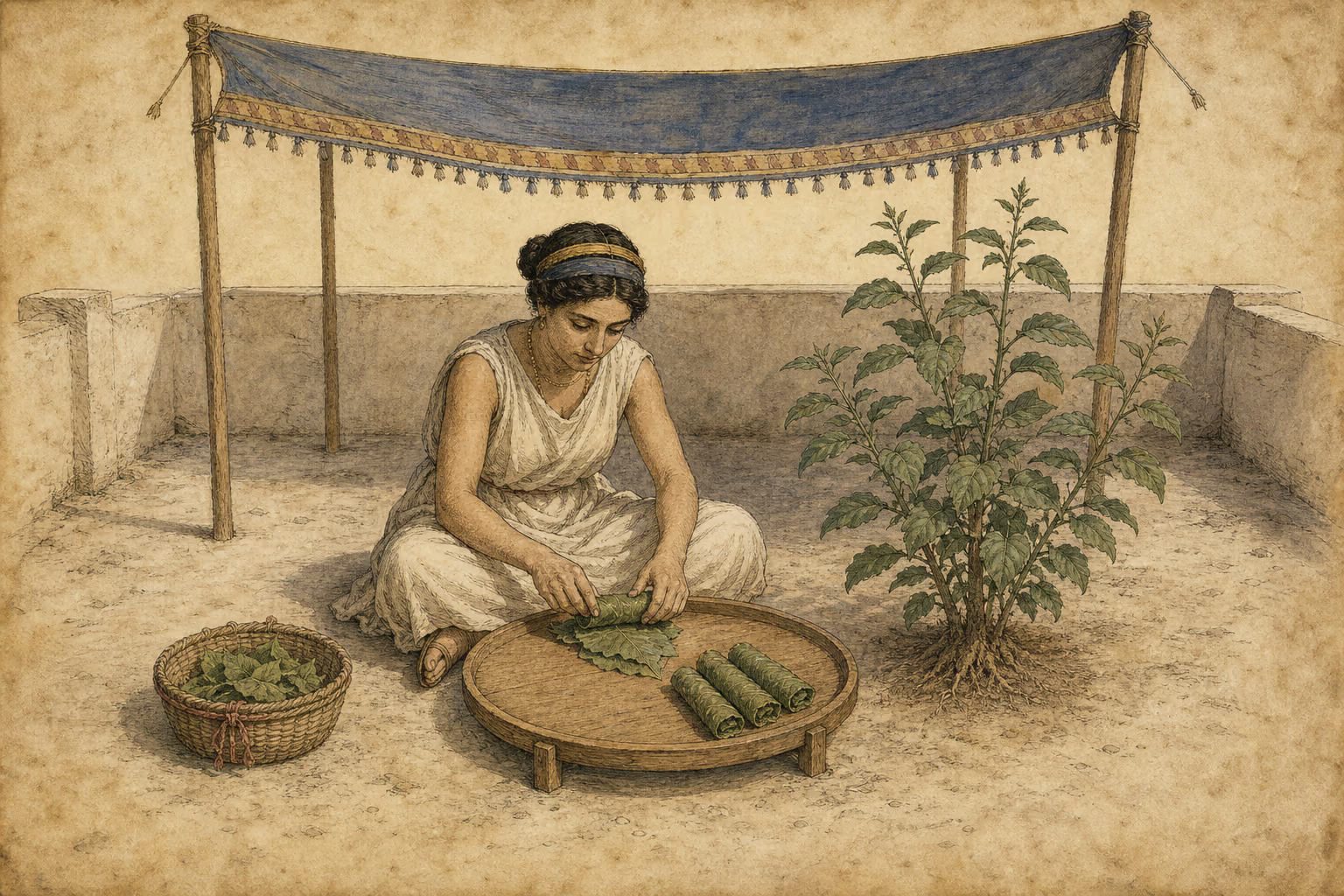
Corchorum Alexandrini cibi herba est convolutis foliis ad similitudinem mori, praecordiis, ut ferunt, utilis alopeciisque et lentigini. boum quoque scabiem celerrime sanari ea invenio, apud Nicandrum quidem et serpentium morsus, antequam floreat.
Nec de cneco sive atractylide verbosius dici par esset, Aegyptia herba, ni magnum contra venenata animalia praeberet auxilium, item adversus fungos. constat a scorpione percussos, quamdiu teneant eam herbam, non sentire cruciatum.
English · Bostock & Riley 1855–57
The corchorus is a plant which is used at Alexandria as an article of food: the leaves of it are rolled up, one upon the other, like those of the mulberry, and it is wholesome, it is said, for the viscera, and in cases of alopecy, being good also for the removal of freckles. I find it stated also, that it cures the scab in cattle very rapidly: and, according to Nicander, it is a remedy for the stings of serpents, if gathered before it blossoms.
There would be no necessity to speak at any length of the cnecos or atractylis, an Egyptian plant, were it not for the fact that it offers a most efficacious remedy for the stings of venomous animals, as also in cases of poisoning by fungi. It is a well-known fact, that persons, when stung by the scorpion, are not sensible of any painful effects so long as they hold this plant in their hand.