LIBER XXII · CAPUT 17
THE HELXINE: TWELVE REMEDIES
Latine · Mayhoff 1906
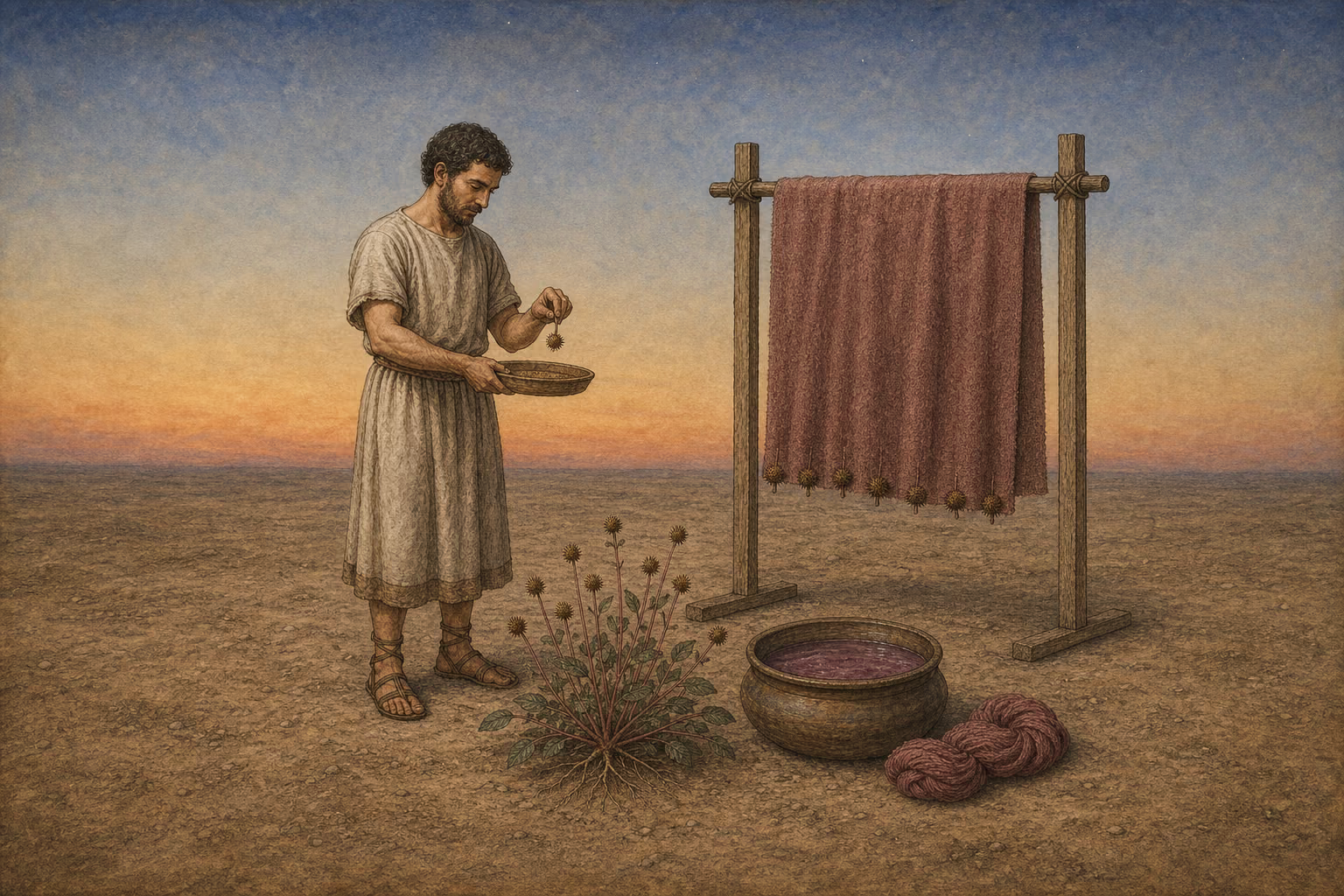
Helxinen aliqui perdicium vocant, quoniam perdices ea praecipue vescantur, alii sideritem, nonnulli parthenium. folia habet mixtae similitudinis plantagini et marruvio, cauliculos densos, leviter rubentes, semina in capitibus lappaceis adhaerescentia vestibus, unde et helxinen dictam volunt. sed nos qualis vera esset helxine diximus priore libro. haec autem inficit lanas, sanat ignes sacros et tumores collectionesque omnes et adusta, panos. sucus eius cum psimithio ignes sacros et guttura incipientia turgescere, item veterem tussim cyatho hausto et omnia vitia umida, sicut tonsillas et aures cum rosaceo. inponitur et podagris cum caprino sebo ceraque Cypria.
Perdicium sive parthenium sive etiam sideritis alia est; ab nostris herba urceolaris vocatur, a aliis astercum; folio similis ocimo, nigrior tantum, nascens in tegulis parietinisque. medetur cum mica salis trita iisdem omnibus, quibus lamium, et eodem modo, item vomicae calfacto suco pota, sed contra vulsa, rupta lapsusque et praecipitia, ut vehiculorum eversiones, singularis. verna carus Pericli Atheniensium principi, cum is in arce templum aedificaret repsissetque super altitudinem fastigii et inde cecidisset, hac herba dicitur sanatus, monstrata Pericli somnio a Minerva, quare parthenium vocari coepta est adsignaturque ei deae. hic est vernula, cuius effigies ex aere fusa est et nobilis ille splanchnoptes.
English · Bostock & Riley 1855–57
The helxine is called by some, “perdicium,” from the circumstance of its forming the principal food of partridges. Other persons, however, give it the name of “sideritis,” and to some it is known as “parthenium.” It has leaves, the shape of which is a mixture of those of the plantago and the marrubium; the stalks are slight and closely packed, and are of a light red colour. The seeds, enclosed in heads resembling those of the lappa, adhere to the clothes, a circumstance, it is said, to which it owes its name of “helxine.” We have already stated in the preceding Book what are the characteristics of the plant properly so called.
The one of which we are now speaking is used for dyeing wool, and is employed for the cure of erysipelas, tumours, all kinds of abscesses, and burns. The juice of it, taken in doses of one cyathus with white lead, is a cure for inflamed tumours, incipient swellings of the throat, and inveterate coughs. It is good, too, for all maladies of the humid parts of the body, the tonsillary glands, for instance; and, in combination with rose oil, it is useful for varicose veins. It is employed topically for the gout, with goat suet and Cyprian wax.
The perdicium or parthenium —for the sideritis is, in reality, a different plant—is known to the people of our country as the herb urceolaris, and to some persons as the “astercum.” The leaf of it is similar to that of ocimum, but darker, and it is found growing on tiled roofs and walls. Beaten up with a sprinkling of salt, it has all the medicinal properties of the lamium, and is used in a similar manner. The juice of it, taken warm, is good, too, for suppurated abscesses; but for the cure of convulsions, ruptures, bruises, and the effects of falls from a height, or of the overturning of vehicles, it is possessed of singular virtues.
A slave, who was held in high esteem by Pericles, the ruler of the Athenians, being engaged upon the buildings of a temple in the citadel, while creeping along the top of the roof, happened to fall; from the effects of which he was relieved, it is said, by this plant, the virtues whereof had been disclosed to Pericles by Minerva in a dream. Hence it is that it was first called “parthenium,” and was consecrated to that goddess. It is this slave of whom there is a famous statue in molten bronze, well known as the Splanchnoptes.