LIBER XXV · CAPUT 13
THE ANAGALLIS, OR CORCHORON; TWO VARIETIES OF IT: SIX REMEDIES
Latine · Mayhoff 1906
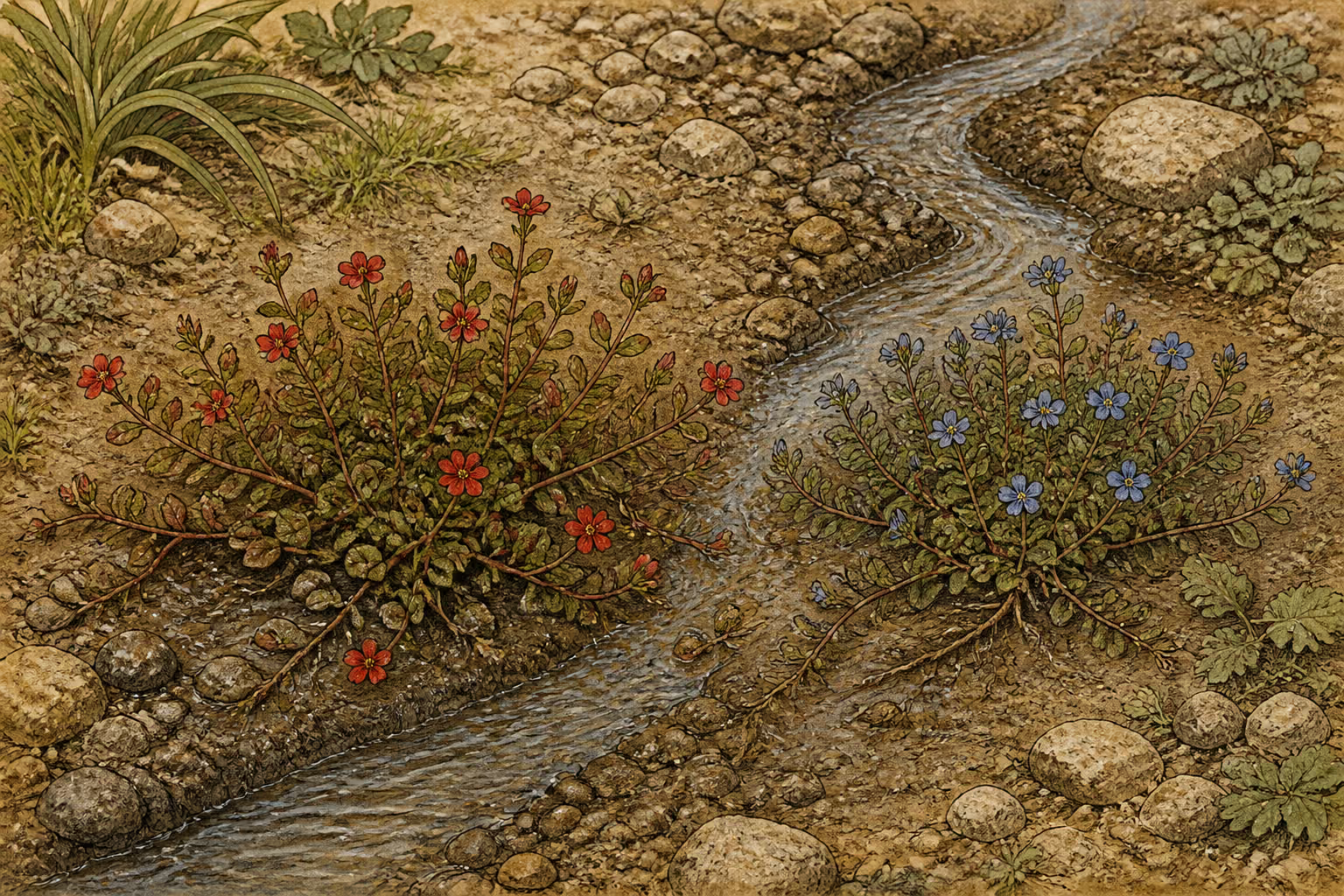
Anagallida aliqui acoron vocant. duo genera eius: mas flore phoeniceo, femina caeruleo, non altiores palmo, frutice tenero, foiis pusillis, rotundis, in terra iacentibus. nascuntur in hortis et aquosis. prior floret caerulea. utriusque sucus oculorum caliginem discutit cum melle et ex ictu cruorem et argema rubens, magis cum Attico melle inunctis. pupillas dilatat, et ideo hae inunguntur ante quibus paracentesis fit. iumentorum quoque oculis medentur. sucus caput purgat per nares infusus ita, ut deinde vino colluatur. bibitur et contra angues suci drachma in vino. mirum quod feminam pecora vitant aut si decepta similitudine —flore enim tantum distant— degustavere, statim eam. quae asyla appellatur, in remedi um quaerunt. a nostris felis oculus vocatur. praecipiunt aliqui effossuris ante solis ortumn, priusquam quicquam aliud loquantur, salutare eam, sublatam exprimere; ita praecipuas esse vires. de Euphorbeae suco satis dictum est. Iippitdini, si tumor erit, absinthium cum melle tritum, item cum... Vettonicae farina conveniet.
Aegilopas sanat herba eodem nomine, quae in hordeo nascitur, tritici folio, semine contrito cum farina permixta inpositaque vel suco. exprimitur he e caule foliisque praegnantibus dempta spica et in trimestri farina digeritur in pastillos.
Antiqui et mandragora utebantur, postea abdicatus est in hac curatione. epiphoris, quod certum est, medetur et oculorum dolori radix tusa cum rosaceo et vino. nam sucus multis oculorum medicamentis miscetur. mandragoran alii Circaeon vocant. duo eius genera: candidus qui et mas, niger qui femina existimatur, angustioribus quam lactucae foliis, hirsutis et caulibus, radicibus binis ternisve rufulis, intus albis, carnosis tenerisque, is paene cubitalibus. ferunt mala abellanarum nucum magnitudine et iniis semen ceu pirorum. hoc albo alii arsena, alii morion, alii hippophlomon vocant. huius folia alba, alterius foliis latiora, ut lapathi sativae. effossuri cavent contrarium ventum et III circulis ante gladio circumscribunt, postea fodiunt ad occasum spectantes. sucus fit et e malis et caule deciso cacumine et e radice punctis aperta aut decocta. utilis haec vel surculo; concisa quoque in orbiculos servatur in vino. sucus non ubique invenitur, sed, ubi potest, circa vindemias quaeritur. odor gravis ei, ut et radicis et mali, gravior ex albo. mala matura in umbra siccantur. sucus ex iis sole densatur, item radicis tusae vel in vino nigro ad tertias decoctae. folia servantur in muria efficacius; salsus rore tantum sucus pestis est; sic quoque noxiae vires gravedinem adferunt etiam olfactu. quamquam mala in aliquis terris manduntur, nimio tamen odore obmutescunt ignari, potu quidem largiore etiam moriuntur. vis somnifica pro viribus bibentium; media potio cyathi unius. bibitur et contra serpentes et ante sectiones punctionesque, ne sentiantur; ob haec satis est aliquis somnum odore quaesisse. bibitur et pro helleboro II obolis in mulso—efficacius helleborum —ad vomitiones et ad bilem nigram extrahendam.
Cicuta quoque venenum est, publica Atheniensium poena invisa, ad multa tamen usus non omittendi. semen habet noxium; caulis autem et viridis estur a plerisque et in patinis. levis hic et geniculatus ut calami, nigricans, altior saepe binis cubitis, in cacuminibus ramosus, folia coriandri teneriora, gravia odoratu, semen aneso crassius, radix concava, nullius usus. semini et foliis refrigeratoria vis; sic et necat: incipiunt algere ab extremitatibus corporis. remedio est, priusquam ad vitalia pereniat, vini natura excalfactoria. sed in vino pota inremediabilis existit. sucus exprimitur foliis floribusque, tum enim maxime tempestivus est; melior semine trito expressus et sole densatus in pastillos. necat sanguinem spissando—haec altera vis ei —; ideo sic necatorum maculae in corporibus apparent. ad dissolvenda medicamenta utuntur illo pro aqua. fit ex eo et ad refrigerandum stomachum malagma. praecipuus tamen est ad cohibendas epiphoras aestivas oculorumque dolores sedandos circumlitus; miscetur collyriis. et alias omnes rheumatismos cohibet. folia quoque tumorem omnem doloreinque et epiphoras sedant. Anaxilaus auctor est mammas a virginitate inlitas semper staturas. quod certum est, lac puerperarum mammis inposita extinguit veneremque testibus circa pubertatem inlita. remedia, in quibus bibenda censetur, non equidem praeceperim. vis maxima natae Susis Parthorum, mox Laconicae, Creticae, Asiaticae, in Graecia vero Megaricae, deinde Atticae.
Cremnos agrios gremias tollit oculorum inpositus, tumorem quoque polenta addita.
Nascitur vulgo molybdaena, id est plumbago, etiam in arvo, folio lapathi, crassa, hispida. hac commanducata si oculus subinde lingatur, plumbum, quod est genus vitii, ex oculo tollitur.
Capnos trunca, quam pedes gallinacios vocant, nascens in parietinis et saepibus, ramis tenuissimis sparsisque, flore purpureo, viridis suco caliginem discutiti; itaque in medicamenta oculorum additur.
Similis et nomine et effect, sed alia est capnos fruticosa, praetenera, foliis coriandri, cineracei coloris, flore purpureo. nascitur in hortis et segetibus hordeaciis. clarittem facit inunctis oculis delacrimationemque ceu fumus, unde nomen. eadem evolsas palpebras renasci prohibet.
Acoron iridis folia habet angustiora tantum et longiore pediculo, radices nigras minusque venosas, cetero et has similes iridis, gustu acres, odore non ingratas, ructu faciles. optumae Daspetiacae e Galatia, mox Creticae, sed plurimae in Colchide iuxta Phasin amnem et ubicumque in aquosis. recentibus virus maius quam vetustis, Creticae candidiores Ponticis. siccantur, ut iris, in umbra digitalibus frustis. nec non inveniuntur qui oxymyrsinae radicem acoron vocant, ideoque quidam hanc acorion vocare malunt. vis ei ad calfaciendum extenuandumque, efficax contra suffusiones et caligines oculorum, suco eiusdem poto contra serpentes.
Cotyledon parvula herba est, in cauliculo tenero, pusillo folio pingui, concavo ut coxendices. nascitur in maritimis petrosisque umidis, radice olivae modo rotunda. oculis medetur suco. est aliud genus eiusdem sordidis foliis, latioribus densioribusque circa radicem velut oculum cingentibus, asperrimi gustus, longiore caule, sed pergracili. usus ad eadem quae sativi aizoi.
Duo genera eius: maius in fictilibus vasculis seritur, quod aliqui bupihthalmon appellant, alii zoophthalmon, alii stergethron, quia amatoriis conveniat, alii hypo- geson, quoniam in subgrundiis fere nascitur; sunt qui ambrosiam potius vocant et qui amerimnon, Italia sedum magnum aut oculum aut digitillum. alterum minusculum, quod erithales vocant, alii trithales, quia ter floreat, alii erysithales, aliqui isoētes, Italia sedum, sed aeqne aizoum utrumque, quoniam vireat semper. maius et cubiti altitudinem excedit, crassitudine plus quam pollicari. folia in cacumine linguae similia, carnosa, pinguia, larga suco, latitudine pollicari, alia in terrain convexa, alia stantia ita, ut ambitu effigiem imitentur oculi. quod minus est, in muris parietinisque et tegulis nascitur, fruticosum a radice et foliosum usque ad cacumen, foliis angustis, mucronatis, sucosis, palmum alto caule. radix inutilis.
Huic similis est quam Graeci andrachnen agrian vocant, Italia inlecebram, pusillis latioribus foliis et breviore cacumine. nascitur in petris et colligitur cibi causa.
Omnium harum vis eadem, refrigerare et adstringere. medentur epiphoris folia inposita vel sucus inunctis, purgat enim ulcera oculorum expletque et ad cicatricem perducit palpebras deglutinat. eaedem capitis doloribus medentur suco vel folio temporibus inlitis, adversantur phalangiorum ictibus, aconito vero maius aizoum praecipue. a scorpionibus quoque habentem id feriri negant.
Medentur et aurium dolori, item sucus hyoscyami modicus, item Achilleae et centaurii minoris et plantaginis, peucedani cum rosaceo et meconio, acori sucus cum rosa —omnis autem strigili calefactus infunditur—, cotyledon etiam purulentis cum medulla cervina calefacta, ebuli radicis tritae sucus linteo colatus, mox in sole densatus et, cum opus sit, rosaceo dilutus et calefactus.
Parotidas verbenaca, item plantago sanat, item sideritis cum axungia vetere.
Narium ozaenas emendat aristolochia cum cypero.
Dentibus remedio sunt panacis radix commanducata, praecipue Chironiae, item sucus collutis, radix hyoscyami ex aceto manducata, item Polemoniae. commanducatur et plantaginis radix, aut colluuntur in aceto decoctae suco; et folia esse utile, vel si sanguine gingivae putrescant; [vel ] semen eiusdem apostemata et collectiones gingivarum sanat. et aristolochia gingivas dentesque confirmat, verbenaca cum radice commanducata et decoctae ex vino aut aceto sucus colltus, item quinquefolii radicis decoctae ad tertias in vino aut aceto. prius quam decoquatur, aqua marina aut salsa lavatur; decoctum diu tenendum in ore. quidam cinere quinqlefolii fricare malunt. et verbasci radix decoquitur in vino ad colluendos dentes, et hysopo colluuntur et peucedani suco cum meconio vel radicum anagallidis, magis feminae, suco ab altera nare, quam doleat, infuso.
Erigeron a nostris vocatur senecio. hanc si ferro circumscriptam effodiat aliquis tangatque ea dentem et alternis ter despuat ac reponat in eundem locum ita, ut vivat herba, aiunt dentem eum postea non doliturum. herba est trixaginis specie et mollitia, cauliculis subrubicundis. nascitur in tegulis et in muris. nomen hoc Graeci dederunt, quia vere canescit. caput eius numerose dividitur lanugine, qualis est spinae, inter divisuras exeunte; quare Callimachus eam acanthida appellavit, alii pappum. nec deinde Graecis de ea constat. alii erucae foliis esse dixerunt, alii roboris—at minora multo—, radice alii supervacua, alii nervis utili, alii potu strangulante. e diverso quidam regio morbo cum vino dederunt et contra omnia vesicae vitia, item cordis et iocineris. extrahere renibus harenam dixere. ischiadicis drachmam cum oxymelite ab ambulatione propinavere, torminibus quoque et in passo utilissimam, praecordiis etiam cibo ex aceto eam praedicantes serentesque in hortis. nec defuere qui et alterum genus facerent nec quale esset demonstrarent, contra serpentes in aqua bibendam edendamque comitialibus dantes. nos eam Romanis experimentis per usus digeremus. lanugo eius cum croco et exiguo aquae frigidae trita inlinitur epiphoris, tosta cum mica salis strumis.
Ephemeron folia habet iilii, sed minora, caulem parem, florem caeruleum, semen supervacuum, radicem unam digitali crassitudine, dentibus praecipuam concisam in aceto decoctamque, ut tepido colluantur. et ipsa etiam radix sistit; cavis, exesis inprimitur. chelidoniae radix ex aceto trita continetur ore, erosis veratrum nigrum inprimitur, mobiles utrolibet decocto in aceto firmantur.
Labrum Venerium vocant in flumine nascentem. est ei vermiculus, qui circa dentes fricatur aut cavis dentium cera includitur. cavendum ne vulsa herba terram tangat.
Ranunculum vocamus quam Graeci batrachion. genera eius IIII: unum pinguioribus quam coriandri fohis et ad latitudinem malvae accedentibus, colore livido, caule alto, gracili et radice alba. nascitur in limitibus umidis et opacis. alterun foliosius, pluribus foliorum incisuris, altius caulibus. tertium minimum est, gravi odore, flore aureo. quartum simile huic, flore lacteo. omnibus vis caustica, si cruda folia inponantur, pusulasque ut ignis faciunt. ideo ad lepras et psorasiis utuntur et ad tollenda stigmata, causticisque omnibus miscent. alopeciis inponunt celeriter removentes. radix in dolore commanducata diutius rumpit dentes; eadem sicca concisa sternumentum est. nostri herbarii strumum eam vocant, quoniam medetur strumis et panis parte in fumo suspensa, creduntque ea rursus sata rebellare quae curaverint vitia, in quo scelere et plantagine utuntur. oris ulcera intus sucus plantaginis emendat et folia radicesque commanducatae, vel si rheumatismo laboret os, ulcera faetoremque quinquefolium, ulcera psyllium.
Conposita quoque contra faetores, vel maxime pudendum vitium, trademus. ergo folia myrti et lentisci pari pondere, gallae Syriacae dimidium pondus simul terere et vino vetusto sparsa mandere matutino ex usu est, vel hederae bacas cum casia et murra pari pondere ex vino. naribus utilissimum est dracontii semen contritum ex melle, etiam si carcinomata in iis sint. suggillata hysopo emendantur, stigmata in facie mandragoras inlitus delet.
English · Bostock & Riley 1855–57
The anagallis is called “corchoron” by some. There are two kinds of it, the male plant, with a red blossom, and the female, with a blue flower. These plants do not exceed a palm in height, and have a tender stem, with diminutive leaves of a rounded form, drooping upon the ground. They grow in gardens and in spots covered with water, the blue anagallis being the first to blossom. The juice of either plant, applied with honey, disperses films upon the eyes, suffusions of blood in those organs resulting from blows, and argema with a red tinge: if used in combination with Attic honey, they are still more efficacious. The anagallis has the effect also of dilating the pupil; hence the eye is anointed with it before the operation of couching for cataract. These plants are employed also for diseases of the eyes in beasts of burden.
The juice, injected into the nostrils, which are then rinsed with wine, acts as a detergent upon the head: it is taken also, in doses of one drachma, in wine, for wounds inflicted by serpents. It is a remarkable fact, that cattle will refuse to touch the female plant; but if it should so happen that, deceived by the resemblance—the flower being the only distinguishing mark—they have accidentally tasted it, they immediately have recourse, as a remedy, to the plant called “asyla,” but more generally known among us as “ferus oculus.” Some persons recommend those who gather it, to prelude by saluting it before sunrise, and then, before uttering another word, to take care and extract the juice immediately; if this is done, they say, it will be doubly efficacious.
As to the juice of euphorbia, we have spoken of its properties at sufficient length already. In cases of ophthalmia, attended with swelling, it will be a good plan to apply wormwood beaten up with honey, as well as powdered betony.
The fistula of the eye, called “ægilops,” is cured by the agency of the plant of the same name, which grows among barley, and has a leaf like that of wheat. The seed is pounded for the purpose, and applied with meal; or else the juice is extracted from the stem and more pulpy leaves, the ears being first removed. This juice is incorporated with meal of three-month wheat, and divided into lozenges.
Some persons, too, were in the habit of employing mandragora for diseases of the eyes; but more recently, the use of it for such a purpose has been abandoned. It is a well-ascertained fact, however, that the root, beaten up with rose oil and wine, is curative of defluxions of the eyes and pains in those organs; and, indeed, the juice of this plant still forms an ingredient in many medicaments for the eyes. Some persons give it the name of “circæon.” There are two varieties, the white mandragora, which is generally thought to be the male plant, and the black, which is considered to be the female. It has a leaf narrower than that of the lettuce, a hairy stem, and a double or triple root, black without and white within, soft and fleshy, and nearly a cubit in length.
Both kinds bear a fruit about the size of a hazel-nut, enclosing a seed resembling the pips of a pear in appearance. The name given to the white plant by some persons is “arsen,” by others “morion,” and by others again, “hippophlomos.” The leaves of it are white, while those of the other one are broader, and similar to those of garden lapathum in appearance. Persons, when about to gather this plant, take every precaution not to have the wind blowing in their face; and after tracing three circles round it with a sword, turn towards the west and dig it up. The juice is extracted both from the fruit and from the stalk, the top being first removed; also from the root, which is punctured for the purpose, or else a decoction is made of it. The filaments, too, of the root are made use of, and it is sometimes cut up into segments and kept in wine.
It is not the mandragora of every country that will yield a juice, but where it does, it is about vintage time that it is collected: it has in all cases a powerful odour, that of the root and fruit the most so. The fruit is gathered when ripe, and dried in the shade; and the juice, when extracted, is left to thicken in the sun. The same is the case, too, with the juice of the root, which is extracted either by pounding it or by boiling it down to one third in red wine. The leaves are best, kept in brine; indeed, when fresh, the juice of them is a baneful poison, and these noxious properties are far from being entirely removed, even when they are preserved in brine. The very odour of them is highly oppressive to the head, although there are countries in which the fruit is eaten. Persons ignorant of its properties are apt to be struck dumb by the odour of this plant when in excess, and too strong a dose of the juice is productive of fatal effects.
Administered in doses proportioned to the strength of the patient, this juice has a narcotic effect; a middling dose being one cyathus. It is given, too, for injuries inflicted by serpents, and before incisions or punctures are made in the body, in order to ensure insensibility to the pain. Indeed, for this last purpose, with some persons, the odour of it is quite sufficient to induce sleep. The juice is taken also as a substitute for hellebore, in doses of two oboli, in honied wine: hellebore, however, is more efficacious as an emetic, and as an evacuant of black bile.
Hemlock, too, is a poisonous plant, rendered odious by the use made of it by the Athenian people, as an instrument of capital punishment: still, however, as it is employed for many useful purposes, it must not be omitted. It is the seed that is noxious, the stalk being eaten by many people, either green, or cooked in the saucepan. This stem is smooth, jointed like a reed, of a swarthy hue, often as much as two cubits in height, and branchy at the top. The leaves are like those of coriander, only softer, and possessed of a powerful odour. The seed is more substantial than that of anise, and the root is hollow and never used. The seed and leaves are possessed of refrigerating properties; indeed, it is owing to these properties that it is so fatal, the cold chills with which it is attended commencing at the extremities. The great remedy for it, provided it has not reached the vitals, is wine, which is naturally of a warming tendency; but if it is taken in wine, it is irremediably fatal.
A juice is extracted from the leaves and flowers; for it is at the time of its blossoming that it is in its full vigour. The seed is crushed, and the juice extracted from it is left to thicken in the sun, and then divided into lozenges. This preparation proves fatal by coagulating the blood—another deadly property which belongs to it; and hence it is that the bodies of those who have been poisoned by it are covered with spots. It is sometimes used in combination with water as a medium for diluting certain medicaments. An emollient poultice is also prepared from this juice, for the purpose of cooling the stomach; but the principal use made of it is as a topical application, to check defluxions of the eyes in summer, and to allay pains in those organs. It is employed also as an ingredient in eyesalves, and is used for arresting fluxes in other parts of the body: the leaves, too, have a soothing effect upon all kinds of pains and tumours, and upon defluxions of the eyes.
Anaxilaüs makes a statement to the effect, that if the mamillæ are rubbed with hemlock during virginity, they will always be hard and firm: but a better-ascertained fact is, that applied to the mamillæ, it dries up the milk in women recently delivered; as also that, applied to the testes at the age of puberty, it acts most effectually as an antaphrodisiac. As to those cases in which it is recommended to take it internally as a remedy, I shall, for my own part, decline to mention them. The most powerful hemlock is that grown at Susa, in Parthia, the next best being the produce of Laconia, Crete, and Asia. In Greece, the hemlock of the finest quality is that of Megara, and next to it, that of Attica.
Crethmos agrios, applied to the eyes, removes rheum; and, with the addition of polenta, it causes tumours to disappear.
Molybdæna also grows everywhere in the fields, a plant commonly known as “plumbago.” It has leaves like those of lapathum, and a thick, hairy root. Chewed and applied to the eye from time to time, it removes the disease called “plum-bum,” which affects that organ.
The first kind of capnos, known also as “chicken’s foot,” is found growing on walls and hedges: it has very thin, straggling branches, with a purple blossom. It is used in a green state, and the juice of it disperses films upon the eyes; hence it is that it is employed as an ingredient in medicinal compositions for the eyes.
There is another kind of capnos also, similar both in name and properties, but different in appearance. It is a branchy plant, is extremely delicate, has leaves like those of coriander, is of an ashy colour, and bears a purple flower: it grows in gardens, and amid crops of barley. Employed in the form of an ointment for the eyes, it improves the sight, producing tears in the same way that smoke does, to which, in fact, it owes its name. It has the effect also of preventing the eyelashes, when pulled out, from growing again.
The acoron has leaves similar to those of the iris, only narrower, and with a longer stalk; the roots of it are black, and not so veined, but in other respects are similar to those of the iris, have an acrid taste and a not unpleasant smell, and act as a carminative. The best roots are those grown in Pontus, the next best those of Galatia, and the next those of Crete; but it is in Colchis, on the banks of the river Phasis, and in various other watery localities, that they are found in the greatest abundance. When fresh, they have a more powerful odour than when kept for some time: these of Crete are more blanched than the produce of Pontus. They are cut into pieces about a finger in length, and dried in leather bags in the shade.
There are some authors who give the name of “acoron” to the root of the oxymyrsine; for which reason also some prefer giving that plant the name of “acorion.” It has powerful properties as a calorific and resolvent, and is taken in drink for cataract and films upon the eyes; the juice also is extracted, and taken for injuries inflicted by serpents.
The cotyledon is a small herbaceous plant, with a diminutive, tender stem, and an unctuous leaf, with a concave surface like that of the cotyloïd cavity of the thigh. It grows in maritime and rocky localities, is of a green colour, and has a rounded root like an olive: the juice of it is remedial for diseases of the eyes.
There is another kind also of the same plant, the leaves of which are of a dirty green colour, larger than those of the other, and growing in greater numbers about the root, which is surrounded with them just as the eye is with the socket. These leaves have a remarkably astringent taste, and the stem is of considerable length, but extremely slender. This plant is employed for the same purposes as the iris and aizoüm.
Of the plant known as aizoüm there are two kinds; the larger of which is sown in earthen pots. By some persons it is known as “buphthalmos,” and by others as “zoöphthalmos,” or else as “stergethron,” because it forms an ingredient in the composition of philtres. Another name given to it is “hypogeson,” from the circumstance that it generally grows upon the eaves of houses: some persons, again, give it the names of “ambrosion” and “amerimnon.” In Italy it is known as “sedum magnum,” “oculus,” or “digitellus.” The other kind of aizoüm is more diminutive, and is known by some persons as “erithales” and by others as “trithales,” from the circumstance that it blossoms three times in the year. Other names given to it are “chrysothales” and “isoëtes:” but aizoüm is the common appellation of them both, from their being always green.
The larger kind exceeds a cubit in height, and is somewhat thicker than the thumb: at the extremity, the leaves are similar to a tongue in shape, and are fleshy, unctuous, full of juice, and about as broad as a person’s thumb. Some are bent downwards towards the ground, while others again stand upright, the outline of them resembling an eye in shape. The smaller kind grows upon walls, old rubbish of houses, and tiled roofs; it is branchy from the root, and covered with leaves to the extremity. These leaves are narrow, pointed, and juicy: the stem is a palm in height, and the root is never used.
A similar plant is that known to the Greeks by the name of “andrachle agria,” and by the people of Italy as the “illecebra.” Its leaves, though small, are larger than those of the last-named plant, but growing on a shorter stem. It grows in craggy localities, and is gathered for use as food. All these plants have the same properties, being cooling and astringent. The leaves, applied topically, or the juice, in form of a liniment, are curative of defluxions of the eyes: this juice too acts as a detergent upon ulcers of the eyes, makes new flesh, and causes them to cicatrize; it cleanses the eyelids also of viscous matter. Applied to the temples, both the leaves and the juice of these plants are remedial for head-ache; they neutralize the venom also of the phalangium; and the greater aizoüm, in particular, is an antidote to aconite. It is asserted, too, that those who carry this last plant about them will never be stung by the scorpion.
These plants are curative of pains in the ears; which is the case also with juice of henbane, applied in moderate quantities, of achillea, of the smaller centaury and plantago, of peucedanum in combination with rose-oil and opium, and of acoron mixed with rose-leaves. In all these cases, the liquid is made warm, and introduced into the ear with the aid of a syringe. The cotyledon is good, too, for suppurations in the ears, mixed with deer’s marrow made hot. The juice of pounded root of ebulum is strained through a linen cloth, and then left to thicken in the sun: when wanted for use, it is moistened with oil of roses, and made hot, being employed for the cure of imposthumes of the parotid glands. Vervain and plantago are likewise used for the cure of the same malady, as also sideritis, mixed with stale axle-grease.
Aristolochia, mixed with cyperus, is curative of polypus of the nose.
The following are remedies for diseases of the teeth: root of panaces, chewed, that of the chironion in particular, and juice of panaces, used as a collutory; root, too, of henbane, chewed with vinegar, and root of polemonia. The root of plantago is chewed for a similar purpose, or the teeth, are rinsed with a decoction of the juice mixed with vinegar. The leaves, too, are said to be useful for the gums, when swollen with sanious blood, or if there are discharges of blood therefrom. The seed, too, of plantago is a cure for abscesses in the gums, and for gum-boils. Aristolochia has a strengthening effect upon the gums and teeth; and the same with vervain, either chewed with the root of that plant, or boiled in wine and vinegar, the decoction being employed as a gargle. The same is the case, also, with root of cinquefoil, boiled down to one third, in wine or vinegar; before it is boiled, however, the root should be washed in sea or salt water: the decoction, too, must be kept a considerable time in the mouth. Some persons prefer cleaning the teeth with ashes of cinquefoil.
Root of verbascum is also boiled in wine, and the decoction used for rinsing the teeth. The same is done too with hyssop and juice of peucedanum, mixed with opium; or else the juice of the root of anagallis, the female plant in particular, is injected into the nostril on the opposite side to that in which the pain is felt.
Erigeron is called by our people “senecio.” It is said that if a person, after tracing around this plant with an implement of iron, takes it up and touches the tooth affected with it three times, taking care to spit each time on the ground, and then replaces it in the same spot, so as to take root again, he will never experience any further pain in that tooth. This plant has just the appearance and softness of trixago, with a number of small reddish-coloured stems: it is found growing upon walls, and the tiled roofs of houses. The Greeks have given it the name of “erigeron,” because it is white in spring. The head is divided into numerous downy filaments, which resemble those of the thorn, protruding from between the divisions of the head: hence it is that Callimachus has given it the name of “acanthis,” while others, again, call it “pappus. ”
After all, however, the Greek writers are by no means agreed as to this plant; some say, for instance, that it has leaves like those of rocket, while others maintain that they resemble those of the robur, only that they are considerably smaller. Some, again, assert that the root is useless, while others aver that it is beneficial for the sinews, and others that it produces suffocation, if taken in drink. On the other hand, some have prescribed it in wine, for jaundice and all affections of the bladder, heart, and liver, and give it as their opinion that it carries off gravel from the kidneys. It has been prescribed, also, by them for sciatica, the patient taking one drachma in oxymel, after a walk; and has been recommended as extremely useful for griping pains in the bowels, taken in raisin wine. They assert, also, that used as an aliment with vinegar, it is wholesome for the thoracic organs, and recommend it to be grown in the garden for these several purposes.
In addition to this, there are some authorities to be found, which distinguish another variety of this plant, but without mentioning its peculiar characteristics. This last they recommend to be taken in water, to neutralize the venom of serpents, and prescribe it to be eaten for the cure of epilepsy. For my own part, however, I shall only speak of it in accordance with the uses made of it among us Romans, uses based upon the results of actual experience. The down of this plant, beaten up with saffron and a little cold water, is applied to defluxions of the eyes; parched with a little salt, it is employed for the cure of scrofulous sores.
The ephemeron has leaves like those of the lily, but smaller; a stem of the same height, a blue flower, and a seed of which no use is made. The root is single, about the thickness of one’s finger, and an excellent remedy for diseases of the teeth; for which purpose it is cut up in pieces, and boiled in vinegar, the decoction being used warm as a collutory. The root, too, is employed by itself to strengthen the teeth, being inserted for the purpose in those that are hollow or carious.
Root of chelidonia is also beaten up with vinegar, and kept in the mouth. Black hellebore is sometimes inserted in carious teeth; and a decoction of either of these last-mentioned plants, in vinegar, has the effect of strengthening loose teeth.
Labrum Venereum is the name given to a plant that grows in running streams. It produces a small worm, which is crushed by being rubbed upon the teeth, or else enclosed in wax and inserted in the hollow of the tooth. Care must be taken, however, that the plant, when pulled up, does not touch the ground.
The plant known to the Greeks as “batrachion,” we call ranunculus. There are four varieties of it, one of which has leaves somewhat thicker than those of coriander, nearly the size of those of the mallow, and of a livid hue: the stem of the plant is long and slender, and the root white; it grows on moist and well-shaded embankments. The second kind is more foliated than the preceding one, the leaves have more numerous incisions, and the stems of the plant are long. The third variety is smaller than the others, has a powerful smell, and a flower of a golden colour. The fourth kind is very like the one last mentioned, but the flower is milk-white.
All these plants have caustic properties: if the leaves are applied unboiled, they raise blisters like those caused by the action of fire; hence it is that they are used for the removal of leprous spots, itch-scabs, and brand marks upon the skin. They form an ingredient also in all caustic preparations, and are applied for the cure of alopecy, care being taken to remove them very speedily. The root, if chewed for some time, in cases of tooth-ache, will cause the teeth to break; dried and pulverized, it acts as a sternutatory.
Our herbalists give this plant the name of “strumus,” from the circumstance of its being curative of strumous sores and inflamed tumours, for which purpose a portion of it is hung up in the smoke. It is a general belief, too, with them, that if it is replanted, the malady so cured will reappear —a criminal practice, for which the plantago is also employed. The juice of this last-mentioned plant is curative of internal ulcerations of the mouth; and the leaves and root are chewed for a similar purpose, even when the mouth is suffering from defluxions. Cinquefoil effects the cure of ulcerations and offensive breath; psyllium is used also for ulcers of the mouth.
We shall also here make mention of certain preparations for the cure of offensive breath—a most noisome inconvenience. For this purpose, leaves of myrtle and lentisk are taken in equal proportions, with one half the quantity of Syrian nut-galls; they are then pounded together and sprinkled with old wine, and the composition is chewed in the morning. In similar cases, also, ivy berries are used, in combination with cassia and myrrh; these ingredients being mixed, in equal proportions, with wine.
For offensive odours of the nostrils, even though attended with carcinoma, the most effectual remedy is seed of dracontium beaten up with honey. An application of hyssop has the effect of making bruises disappear. Brand marks in the face are healed by rubbing them with mandragora.