LIBER XXVI · CAPUT 15
REMEDIES FOR FEMALE DISEASES
Latine · Mayhoff 1906
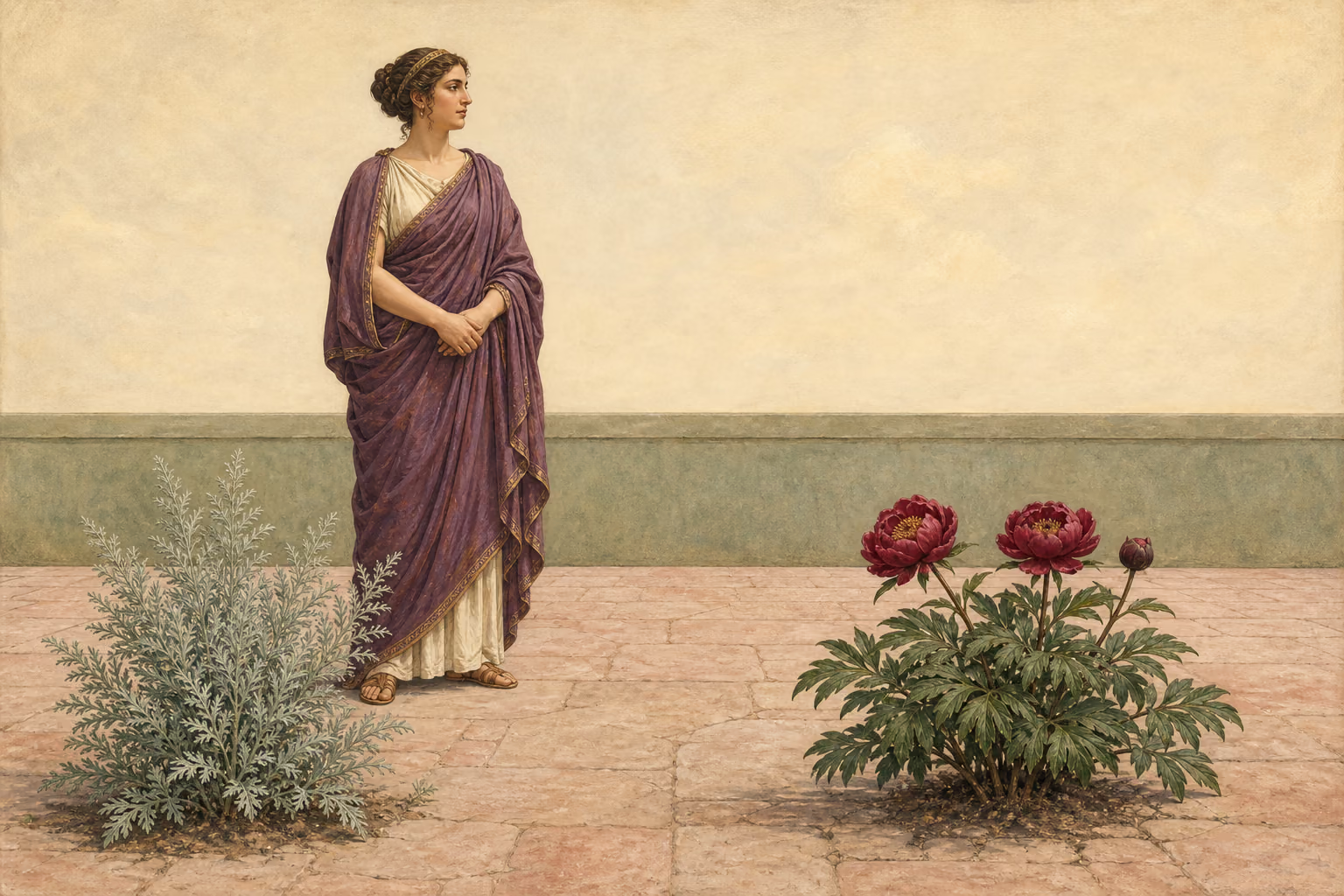
Artemisiam et elelisphacum alligatas qui habeat viator negatur lassitudinem sentire.—
Muliebribus morbis medetur maxime in universum Paeoniae herbae semen nigrum ex aqua mulsa; eadem et in radice vis. menses ciet panacis semen cum absinthio, menses et sudores scordotis potu et inlitu. Vettonica drachma in vini cyathis III bibitur contra omnia volvarum vitia aut quae a partu fiunt. menses nimios sistit Achillia adposita et decoctum eius insidentibus. mammis inponitur hyoscyami semen ex vino, locis radix in cataplasmate, mammis et chelidonia. secundas morantes vel partus emortuos radices panacis adpositae extrahunt. ipsum panaces e vino potum volvas purgat adpositumque cum melle. Polemonia pota ex vino secundas pellit, nidore corrigit volvas. centauri minoris sucus potu fotuque menses ciet, item maioris radix in volvae doloribus isdem modis prodest, derasa vero et adposita extrahit partus emortuos. plantago adponitur in lana in dolore volvae, in strangulatu bibitur. sed praecipua dictamno vis est: menses ciet, partus emortuos vel traverses eicit—bibitur ex aqua foliorum obolo—, adeo ad haec efficax, ut ne in cubiculum quidem praegnantium inferatur, nec potu tantum, sed et inlitu et suffitu valet; proxime pseudodictamnum, sed menses ciet cum mero decoctum denarii pondere. plurimis tamen modis aristolochia prodest, nam et menses et secundas ciet et emortuos partus extrahit, murra et pipere additis pota vel subdita; volvas quoque procidentes inhibet fotu vel suffitu vel subiectu, maxime tenuis. strangulatum ab his mensumque difficultatem agaricum obolis III in vini veteris cyatho potum emendat, peristereos adposita in adipe suillo recenti, antirrhinon cum rosaceo et melle. item adposita nymphaeae Thessalae radix dolori medetur, in vino nigro pota profluvia inhibet; e diverso ciet cyclamini radix pota et adposita et vesicae insidentium decocto medetur. secundas pota cissanthemos pellit, volvam sanat. e xiphio radix superior menses ciet drachma ex aceto pota. peucedanum strangulatus volvae nidore ustum recreat, menses albos praecipue psyllion drachma in cyathis III aquae, semen mandragorae potum volvam purgat, menses ciet sucus adpositus et emortuos partus. nimia rursus proluvia sistit semen cum vivo sulphure, contra ea ciet batrachium potu vel cibo, ardens alias, ut diximus, cruda, sed cocta commendatur sale et oleo et cumino. daucum et menses et secundas potu facillime pellit, ladanum suffitu corrigit volvas, dolori earum exulceratisque inponitur. emortua scamonium pellit potum vel adpositum. menses ciet hypericum utrumque adpositum, ante alia vero, ut Hippocrati videtur, crethmos e vino semine vel radicis cortice, trahit et secundas, succurrit et strangulationibus ex aqua pota; item radix e geranio peculiariter secundis inflationibusque volvarum conveniens. purgat hippuris pota et adposita volvas, polygonus pota. menses ciet et alcimae radix, folia plantaginis pellunt, item agaricum ex aqua mulsa. Artemisia volvae medetur trita, ex oleo irino aut cum fico aut cum murra adposita; eiusdem radix pota in tantum purgat, ut partus enectos extrahat. menses et secundas ciet ramorum decoctum insidentibus, item folia pota drachma. ad eadem omnia prosunt vel inposita ventri imo cum farina hordeacia. acoron quoque utile est interioribus feminarum morbis et conyza utraque et crethmos. et anthyllides duae vulvis utilissimae torminibusque et secundarum morae in vino potae. callithrix fotu locis medetur, albugines in capite tollit, capillos inficit oleo trita. geranion in vino albo potum, hypocisthis in rubro profluvium sistunt. hysopum suffocationes laxat. radix verbenacae pota ex aqua ad omnia in partu aut ex partu mala praestantissima est. peucedano quidam miscent in vino nigro semen cupressi contritum. nam semen psyllii defervefactum in aqua, cum intepuit, epiphoras omnes uteri lenit. symphyton tritum in vino nigro evocat menses. partus accelerat scordotis pota drachma suci in aquae mulsae cyathis IIII. dictamni folia praeclare dantur ex aqua; constat unius oboli pondere, vel si mortui sint in utero infantes, protinus reddi sine vexatione puerperae. similiter prodest pseudodictamnum, sed tardius, cyclaminos adalligata, cissanthemos pota, item Vettonicae farina ex aqua mulsa.
Arsenogonon et thelygonon herbae sunt habentes uvas floribus oleae similes, pallidioris tamen, semen album papaveris modo. thelygoni potu feminam concipi narrant; arsenogonon ab ea semine oleae nec alio distat; huius potu mares generari, si credimus. alii utramque ocimo similem tradunt, arsenogoni autem semen geminum esse testibus simile.
Mammarum vitiis aizoum, quod digitillum appellavimus, unice medetur. erigeron ex passo mammas uberiores facit, sonci cum farre cocti ius. quae vero mastos vocatur, inlita pilos mammarum partu nascentes aufert; testas in facie aliaque cutis vitia emendat Gentiana, nymphaea Heraclia inlita, cyclamini radix maculas omnes. cacaliae grana mixta cerae liquidae extendunt cutem in facie erugantque. vitia omnia acori radix emendat.
Capillum lycium suco flavum facit, denigrat hypericum, quod et corissum vocatur, item ophrys herba, denticulato oleri similis, foliis II. nigritiam dat et Polemonia in oleo decocta. psilotrum nos quidem in muliebribus medicamentis tractamus, verum iam et viris est in usu. efficacissimum autem habetur archezostis, item tithymalli, suco vel in sole cum oleo inlito crebro vel evolsis pilis. —Quadripedum scabiem sanat hysopum ex oleo, suum anginas peculiariter sideritis.—Verum et reliqua genera herbarum reddamus.
English · Bostock & Riley 1855–57
The traveller who carries artemisia attached to his person, or elelisphacus, will never be sensible of lassitude, it is said.
One great remedy for all female diseases in common, is the black seed of the herbaceous plant pæonia, taken in hydromel: the root also is an effectual emmenagogue. Seed of panaces, mixed with wormwood, acts as an emmenagogue and as a sudorific: the same, too, with scordotis, taken internally or applied topically. Betony, in doses of one drachma to three cyathi of wine, is taken for various affections of the uterus, as also directly after child-birth. Excessive menstruation is arrested by a pessary of achillea, or else a sitting-bath composed of a decoction of that plant. Seed of henbane in wine is used as a liniment for diseases of the mamillæ, and the root is employed in the form of a plaster for uterine affections; chelidonia, too, is applied to the mamillæ.
Roots of panaces, applied as a pessary, bring away the after-birth and the dead fœtus, and the plant itself, taken in wine, or used as a pessary with honey, acts as a detergent upon the uterus. Polemonia, taken in wine, brings away the after-birth; used as a fumigation, it is good for suffocations of the uterus. Juice of the smaller centaury, taken in drink, or employed as a fomentation, acts as an emmenagogue. The root also of the larger centaury, similarly used, is good for pains in the uterus; scraped and used as a pessary, it expels the dead fœtus. For pains of the uterus, plantago is applied as a pessary, in wool, and for hysterical suffocations, it is taken in drink. But it is dittany that is of the greatest efficacy in cases of this description; it acts as an emmenagogue, and is an expellent of the fœtus when dead or lying transversely in the uterus. In these cases the leaves of it are taken, in doses of one obolus, in water: indeed so active is it in its effects that ordinarily it is forbidden to be introduced into the chamber of a woman lying-in. Not only is it thus efficacious when taken in drink, but even when applied topically or used as a fumigation. Pseudodictamnum possesses pretty nearly the same virtues, but it acts as an emmenagogue also, boiled in doses of one denarius in unmixed wine. Aristolochia, however, is employed for a greater number of purposes: in combination with myrrh and pepper, either taken in drink or used as a pessary, it acts as a powerful emmenagogue, and brings away the dead fœtus and the after-birth. This plant, the smaller kind in particular, used either as a fomentation, fumigation, or pessary, acts as a preventive of procidence of the uterus.
Hysterical suffocations and irregularities of the catamenia are treated with agaric, taken in doses of three oboli, in one cyathus of old wine: vervain is used also in similar cases, as a pessary, with fresh hog’s lard; or else antirrhinum, with rose, oil and honey. Root of Thessalian nymphæa, used as a pessary, is curative of pains in the uterus; taken in red wine, it arrests uterine discharges. Root of cyclaminos, on the other hand, taken in drink and employed as a pessary, acts as an emmenagogue: a decoction of it, used as a sitting-bath, cures affections of the bladder. Cissanthemos, taken in drink, brings away the after-birth, and is curative of diseases of the uterus. The upper part of the root of xiphion, taken in doses of one drachma, in vinegar, promotes menstruation. A fumigation of burnt peucedanum has a soothing effect in cases of hysterical suffocation. Psyllion, taken in the proportion of one drachma to three cyathi of hydromel, is particularly good for promoting the lochial discharge. Seed of mandragora, taken in drink, acts as a detergent upon the uterus; the juice, employed in a pessary, promotes menstruation and expels the dead fœtus. The seed of this plant, used with live sulphur, arrests menstruation when in excess; while batrachion, on the other hand, acts as an emmenagogue. This last plant is either used as an article of food, or is taken in drink: in a raw state, as already stated, it has a burning flavour; but when cooked, the taste of it is greatly improved by the addition of salt, oil, and cummin. Daucus, taken in drink, promotes the catamenia, and is an expellent of the after-birth in a very high degree. Ladanum, used as a fumigation, acts as a corrective upon the uterus, and is employed topically for pains and ulcerations of that organ.
Scammony, taken in drink or used as a pessary, is an expellent of the dead fœtus. Either kind of hypericon, used as a pessary, promotes menstruation: but for this purpose it is crethmos, according to Hippocrates, that is the most efficacious, the seed or root of it being taken in wine. * * * of the outer coat brings away the after-birth. This plant, taken in water, is good for hysterical suffocations; root of geranion also, which is peculiarly useful for the after-birth, and for inflation of the uterus. Hippuris, taken in drink or applied as a pessary, acts as a detergent upon the uterus: polygonos, taken in drink, promotes menstruation; and the same with root of alcima. Leaves of plantago, and agaric in hydromel, have a similar effect. Artemisia, bruised and applied as a pessary, with oil of iris, figs, or myrrh, is curative of diseases of the uterus; the root, too, of this plant, taken in drink, is so strongly purgative as to expel the dead fœtus even. A decoction of the branches, used as a sitting-bath, promotes menstruation and brings away the after-birth; the same too, with the leaves, taken in doses of one drachma in drink. The leaves, if applied to the lower regions of the abdomen with barley-meal, will prove equally efficacious.
Acoron is very useful for internal complaints of females; as also the two varieties of conyza, and crethmos. Either kind of anthyllis, taken in wine, is remarkably good for uterine affections, griping pains in that organ, and retardations of the after-birth. Callithrix, applied as a fomentation, is curative of affections of the vagina: it removes scaly eruptions also of the head, and, beaten up in oil, it stains the hair. Geranion, taken in white wine, or hypocisthis in red, arrests all uterine discharges. Hyssop modifies hysterical suffocations. Root of vervain, taken in water, is a most excellent remedy for all accidents incident to, or consequent upon, delivery. Some persons mix bruised cypress seed with peucedanum in red wine. Seed, too, of psyllion, boiled in water and taken warm, has a soothing effect upon all defluxions of the uterus. Symphyton, bruised in wine, promotes menstruation. Juice of scordotis, in the proportion of one drachma to four cyathi of hydromel, accelerates delivery. Leaves of dittany are given for the same purpose, in water, with remarkable success. It is a well-known fact, too, that these leaves, to the extent of a single obolus even, will bring away the fœtus instantaneously, even when dead, without the slightest inconvenience to the patient. Pseudodictamnum is productive of a somewhat similar effect, but not in so marked a degree: cyclaminos, too, attached as an amulet; cissanthemos, taken in drink; and powdered betony, in hydromel.
Arsenogonon and thelygonon are plants, both of them, with clusters resembling the blossoms of the olive, but paler, and a white seed like that of the poppy. By taking thelygonon in drink, they say, the conception of female issue is ensured. Arsenogonon differs from it in the seed, which resembles that of the olive, but in no other respect. By taking this last plant in drink, male issue may be ensured—that is, if we choose to believe it. Some persons, however, assert that both plants resemble ocimum, but that the seed of arsenogonon is double, and resembles the testes in appearance.
Aizoüm, which we have spoken of under the name of digitellus, is the great specific for diseases of the mamillæ. The milk is increased by taking erigeron in raisin wine, or else sonchos boiled with spelt. The plant known as “mastos,” applied topically, removes the hairs from the mamillæ, which make their appearance after child-birth: it has the effect also of dispersing scaly crusts upon the face, and other cutaneous affections. Gentian also, nymphæa heraclia employed in a liniment, and root of cyclaminos, remove all blemishes of the skin. Seeds of cacalia, mixed with melted wax, plump out the skin of the face and make wrinkles disappear. Root of acoron, also, removes all spots upon the skin.
Lysimachia imparts a blonde tint to the hair, and the hypericon, otherwise called “corisson,” makes it black. The same too, with ophrys, a plant with indentations, which resembles the cabbage, but has only two leaves. Polemonia, too, boiled in oil, imparts blackness to the hair.
As for depilatories, I reckon them in the number of cosmetics, fit for women only, though men use them now-a-days. For this purpose archezostis is looked upon as highly efficacious, as also juice of tithymalos, applied with oil every now and then in the sun, or after pulling out the hairs. Hyssop, applied with oil, heals itch-scab in beasts, and sideritis is particularly useful for quinzy in swine.
But let us now turn to the remaining plants of which we have to speak.