LIBER XXVIII · CAPUT 3
TWO HUNDRED AND TWENTY-SIX OBSERVATIONS ON REMEDIES DERIVED FROM MAN. EIGHT REMEDIES DERIVED FROM CHILDREN
Latine · Mayhoff 1906
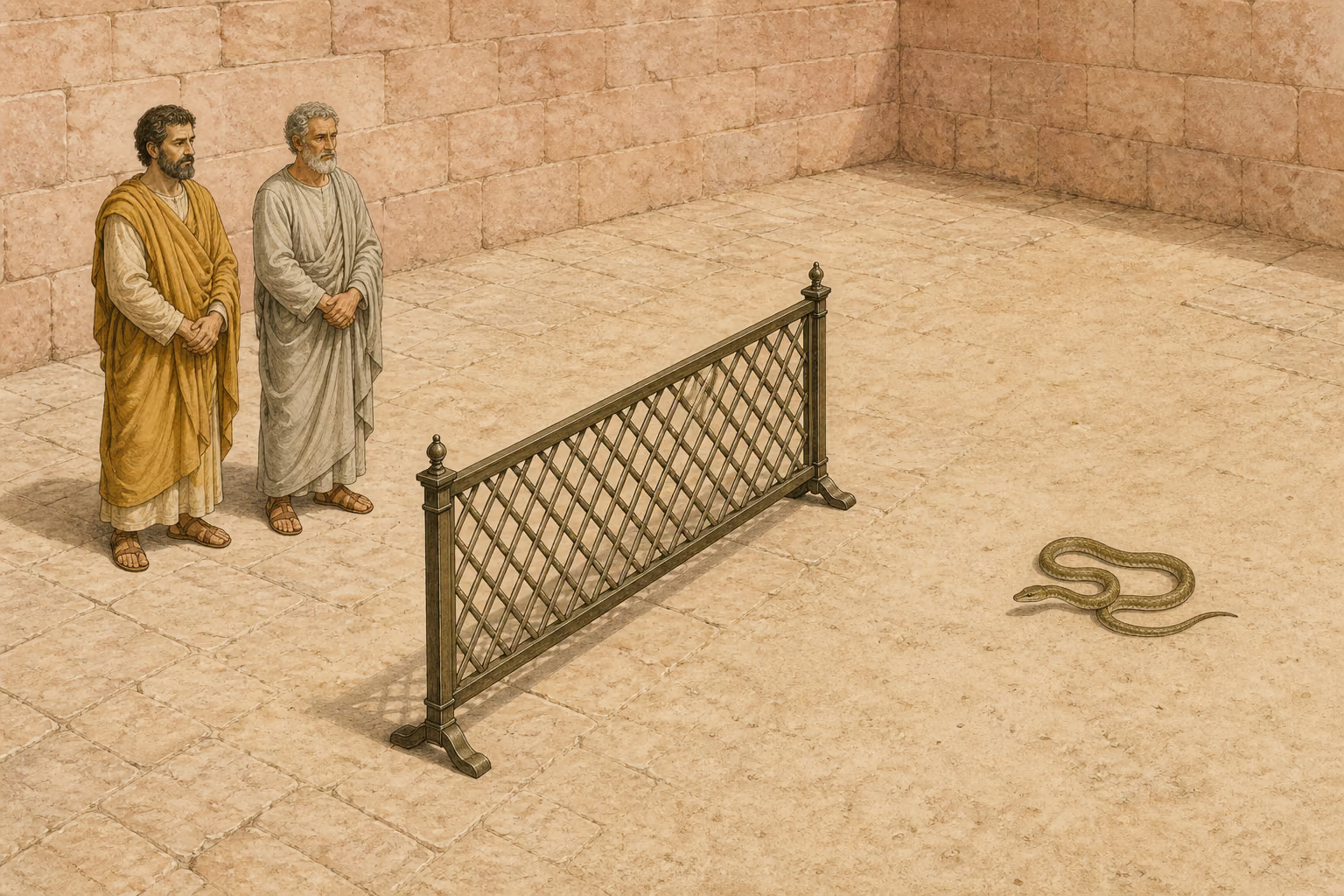
Hominum monstrificas naturas et veneficos aspectus diximus in portentis gentium et multas animalium proprietates, quae repeti supervacuum est. quorundam hominum tota corpora prosunt, ut ex iis familiis, quae sunt terrori serpentibus, tactu ipso levant percussos suctuve modo, quorum e genere sunt Psylli Marsique et qui Ophiogenes vocantur in insula Cypro, ex qua familia legatus Euagon nomine a consulibus Romae in dolium serpentium coniectus experimenti causa circummulcentibus linguis miraculum praebuit. signum eius familiae est, si modo adhuc durat, vernis temporibus odoris virus. atque eorum sudor quoque medebatur, non modo saliva. nam in insula Nili Tentyri nascentes tanto sunt crocodilis terrori, ut vocem quoque eorum fugiant, horum omniumn generum insita repugnantia interventum quoque mederi constat, sicuti adgravari vulnera introitu eorum, qui umquam fuerint serpentium canisve dente laesi. iidem gallinarum incubitus, pecorum fetus abortu vitiant; tantum remanet virus ex accepto semel malo, ut venefici fiant venena passi. remedio est ablui prius manus eorum aquaque illa eos, quibus medearis, inspergi. rursus a scorpione aliquando percussi numquam postea a crabronibus, vespis apibusve feriuntur. minus miretur hoc qui sciat, vestem a tineis non attingi, quae fuerit in funere, serpentes aegre praeterquam laeva manu extrahi.
English · Bostock & Riley 1855–57
We have already, when speaking of the singular peculiarities of various nations, made mention of certain men of a monstrous nature, whose gaze is endowed with powers of fascination; and we have also described properties belonging to numerous animals, which it would be superfluous here to repeat. In some men, the whole of the body is endowed with remarkable properties, as in those families, for instance, which are a terror to serpents; it being in their power to cure persons when stung, either by the touch or by a slight suction of the wound. To this class belong the Psylli, the Marsi, and the people called “Ophiogenes” in the Isle of Cyprus. One Euagon, a member of this family, while attending upon a deputation at Rome, was thrown by way of experiment, by order of the consuls, into a large vessel filled with serpents; upon which, to the astonishment of all, they licked his body all over with their tongues. One peculiarity of this family—if indeed it is still in existence—is the strong offensive smell which proceeds from their body in the spring; their sweat, too, no less than their spittle, was possessed of remedial virtues. The people who are born at Tentyris, an island in the river Nilus, are so formidable to the crocodiles there, that their voice even is sufficient to put them to flight. The presence even, it is well known, of all these different races, will suffice for the cure of injuries inflicted by the animals to which they respectively have an antipathy; just in the same way that wounds are irritated by the approach of persons who have been stung by a serpent at some former time, or bitten by a dog. Such persons, too, by their presence, will cause the eggs upon which a hen is sitting to be addled, and will make pregnant cattle cast their young and miscarry; for, in fact, so much of the venom remains in their body, that, from being poisoned themselves, they become poisonous to other creatures. The proper remedy in such case is first to make them wash their hands, and then to sprinkle with the water the patient who is under medical treatment. When, again, persons have been once stung by a scorpion they will never afterwards be attacked by hornets, wasps, or bees: a fact at which a person will be the less surprised when he learns that a garment which has been worn at a funeral will never be touched by moths; that it is hardly possible to draw serpents from their holes except by using the left hand; and that, of the discoveries made by Pythagoras, one of the most unerring, is the fact, that in the name given to infants, an odd number of vowels is portentous of lameness, loss of eyesight, or similar accidents, on the right side of the body, and an even number of vowels of the like infirmities on the left.