LIBER XXX · CAPUT 2
THE VARIOUS BRANCHES OF MAGIC
Latine · Mayhoff 1906
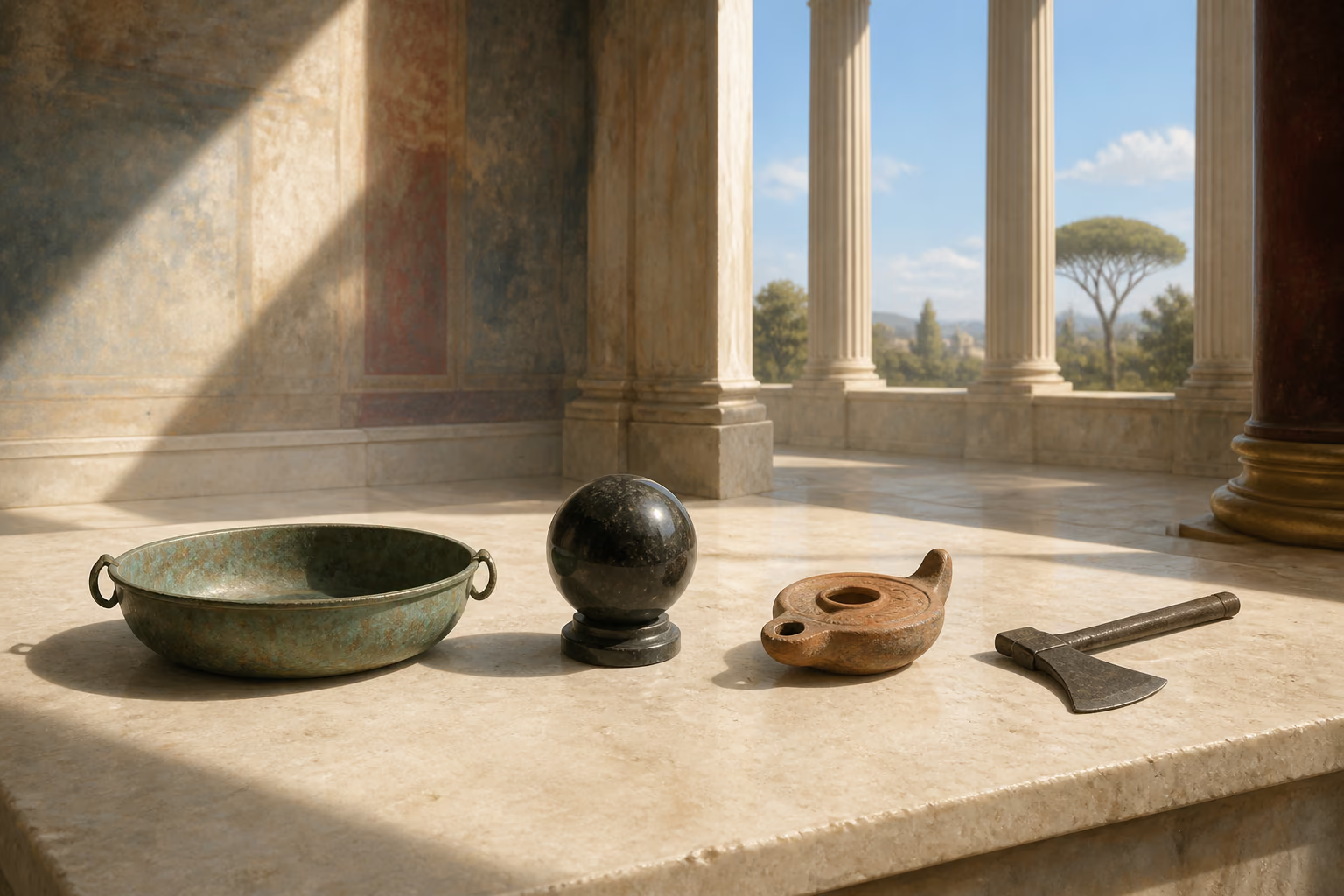
Ut narravit Osthanes, species eius plures sunt. namque ex aqua et sphaeris et aëre et stellis et lucernis ac pelvibus securibusque et multis aliis modis divina promittit, praeterea umbrarum inferorumque colloquia. quae omnia aetate nostra princeps Nero vana falsaque comperit. quippe non citharae tragicique cantus libido illi maior fuit, fortuna rerum humanarum summa gestiente in profundis animi vitiis, primumque imperare dis concupivit nec quicquam generosius voluit. nemo umquam ulli artium validius favit. ad hoc non opes ei defuere, non vires, non discentis ingenium, quae non alia patiente mundo! inmensum, indubitatum exemplum est falsae artis, quam dereliquit Nero; utinamque inferos potius et quoscumque de suspitionibus suis deos consuluisset, quam lupanaribus atque prostitutis mandasset inquisitiones eas! nulla profecto sacra, barbari licet ferique ritus, non mitiora quam cogitationes eius fuissent. saevius sic nos replevit umbris. sunt quaedam Magis perfugia, veluti lentiginem habentibus non obsequi numina aut cerni. an obstitit forte hoc in illo? nihil membris defuit. nam dies eligere certos liberum erat, pecudes vero, quibus non nisi ater colos esset, facile; nam homines immolare etiam gratissimum. Magus ad eum Tiridates venerat Armeniacum de se triumphum adferens et ideo provinciis gravis. navigare noluerat, quoniam expuere in maria aliisque mortalium necessitatibus violare naturam eam fas non putant. Magos secum adduxerat, magicis etiam cenis eum initiaverat; non tamen, cum regnum ei daret, hanc ab eo artem accipere valuit. proinde ita persuasum sit, intestabilem, inritam, inanem esse, habentem tamen quasdam veritatis umbras, sed in his veneficas artes pollere, non magicas. quaerat aliquis, quae sint mentiti veteres Magi, cum adulescentibus nobis visus Apion grammaticae artis prodiderit cynocephalian herbam, quae in Aegypto vocaretur osiritis, divinam et contra omnia veneficia, sed si tota erueretur, statim eum, qui eruisset, mori, seque evocasse umbras ad percunctandum Homerum, quanam patria quibusque parentibus genitus esset, non tamen ausus profiteri, quid sibi respondisse diceret.
English · Bostock & Riley 1855–57
According to what Osthanes tells us, there are numerous sorts of magic. It is practised with water, for instance, with balls, by the aid of the air, of the stars, of lamps, basins, hatchets, and numerous other appliances; means by which it engages to grant a foreknowledge of things to come, as well as converse with ghosts and spirits of the dead. All these practices, however, have been proved by the Emperor Nero, in our own day, to be so many false and chimærical illusions; entertaining as he did a passion for the magic art, unsurpassed even by his enthusiastic love for the music of the lyre, and for the songs of tragedy; so strangely did his elevation to the highest point of human fortune act upon the deep-seated vices of his mind! It was his leading desire to command the gods of heaven, and no aspiration could he conceive more noble than this. Never did person lavish more favours upon any one of the arts; and for the attainment of this, his favourite object, nothing was wanting to him, neither riches, nor power, nor aptitude at learning, and what not besides, at the expense of a suffering world.
It is a boundless, an indubitable proof, I say, of the utter falsity of this art, that such a man as Nero abandoned it; and would to heaven that he had consulted the shades below, and any other spirits as well, in order to be certified in his suspicions, rather than commissioned the denizens of stews and brothels to make those inquisitions of his [with reference to the objects of his jealousy]. For assuredly there can be no superstition, however barbarous and ferocious the rites which it sanctions, that is not more tolerant than the imaginations which he conceived, and owing to which, by a series of blood-stained crimes, our abodes were peopled with ghosts.
The magicians, too, have certain modes of evasion, as, for instance, that the gods will not obey, or even appear to, persons who have freckles upon the skin. Was this perchance the obstacle in Nero’s way? As for his limbs, there was nothing deficient in them. And then, besides, he was at liberty to make choice of the days prescribed by the magic ritual: it was an easy thing for him to make choice of sheep whose colour was no other than perfectly black: and as to sacrificing human beings, there was nothing in the world that gave him greater pleasure. The Magian Tiridates was at his court, having repaired thither, in token of our triumph over Armenia, accompanied by a train which cost dear to the provinces through which it passed. For the fact was, that he was unwilling to travel by water, it being a maxim with the adepts in this art that it is improper to spit into the sea or to profane that element by any other of the evacuations that are inseparable from the infirmities of human nature. He brought with him, too, several other Magi, and went so far as to initiate the emperor in the repasts of the craft; and yet the prince, for all he had bestowed a kingdom upon the stranger, found himself unable to receive at his hands, in return, this art.
We may rest fully persuaded then, that magic is a thing detestable in itself. Frivolous and lying as it is, it still bears, however, some shadow of truth upon it; though reflected, in reality, by the practices of those who study the arts of secret poisoning, and not the pursuits of magic. Let any one picture to himself the lies of the magicians of former days, when he learns what has been stated by the grammarian Apion, a person whom I remember seeing myself when young. He tells us that the plant cynocephalia, known in Egypt as “osiritis,” is useful for divination, and is a preservative against all the malpractices of magic, but that if a person takes it out of the ground entire, he will die upon the spot. He asserts, also, that he himself had raised the spirits of the dead, in order to make enquiry of Homer in reference to his native country and his parents; but he does not dare, he tells us, disclose the answer he received.