LIBER XXXII · CAPUT 9
REMEDIES FOR PAINS IN THE LIVER AND SIDE. THE ELONGATED CONCH: SIX REMEDIES. THE TETHEA: FIVE REMEDIES
Latine · Mayhoff 1906
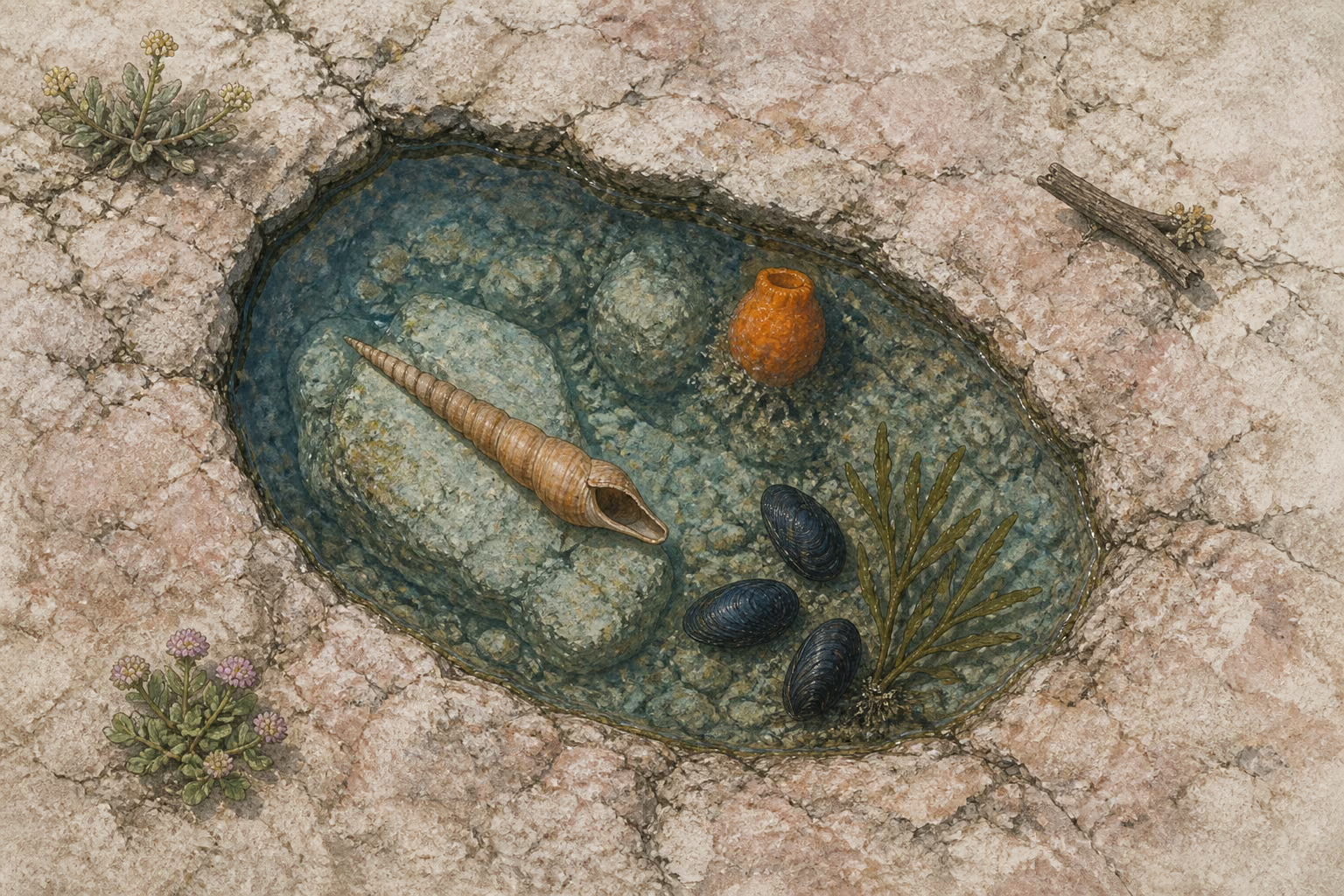
Iocineris doloribus.... scorpio marinus in vino necatus, ut inde bibatur, conchae longae carnes ex mulso potae cum aquae pari modo aut, si febres sint, ex aqua mulsa.—Lateris dolores leniunt hippocampi tosti sumpti tetheaque similis ostreo in cibo sumpta, ischiadicorum muria siluri clystere infusa. dantur autem conchae ternis obolis dilutis in vini sextariis II per dies XV.
Alvum emollit silurus e iure et torpedo in cibo et olus marinum simile sativo—stomacho inimicum alvum facillime purgat, sed propter acrimoniam cum pingui carne coquitur—et omnium piscium ius. idem et urinas ciet, e vino maxime. optimum e scorpionibus et iulide et saxatilibus nec virus resipientibus nec pinguibus. coci debent cum aneto, apio, coriandro, porro, additis oleo, sale. purgant et cybia vetera privatimque cruditates; pituitas, bilem trahunt.
Purgant et myaces, quorum natura tota in hoc loco dicetur. acervantur muricum modo vivuntque in algosis, gratissimi autumno et ubi multa dulcis aqua miscetur maria, ob id in Aegypto laudatissimi. procedente hieme amaritudinem trahunt coloremque rubrum. horum ius traditur alvum et vesicas exinanire, interanea destringere, omnia adaperire, renes purgare, sanguinem adipemque minuere. itaque utilissimi sunt hydropicis, mulierum purgationibus, morbo regio, articulario, inflationibus, item obesis, fellis pituitaequoque, pulmonis, iocineris, lien???s vitiis, rheumatismis. fauces tantum vexant vocemque ol???- tundunt. ulcera, quae serpant aut sint purganda, sanant, item carcinomata cremati ut murices; et morsus canum hominumque cum melle, lepras, lentigines. cinis eorum lotus emendat caligines, scabritias, albugines, gingivarum et dentium vitia, eruptiones pituitae; et contra dorycnium aut opocarpathum antidoti vicem optinent. degenerant in duas species: mitulos, qui salem virusque resipiunt, myiscas quae rotunditate differunt, minores aliquanto atque hirtas, tenuioribus testis, carne dulciores. mituli quoque ut murices cinere causticam vim habent et ad lepras, lentigines, maculas. lavantur quoque plumbi modo ad genarum crassitudines et oculorum albugines caliginesque atque in aliis partibus sordida ulcera capitisque pusulas. carnes eorum ad canis morsus inponuntur.
At pelorides emolliunt alvum, item castorea in aqua mulsa drachmis binis. qui vehementius volunt uti, addu??? cucumeris sativi radicis siccae drachmam et aphronitri II. tethea torminibus et inflationibus occurrunt. inveniuntur haec in foliis maris sugentia, fungorum verius generis quam piscium. eadem et tenesmum dissolvunt reniumque vitia. nascitur et in maria apsinthium, quod aliqui seriphum vocant, circa Taposirim maxime Aegypti, exilius terrestri. alvum solvit et noxiis animalibus intestina liberat—solvunt et saepiae—; in cibo datur cum oleo et sale et farina coctum. menae salsae cum felle taurino inlitae umbilico alvum solvunt. piscium ius in patina coctorum cum lactucis tenesmum discutit. cancri fluviatiles triti et ex aqua poti alvum sistunt, urinam cient in vino albo. ademptis bracchiis calculos pellunt III obolis cum murra et iride singulis earum drachmis, ileos et inflationes castorea cum dauci semine et petroselino quantum ternis digitis sumatur, ex mulsi calidi cyathis IIII, tormina vero cum aneto ex vino mixto. erythini in cibo sumpti sistunt alvum. dysentericis medentur ranae cum scilla decoctae ita, ut pastilli fiant, vel cor earum cum melle tritum, ut tradit Niceratus, morbo regio salsamentum cum pipere ita, ut reliqua carne abstineatur.
Lieni medetur solea piscis inpositus, item torpedo, item rhombus; vivus dein remittitur in mare. scorpio marinus necatus in vino vesicae vitia et calculos sanat, lapis, qui invenitur in scorpionis marini cauda, pondore oboli potus, enhydridis iecur, blendiorum cinis cum ruta. inveniuntur et in bacchi piscis capite ceu lapilli; hi poti ex aqua calculosis praeclare medentur. aiunt et urticam marinam in vino potam prodesse, item pulmonem marinum decoctum in aqua. ova saepiae urinam movent ieniumque pituitas extrahunt. rupta, convolsa cancri fluvatiles triti in asinino maxime lacte sanant, echini vero cum spinis suis contusi et e vino poti calculos—modus singulis hemina; bibitur, donec prosit—et alias in cillis ad hoc proficiunt. purgatur vesica et pectinum cibo. ex iis mares aliiδόνακας vocant, aliiαὐλούς,, feminasὄνυχσς. urinam mares movent. dulciores feminae sunt et unicolores. [Saepiae quoque ova urinam movent et renes purgant].
Enterocelicis lepus marinus inlinitur tritus cum melle. iecur aquaticae colubrae, item hydri tritum potumque calculosis prodest. ischiadicos liberant salsamenta e siluro infusa clysterio, evacuata prius alvo, sedis attritus cinis e capite mugilum et mullorum; comburuntur autem in fictili vase, inlini cum melle debent. item capitis menarum cinis et ad rhagadas et ad condylomata utilis, sicut pelamydum salsarum capitum cinis vel cybiorum cum melle. torpedo adposita procidentis interanei morbum ibi coercet. cancrorum fluviatilium cinis ex oleo et cera rimas in eadem parte emendat, idem et marini cancri pollent.
Panos salsamenta coracinorum discutiunt, sciaenae interanea et squamae combustae, scorpio in vino decoctus ita, ut foveantur ex illo. at echinorum testae contusae et ex aqua inlitae incipientibus panis resistunt, muricum vel purpurarum cinis utroque modo, sive discutere opus sit incipientes sive concoctos emittere. quidam ita componunt medicamentum: cerae et turis drachmas XX, spumae argenti XXXX, cineris muricum X, olei veteris heminam. prosunt per se salsamenta cocta, cancri fluviatiles triti; ad verendorum pusulas cinis e capite menarum, item carnes decoctae et inpositae, similiter percae salsae e capite cinis melle addito, pelamydum capitis cinis aut squatinae cutis combustae. haec est qua diximus lignum poliri, quoniam et a mari fabr???les usus exeunt. prosunt et zmarides inlitae, item muricum vel purpurarum testae cinis cum melle, efficacius crenatarum cum carnibus suis. carbunculos verendorum privatim salsamenta cocta cum melle restingunt. testem, si descenderit, coclearum spuma inlini volunt.
Urinae incontinentiam hippocampi tosti et in cibo saepius sumpti emendant, ophidion pisciculus congro similis cum lili radice, pisciculi minuti ex ventre eius, qui devoraverit, exempti cremati ita, ut cinis eorum bibatur ex aqua. iubent et cocleas Africanas cum sua care comburi cineremque ex vino Signino dari.
Podagris articulariisque morbis utile est oleum, in quo decocta sint ranarum intestina, et rubetae cinis cum adipe vetere. quidam et hordei cinerem adiciunt trium, rerum aequo pondere. iubent et lepore marino recenti podagram fricari, fibrinis quoque pellibus calceari, maxime Pontici fibri, item vituli marini, cuius et adips prodest isdem, nec non et bryon, de quo diximus, lactucae simile, rugosioribus foliis, sine caule. natura ei styptica, inpositumque lenit impetus podagrae. item alga, de qua et ipsa dictum est. observatur in ea, ne arida inponatur.—Perniones emendat pulmo marinus, canori marini cinis ex oleo, item fluviatiles triti ustique, cinere et ex oleo subacto, siluri adips.—In articulis morborum impetus sedant ranae subinde recentes inpositae; quidam dissectas iubent inponi.—Corpus auget ius mitulorum et concharum.
Comitiales, ut diximus, coagulum vituli marini bibunt cum lacte equino asinaeve aut cum Punici suco, quidam ex aceto mulso. nec non aliqui per se pilulas devorant. castoreum in aceti mulsi cyathis III ieiunis datur, iis vero, qui saepius corripiantur, clystere infusum mirifice prodest. castorei drachmae II esse debebunt, mellis et olei sextarius et aquae tantundem. ad praesens vero correptis olfactu subvenit cum aceto. datur et mustelae marinae iocur, item muris, vel testudinum sanguis.
English · Bostock & Riley 1855–57
For pains in the liver, a sea-scorpion is killed in wine, and the liquid is taken. The meat, too, of the elongated conch is taken with honied wine and water, in equal quantities, or, if there are symptoms of fever, with hydromel. Pains in the side are assuaged by taking the flesh of the hippocampus, grilled, or else the tethea, very similar to the oyster, with the ordinary food. For sciatica, the pickle of the silurus is injected, by way of clyster. The flesh of conchs, too, is prescribed, for fifteen days, in doses of three oboli soaked in two sextarii of wine.
The silurus, taken in its broth, or the torpedo, used as food, acts as a laxative upon the bowels. There is a sea-wort, also, similar in appearance to the cultivated cabbage: it is injurious to the stomach, but acts most efficiently as a purgative, requiring to be cooked with fat meat for the purpose, in consequence of its extreme acridity. The broth, too, of all boiled fish is good for this purpose; it acting, also, as a strong diuretic, taken with wine more particularly. The best kind of all is that prepared from the sea-scorpion, the iulis, and rock-fish in general, as they are destitute of all rankness and are free from fat. The proper way of cooking them is with dill, parsley, coriander, and leeks, with the addition of oil and salt. Stale cybium, too, acts as a purgative, and is particularly useful for carrying off crudities, pituitous humours, and bile.
The myax is of a purgative nature, a shell-fish of which we shall take this opportunity of giving the natural history at length. These fish collect together in masses, like the murex, and are found in spots covered with sea-weed. They are the finest eating in autumn, and are found in the greatest perfection in places where fresh-water streams discharge themselves into the sea; for which reason it is that those of Egypt are held in such high esteem. As the winter advances, they contract a bitter flavour, and assume a reddish hue. The liquor of these fish, it is said, acts as a purgative upon the bowels and bladder, has a detergent effect upon the intestines, acts aperiently upon all the passages, purges the kidneys, and diminishes the blood and adipose secretions. Hence it is that these shell-fish are found of the greatest use for the treatment of dropsy, for the regulation of the catamenia, and for the removal of jaundice, all diseases of the joints, and flatulency. They are very good, also, for the reduction of obesity, for diseases of the bile and of the pituitous secretions, for affections of the lungs, liver, and spleen, and for rheumatic defluxions. The only inconvenience resulting from them is, that they irritate the throat and impede the articulation. They have, also, a healing effect upon ulcers of a serpiginous nature, or which stand in need of detergents, as also upon carcinomatous sores. Calcined, the same way as the murex, and employed with honey, they are curative of bites inflicted either by dogs or human beings, and of leprous spots or freckles. The ashes of them, rinsed, are good for the removal of films upon the eyes, granulations of those organs and indurations of the membrane, as also for diseases of the gums and teeth, and for pituitous eruptions. They serve, also, as an antidote to dorycnium and to opocarpathon.
There are two species of this shell-fish, of a degenerate kind: the mitulus, which has a strong flavour, and a saltish taste; and the myisca, which differs from the former in the roundness of its shell, is somewhat smaller, and is covered with filaments, the shell being thinner, and the meat of a sweeter flavour. The ashes, also, of the mitulus, like those of the murex, are possessed of certain caustic properties, and are very useful for the removal of leprous spots, freckles, and blemishes of the skin. They are rinsed, too, in the same manner as lead, for the removal of swellings of the eyelids, of indurations of the membranes, and of films upon the eyes, as also of sordid ulcers upon other parts of the body, and of pustules upon the head. The meat of them, also, is employed as an application for bites inflicted by dogs.
As to pelorides, they act as a gentle laxative upon the bowels, an effect equally produced by castoreum, taken in doses of two drachmæ, in hydromel: where, however, a more drastic purgative is required, one drachma of dried garden-cucumber root is added, and two drachmæ of aphronitrum. The tethea is good for griping pains in the bowels and for attacks of flatulency: they are generally found adhering to the leaves of marine plants, sucking their nutriment therefrom, and may be rather looked upon as a sort of fungus than as a fish. They are useful, also, for the removal of tenesmus and of diseases of the kidneys.
There grows also in the sea a kind of absinthium, known by some persons as “seriphum,” and found in the vicinity of Taposiris, in Egypt, more particularly. It is of a more slender form than the land absinthium, acts as a purgative upon the bowels, and effectually removes intestinal worms. The sæpia, too, is a laxative; for which purpose these fish are administered with the food, boiled with a mixture of oil, salt, and meal. Salted mænæ, applied with bull’s gall to the navel, acts as a purgative upon the bowels.
The liquor of fish, boiled in the saucepan with lettuces, dispels tenesmus. River-crabs, beaten up and taken with water, act astringently upon the bowels, and they have a diuretic effect, if taken with white wine. Deprived of the legs, and taken in doses of three oboli with myrrh and iris, one drachma of each, they disperse urinary calculi. For the cure of the iliac passion and of attacks of flatulency, castoreum should be taken, with seed of daucus and of parsley, a pinch in three fingers of each, the whole being mixed with four cyathi of warm honied wine. Griping pains in the bowels should be treated with castoreum and a mixture of dill and wine. The fish called “erythinus,” used as food, acts astringently upon the bowels. Dysentery is cured by taking frogs boiled with squills, and prepared in the form of boluses, or else hearts of frogs beaten up with honey, as Niceratus recommends. For the cure of jaundice, salt fish should be taken with pepper, the patient abstaining from all other kinds of meat.
For the cure of spleen diseases, the fish known as the sole is applied to that part; the torpedo, also, or else a live turbot; it being then set at liberty in the sea. The sea-scorpion, killed in wine, is a cure for diseases of the bladder and for urinary calculi; the stone, also, that is found in the tail of this last fish, taken in drink, in doses of one obolus; the liver of the enhydris; and the ashes of the fish called “blendius;” taken with rue. In the head, too, of the fish called “bacchus,” there are found certain small stones, as it were: these, taken in water, six in number, are an excellent cure for urinary calculi. They say, too, that the sea-nettle, taken in wine, is very useful for this purpose, as also the pulmo marinus, boiled in water. The eggs of the sæpia have a diuretic effect, and carry off pituitous humours from the kidneys. Ruptures and convulsions are very effectually treated by taking river-crabs, bruised in asses’ milk more particularly; and urinary calculi by drinking sea-urchins pounded, spines and all, in wine; the due proportion being one semisextarius of wine for each urchin, and the treatment being continued till its good effects are visible. The flesh, too, of the sea-urchin, taken as food, is very useful as a remedy for the same malady.
Scallops also, taken as food, act detergently upon the bladder: the male fish is by some persons called “donax,” and by others “aulos,” the female being known as “onyx.” The male scallop has a diuretic effect: the flesh of the female is sweeter than that of the male, and of an uniform colour. The eggs, too, of the sæpia promote the urinary secretions, and act detergently upon the kidneys.
For the cure of intestinal hernia the sea-hare is applied, bruised with honey. The liver of the water-snake, and that of the hydrus, bruised and taken in drink, are remedial for urinary calculi. Sciatica is cured by using the pickle of the silurus as a clyster, the bowels being first thoroughly purged. For chafing of the fundament, an application is made of heads of mullets and surmullets, reduced to ashes; for which purpose they are calcined in an earthen vessel, and must be applied in combination with honey. Calcined heads, too, of the fish known as mænæ are useful for the cure of chaps and condylomata; as also heads of salted pelamides, reduced to ashes, or calcined cybium, applied with honey.
The torpedo, applied topically, reduces procidence of the rectum. River-crabs, reduced to ashes, and applied with oil and wax, are curative of chaps of the fundament: sea-crabs, too, are equally useful for the purpose.
The pickle of the coracinus disperses inflammatory tumours; an effect which is equally produced by using the calcined intestines and scales of the sciæna. The sea-scorpion, too, is used for the same purpose, boiled in wine, and applied as a fomentation to the part affected. Shells of sea-urchins, bruised and applied with water, act as a check upon incipient inflammatory tumours. Ashes of the murex, or of the purple, are employed in either case, whether it is wanted to disperse inflammatory tumours in an incipient state, or to bring them to a head and break them. Some authorities prescribe the following preparation: of wax and frankincense twenty drachmæ, of litharge forty drachmæ, of calcined murex ten drachmæ, and of old oil, one semisextarius. Salt fish, boiled and applied by itself, is highly useful for the above purposes.
River crabs, bruised and applied, disperse pustules on the generative organs: the same, too, with calcined heads of mænæ, or the flesh of that fish, boiled and applied. Heads of salted perch, reduced to ashes, and applied with honey, are equally useful for the purpose; or else calcined heads of pelamides, or skin of the squatina reduced to ashes. It is the skin of this fish that is used, as already stated, for giving a polish to wood; for the sea even, we find, furnishes its aid to our artificers. For a similar purpose the fishes called “smarides” are applied topically; as also ashes of the shell of the murex or of the purple, applied with honey; which last are still more efficacious when the flesh has been burnt with the shell.
Salt fish, boiled with honey, is particularly good for the cure of carbuncles upon the generative organs. For relaxation of the testes, the slime of snails is recommended, applied in the form of a liniment.
The flesh of hippocampi, grilled and taken frequently as food, is a cure for incontinence of urine; the ophidion, too, a little fish similar to the conger in appearance, eaten with a lily root; or the small fry found in the bellies of larger fish that have swallowed them, reduced to ashes and taken in water. It is recommended, too, to burn African snails, both shells and flesh, and to administer the ashes with wine of Signia.
For the cure of gout and of diseases of the joints, oil is useful in which the intestines of frogs have been boiled. Ashes, too, of burnt bramble-frogs are similarly employed, with stale grease; in addition to which, some persons use calcined barley, the three ingredients being mixed in equal proportions. It is recommended too, in cases of gout, to rub the parts affected with a sea-hare, fresh caught, and to wear shoes made of beaver’s skin, Pontic beaver more particularly, or else of sea-calf’s skin, an animal the fat of which is very useful for the purpose: the same being the case also with bryon, a plant of which we have already spoken, similar to the lettuce in appearance, but with more wrinkled leaves, and destitute of stem. This plant is of a styptic nature, and, applied topically, it tends to modify the paroxysms of gout. The same, too, with sea-weed, of which we have also spoken already; due precaution being taken not to apply it dry.
Chilblains are cured by applying the pulmo marinus; ashes of sea-crabs with oil; river crabs, bruised and burnt to ashes and kneaded up with oil; or else fat of the silurus. In diseases of the joints, the paroxysms are modified by applying fresh frogs every now and then: some authorities recommend that they should be split asunder before being applied. The liquor from mussels and other shell-fish has a tendency to make flesh.
Epileptic patients, as already stated, are recommended to drink the rennet of the sea-calf, mixed with mares’ milk or asses’ milk, or else with pomegranate juice, or, in some cases, with oxymel: some persons, too, swallow the rennet by itself, in the form of pills. Castoreum is sometimes administered, in three cyathi of oxymel, to the patient fasting; but where the attacks are frequent, it is employed in the form of a clyster, with marvellous effect. The proper proportions, in this last case, are two drachmæ of castoreum, one sextarius of oil and honey, and the same quantity of water. At the moment that the patient is seized with a fit, it is a good plan to give him castoreum, with vinegar, to smell. The liver, too, of the sea-weasel is given to epileptic patients, or else that of sea-mice, or the blood of tortoises.