LIBER IV · CAPUT 1
EPIRUS
Latine · Mayhoff 1906
Tertius Europae sinus Acrocerauniis incipit montibus, finitur Hellesponto, amplectitur praeter minores sinus |XIX|.XXV passuum. in eo Epiros, Acarnania, Aetolia, Phocis, Locris, Achaia, Messenia, Laconica, Argolis, Megaris, Attice, Boeotia iterumque ab alio mari eadem Phocis et Locris, Doris, Phthiotis, Thessalia, Magnesia, Macedonia, Thracia. omnis Graeciae fabulositas sicut et litterarum claritas ex hoc primum sinu effulsit, quapropter paululum in eo conmorabimur.
Epiros in universum appellata a Cerauniis incipit montibus. in ea primi Chaones, a quibus Chaonia, dein Thesproti, Antigonenses, locus Aornos et pestifera avibus exhalatio, Cestrini, Perrhaebi, quorum mons Pindus, Cassopaei, Dryopes, Selloe, Hellopes, Molossi, apud quos Dodonaei Iovis templum oraculo inlustre, Talarus mons, centum fontibus circa radices Theopompo celebratus.
Epiros ipsa, ad Magnesiam Macedoniamque tendens, a tergo suo Dassaretas supra dictos, liberam gentem, mox feram Dardanos habet. Dardanis laevo Triballi praetenduntur latere et Moesicae gentes, a fronte iunguntur Maedi ac Denselatae, quibus Threces ad Pontum usque pertinentes. ita succincta Rhodopes, mox et Haemi, vallatur excelsitas. in Epiri ora castellum in Acrocerauniis Chimera, sub eo Aquae Regiae fons, oppida Maeandria, Cestria, flumen Thesprotiae Thyamis, colonia Buthrotum, maximeque nobilitatus Ambracius sinus, D passuum faucibus spatiosum aequor accipiens, longitudinisXXXVII, latitudinis XV. in eum defertur amnis Acheron, e lacu Thesprotiae Acherusia profluens XXXV passuum inde et mille pedum ponte mirabilis omnia sua mirantibus. in sinu oppidum Ambracia. Molossorum flumina Aphas, Aratthus, civitas Anac- torica, locus Pandosia.
Acarnaniae, quae antea Curetis vocabatur, oppida Heraclia, Echinus et in ore ipso colonia Augusti Actium cum templo Apollinis nobili ac civitate libera Nicopolitana. egressos sinu Ambracio in Ionium excipit Leucadium litus, promunturium Leucates, dein sinus et Leucadia ipsa paeninsula, quondam Neritis appellata, opere accolarum abscisa continenti ac reddita ventorum flatu congeriem harenae adtumulantium, qui locus vocatur Dioryctos stadiorum longitudine trium. oppidum in ea Leucas, quondam Neritum dictum. deinde Acarnanum urbes Alyzia, Stratos, Argos amphilochicum cognominatum. amnis Achelous e Pindo fluens atque Acarnaniam ab Aetolia dirimens et Artemitam insulam adsiduo terrae invectu continenti adnectens.
English · Bostock & Riley 1855–57
The third great Gulf of Europe begins at the mountains of Acroceraunia, and ends at the Hellespont, embracing an extent of 2500 miles, exclusive of the sea-line of nineteen smaller gulfs. Upon it are Epirus, Acarnania, Ætolia, Phocis, Locris, Achaia, Messenia, Laconia, Argolis, Megaris, Attica, Bœotia; and again, upon the other sea, the same Phocis and Locris, Doris, Phthiotis, Thessalia, Magnesia, Macedonia and Thracia. All the fabulous lore of Greece, as well as the effulgence of her literature, first shone forth upon the banks of this Gulf. We shall therefore dwell a little the longer upon it.
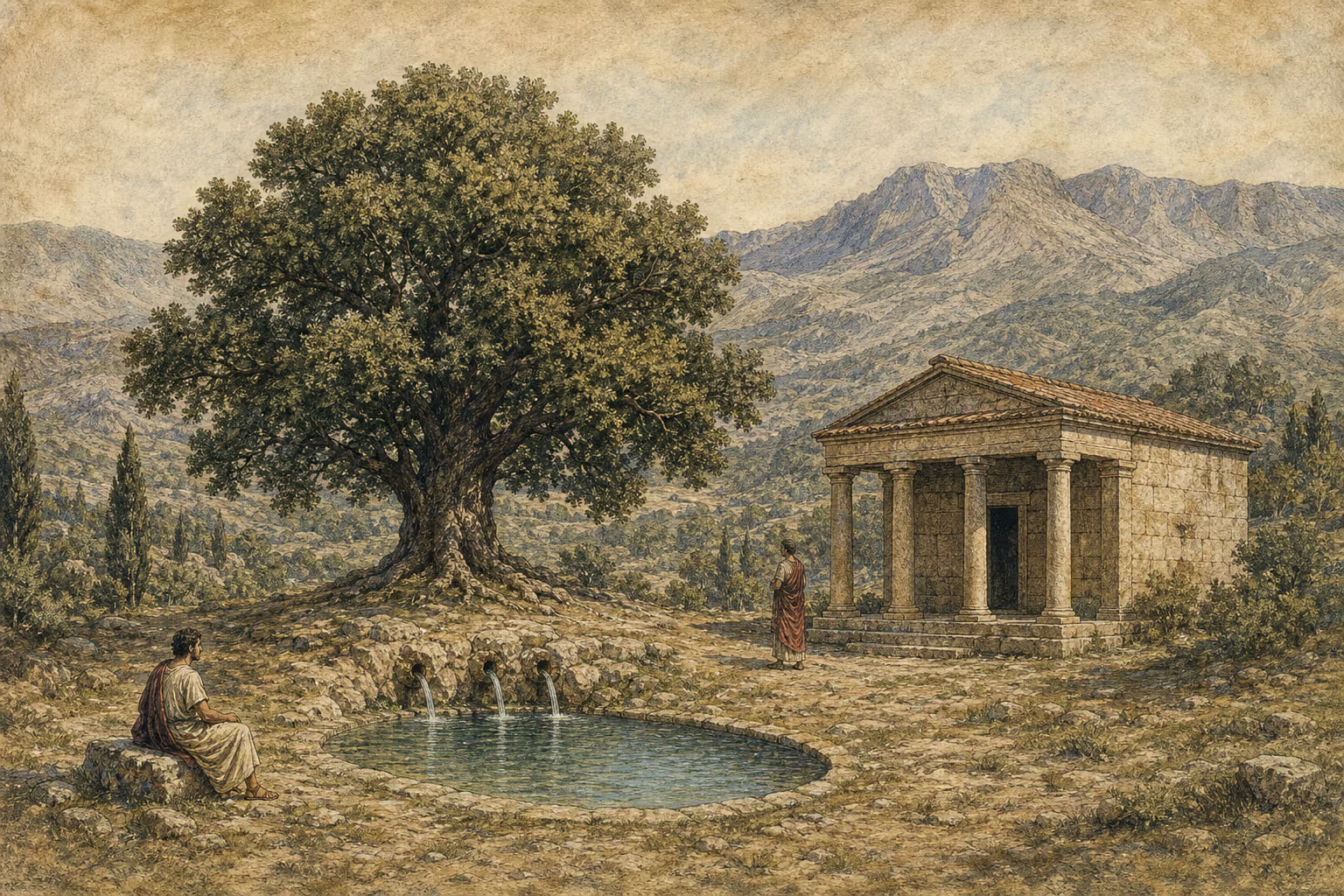
Epirus, generally so called, begins at the mountains of Acroceraunia. The first people that we meet are the Chaones, from whom Chaonia receives its name, then the Thesproti, and then the Antigonenses. We then come to the place where Aornos stood, with its exhalations so deadly to the feathered race, the Cestrini, the Perrhæbi, in whose country Mount Pindus is situate, the Cassiopæi, the Dryopes, the Sellæ, the Hellopes, the Molossi, in whose territory is the temple of the Dodonæan Jupiter, so famous for its oracle; and Mount Tomarus, so highly praised by Theopompus, with its hundred springs gushing from its foot.
Epirus, properly so called, advances towards Magnesia and Macedonia, having at its back the Dassaretæ, previously mentioned, a free nation, and after them the Dardani, a savage race. On the left hand, before the Dardani are extended the Triballi and the nations of Mœsia, while in front of them the Medi and the Denselatæ join, and next to them the Thracians, who stretch away as far as the Euxine: in such a manner is a rampart raised around the lofty heights of Rhodope, and then of Hæmus.
On the coast of Epirus is the fortress of Chimæra, situate upon the Acroceraunian range, and below it the spring known as the Royal Waters; then the towns of Mæandria, and Cestria, the Thyamis, a river of Thesprotia, the colony of Buthrotum, and the Ambracian Gulf, so famed in history; which, with an inlet only half a mile in width, receives a vast body of water from the sea, being thirty-seven miles in length, and fifteen in width. The river Acheron, which runs through Acherusia, a lake of Thesprotia, flows into it after a course of thirty-six miles; it is considered wonderful for its bridge, 1000 feet in length, by a people who look upon everything as wonderful that belongs to themselves. Upon this Gulf is also situate the town of Ambracia. There are also the Aphas and the Arachthus, rivers of the Molossi; the city of Anactoria, and the place where Pandosia stood.
The towns of Acarnania, the ancient name of which was Curetis, are Heraclia, Echinus, and, on the coast, Actium, a colony founded by Augustus, with its famous temple of Apollo and the free city of Nicopolis. Passing out of the Ambracian Gulf into the Ionian Sea, we come to the coast of Leucadia, with the Promontory of Leucate, and then the Gulf and the peninsula of Leucadia, which last was formerly called Neritis. By the exertions of the inhabitants it was once cut off from the mainland, but was again joined to it by the vast bodies of sand accumulated through the action of the winds. This spot is called Dioryctos, and is three stadia in length: on the peninsula is the town of Leucas, formerly called Neritus. We next come to Alyzia, Stratos, and Argos, surnamed Amphilochian, cities of the Acarnanians: the river Acheloüs flows from the heights of Pindus, and, after separating Acarnania from Ætolia, is fast adding the island of Artemita to the mainland by the continual deposits of earth which it brings down its stream.