LIBER IV · CAPUT 16
BRITANNIA
Latine · Mayhoff 1906
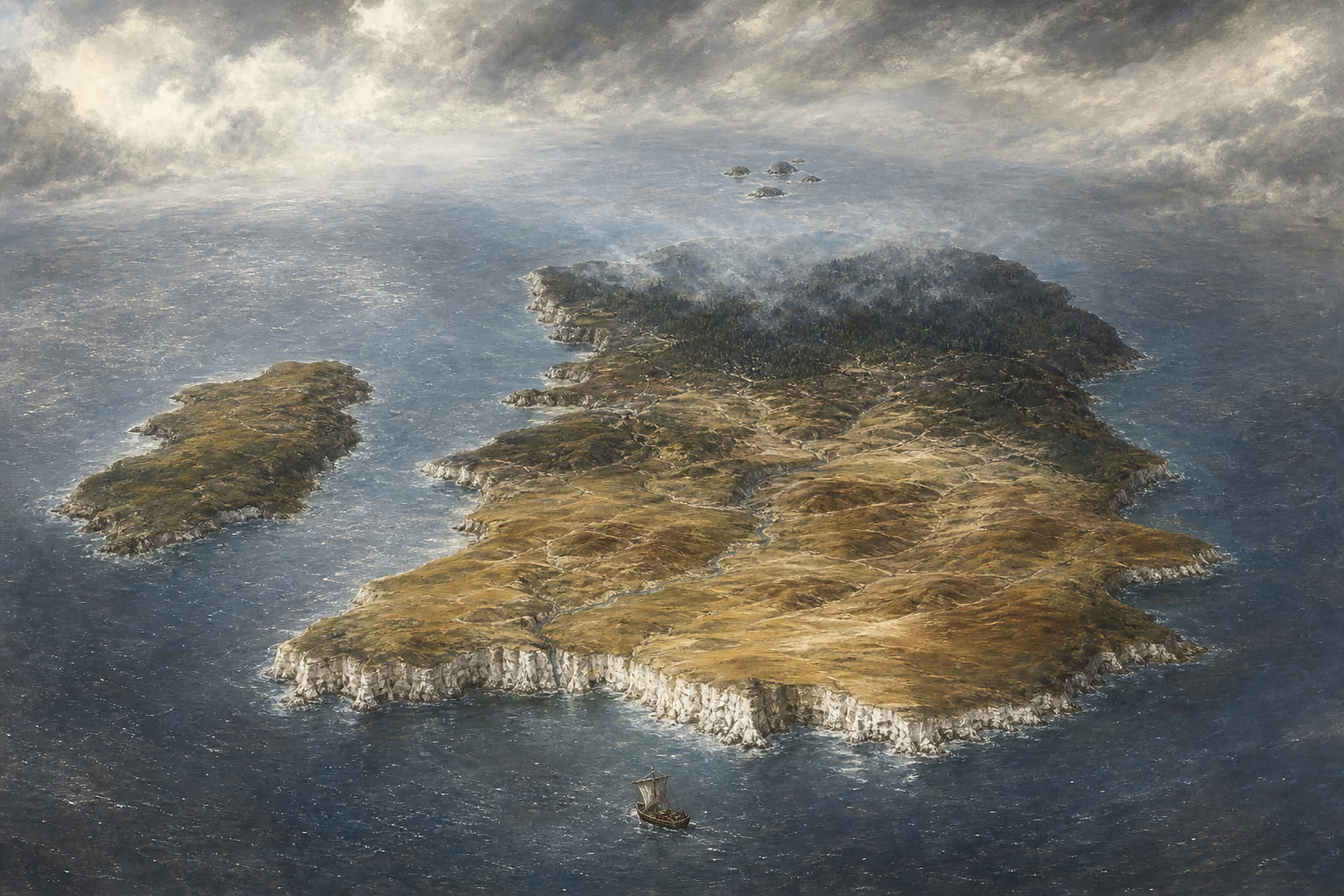
Ex adverso huius situs Britannia insula, clara Graecis nostrisque monimentis, inter septentrionem et occidentem iacet, Germaniae, Galliae, Hispaniae, multo maximis Europae partibus, magno intervallo adversa. Albion ipsi nomen fuit, cum Britanniae vocarentur omnes de quibus mox paulo dicemus. haec abest a Gesoriaco Morinorum gentis litore proximo traiectu L???. circuitu patere |XXXXVIII|.LXXV Pytheas et Isidorus tradunt, XXX prope iam annis notitiam eius Romanis armis non ultra vicinitatem silvae Calidoniae propagantibus. Agrippa longitudinem DCCC esse, latitudinem CCC credit, eandem Hiberniae, sed longitudinem CC minorem. super eam haec sita abest brevissimo transitu a Silurum gente XXX. reliquarum nulla CXXV amplior circuitu proditur. sunt autem XL Orcades, modicis inter se discretae spatiis, VII Haemodae, XXX Hebudes et inter Hiberniam ac Britanniam Mona, Monapia, Riginia, Vectis, Silumnus, Andros, infra vero Samnis et Axanthos et ab adversa in Germanicum mare sparsae Glaesiae, quas Electridas Graeci recentiores appellavere, quod ibi electrum nasceretur. ultima omnium quae memorantur Tyle, in qua solstitio nullas esse noctes indicavimus, cancri signum sole transeunte, nullosque contra per brumam dies. hoc quidam senis mensibus continuis fieri arbitrantur. Timaeus historicus a Britannia introrsus sex dierum navigatione abesse dicit insulam Ictim, in qua candidum plumbum proveniat; ad eam Britannosvitilibus navigiis corio circumsutis navigare. sunt qui et alias prodant, Scandias, Dumnam, Bergos maximamque omnium Berricen, ex qua in Tylen navigetur. a Tyle unius diei navigatione mare concretum a nonnullis Cronium appellatur.
English · Bostock & Riley 1855–57
Opposite to this coast is the island called Britannia, so celebrated in the records of Greece and of our own country. It is situate to the north-west, and, with a large tract of intervening sea, lies opposite to Germany, Gaul, and Spain, by far the greater part of Europe. Its former name was Albion; but at a later period, all the islands, of which we shall just now briefly make mention, were included under the name of “Britanniæ.” This island is distant from Gesoriacum, on the coast of the nation of the Morini, at the spot where the passage across is the shortest, fifty miles. Pytheas and Isidorus say that its circumference is 4875 miles. It is barely thirty years since any extensive knowledge of it was gained by the successes of the Roman arms, and even as yet they have not penetrated beyond the vicinity of the Caledonian forest. Agrippa believes its length to be 800 miles, and its breadth 300; he also thinks that the breadth of Hibernia is the same, but that its length is less by 200 miles. This last island is situate beyond Britannia, the passage across being the shortest from the territory of the Silures, a distance of thirty miles. Of the remaining islands none is said to have a greater circumference than 125 miles. Among these there are the Orcades, forty in number, and situate within a short distance of each other, the seven islands called Acmodæ, the Hæbudes, thirty in number, and, between Hibernia and Britannia, the islands of Mona, Monapia, Ricina, Vectis, Limnus, and Andros. Below it are the islands called Samnis and Axantos, and opposite, scattered in the German Sea, are those known as the Glæsariæ, but which the Greeks have more recently called the Electrides, from the circumstance of their producing electrum or amber. The most remote of all that we find mentioned is Thule, in which, as we have previously stated, there is no night at the summer solstice, when the sun is passing through the sign of Cancer, while on the other hand at the winter solstice there is no day. Some writers are of opinion that this state of things lasts for six whole months together. Timæus the historian says that an island called Mictis is within six days’ sail of Britannia, in which white lead is found; and that the Britons sail over to it in boats of osier, covered with sewed hides. There are writers also who make mention of some other islands, Scandia namely, Dumna, Bergos, and, greater than all, Nerigos, from which persons embark for Thule. At one day’s sail from Thule is the frozen ocean, which by some is called the Cronian Sea.