LIBER IV · CAPUT 20
NEARER SPAIN, ITS COAST ALONG THE GALLIC OCEAN
Latine · Mayhoff 1906
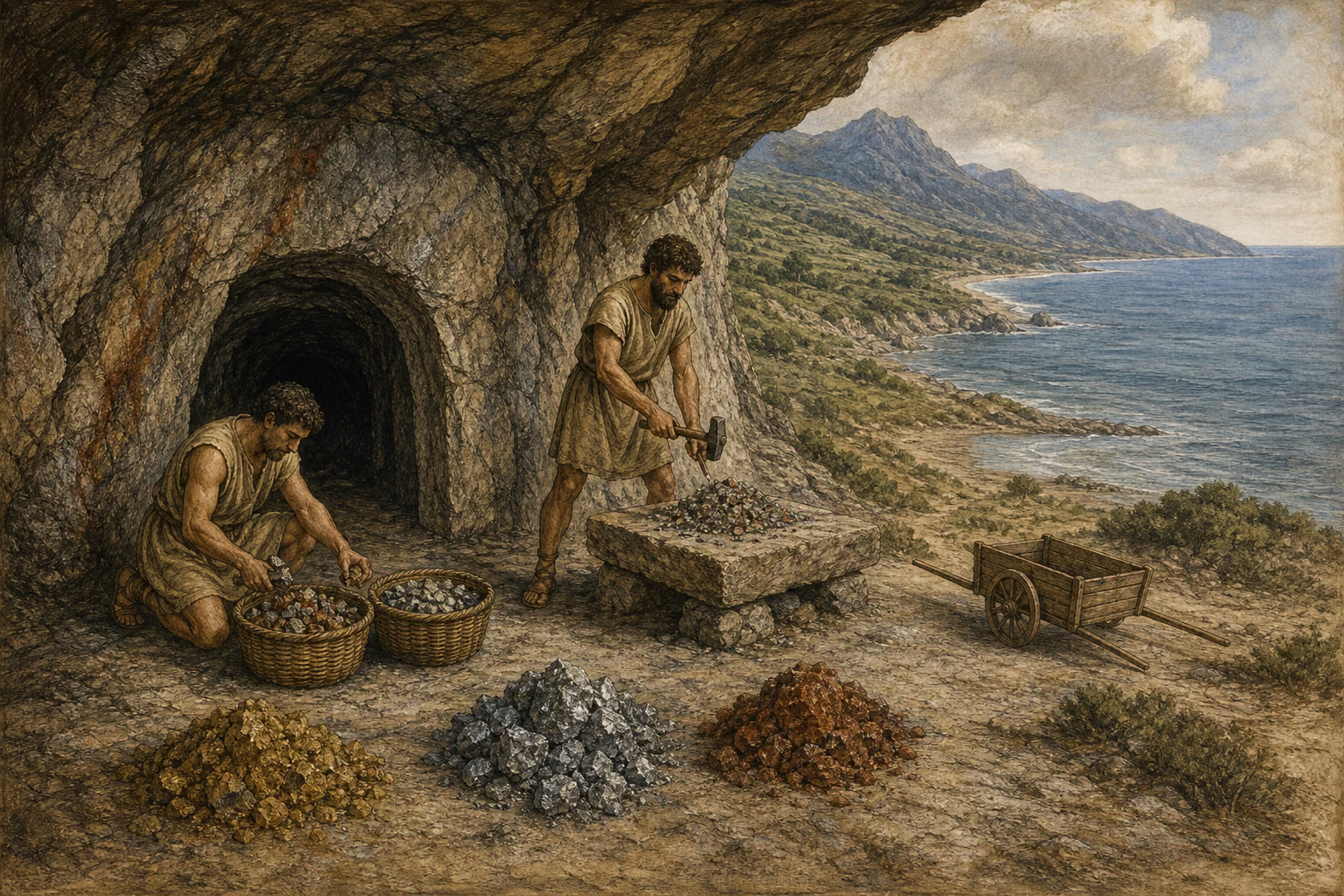
A Pyrenaei promunturio Hispania incipit, angustior non Gallia modo, verum etiam semet ipsa, ut diximus, inmensum quantum hinc oceano, illinc Hiberico mari comprimentibus. ipsa Pyrenaei iuga ab exortu aequinoctiali in occasum brumalem breviores quam latere meridiano Hispanias faciunt. proxima ora citerioris est eiusdemque Tarraconensis situs. a Pyrenaeo per oceanum Vasconum saltus, Olarso, Vardulorum oppida, Morogi, Menosca, Vesperies, Amanum portus, ubi nunc Flaviobrica colonia. civitatium novem regio Cantabrorum. flumen Sauga. portus Victoriae Iuliobrigensium; ab eo loco fontes HiberiXL p. portus Blendium. Orgenomesci e Cantabris; portus eorum Veseiasueca. regio Asturum, Noega oppidum. in paeninsula Paesici et deinde conventus Lucensis a flumine Navia Albiones, Cibarci, Egi, Varri cognomine Namarini, Adovi, Arroni, Arrotrebae. promunturium Celticum, amnes Florius, Nelo. Celtici cognomine Neri et super Tamarci, quorum in paeninsula tres arae Sestianae Augusto dicatae, Copori, oppidum Noeta, Celtici cognomine Praestamarci, Cileni. ex insulis nominandae Corticata et Aunios. a Cilenis conventus Bracarum Helleni, Grovi, castellum Tyde, Graecorum subolis omnia. insulae Siccae, oppidum Abobrica. Minius amnis, IIII ore spatiosus, Leuni, Seurbi, Bracarum oppidum Augusta, quos super Gallaecia. flumen Limia, Durius amnis e maximis Hispaniae, ortus in Pelendonibus et iuxta Numantiam lapsus, dein per Arevacos Vaccaeosque, disterminatis ab Asturia Vettonibus, a Lusitania Gallaecis, ibi quoque Turdulos a Bracaris arcens. omnis, quae dicta regio a Pyrenaeo, metallis referta auri, argenti, ferri, plumbi nigri albique.
English · Bostock & Riley 1855–57
At the Promontory of the Pyrenees Spain begins, more narrow, not only than Gaul, but even than itself in its other parts, as we have previously mentioned, seeing to what an immense extent it is here hemmed in by the ocean on the one side, and by the Iberian Sea on the other. A chain of the Pyrenees, extending from due east to south-west, divides Spain into two parts, the smaller one to the north, the larger to the south. The first coast that presents itself is that of the Nearer Spain, otherwise called Tarraconensis. On leaving the Pyrenees and proceeding along the coast, we meet with the forest ranges of the Vascones, Olarso, the towns of the Varduli, the Morosgi, Menosca, Vesperies, and the Port of Amanus, where now stands the colony of Flaviobriga. We then come to the district of the nine states of the Cantabri, the river Sauga, and the Port of Victoria of the Juliobrigenses, from which place the sources of the Iberus are distant forty miles. We next come to the Port of Blendium, the Orgenomesci, a people of the Cantabri, Vereasueca their port, the country of the Astures, the town of Noega, and on a peninsula, the Pæsici. Next to these we have, belonging to the jurisdiction of Lucus, after passing the river Navilubio, the Cibarci, the Egovarri, surnamed Namarini, the Iadoni, the Arrotrebæ, the Celtic Promontory, the rivers Florius and Nelo, the Celtici, surnamed Neri, and above them the Tamarici, in whose peninsula are the three altars called Sestianæ, and dedicated to Augustus; the Capori, the town of Noela, the Celtici surnamed Præsamarci, and the Cileni: of the islands, those worthy of mention are Corticata and Aunios. After passing the Cileni, belonging to the jurisdiction of the Bracari, we have the Heleni, the Gravii, and the fortress of Tyde, all of them deriving their origin from the Greeks. Also, the islands called Cicæ, the famous city of Abobrica, the river Minius, four miles wide at its mouth, the Leuni, the Seurbi, and Augusta, a town of the Bracari, above whom lies Gallæcia. We then come to the river Limia, and the river Durius, one of the largest in Spain, and which rises in the district of the Pelendones, passes near Numantia, and through the Arevaci and the Vaccæi, dividing the Vettones from Asturia, the Gallæci from Lusitania, and separating the Turduli from the Bracari. The whole of the region here mentioned from the Pyrenees is full of mines of gold, silver, iron, and lead, both black and white.