LIBER IV · CAPUT 22
THE ISLANDS IN THE ATLANTIC OCEAN
Latine · Mayhoff 1906
septentrio hinc oceanusque Gallicus, occasus illinc, oceanus Atlanticus. promunturi excursum LX prodidere, alii XC, ad Pyrenaeum inde non pauci |XII|.L???, et ibi gentem Artabrum, quae numquam fuit, manifesto errore. Arrotrebas enim, quos ante Celticum diximus promunturium, hoc in loco posuere litteris permutatis. erratum et in amnibus inclutis. ab Minio, quem supra diximus, CC, ut auctor est Varro, abest Aeminius, quem alibi quidam intellegunt et Limaeam vocant, Oblivionis antiquis dictus multumque fabulosus, ab Durio Tagus CC interveniente Munda. Tagus auriferis harenis celebratur. ab eo CLX promunturium Sacrum e media prope Hispaniae fronte prosilit. |XIIII| inde ad Pyrenaeum medium colligi Varro tradit, ad Anam vero, quo Lusitaniam a Baetica discrevimus, CXXVI, a Gadibus CII additis. gentes Celtici Turduli et circa Tagum Vettones, ab Ana ad Sacrum Lusitani. oppida a Tago memorabilia in ora Olisipo, equarum e favonio vento conceptu nobile, Salacia cognominata Vrbs Imperatoria, Merobrica. promunturium Sacrum et alterum Cuneus. oppida Ossonoba, Balsa, Myrtilis.
Vniversa provincia dividitur in conventus tres, Emeritensem, Pacensem, Scalabitanum, tota populorum XLV, in quibus coloniae sunt quinque, municipium civium Romanorum, Latii antiqui III, stipendiaria XXXVI. coloniae Augusta Emerita, Anae fluvio adposita, Metellinensis, Pacensis, Norbensis Caesarina cognomine; contributa sunt in eam Castra Servilia, Castra Caecilia. quinta est Scalabis quae Praesidium lulium vocatur. municipium civium Romanorum Olisipo, Felicitas Iulia cognominatum. oppida veteris Latii Ebora, quod item Liberalitas Iulia, et Myrtilis ac Salacia, quae diximus. stipendiariorum quos nominare non pigeat, praeter iam dictos in Baeticae cognominibus, Augustobrigenses, Aeminienses, Aranditani, Arabricenses, Balsenses, Caesarobrigenses, Caperenses, Caurienses, Colarni, Cibilitani, Concordienses, Elbocori, Interannienses, Lancienses, Mirobrigenses qui Celtici cognominantur, Medubrigenses qui Plumbari, Ocelenses, Turduli qui Bardili et Tapori.
Lusitaniam cum Asturia et Gallaecia patere longitudine DXL, latitudine DXXXVI, Agrippa prodidit. omnes autem Hispaniae a duobus Pyrenaei promunturiis per maria totius orae circuitu |XXVIIII|.XXIIII colligere existimantur, ab aliis |XXVI|.
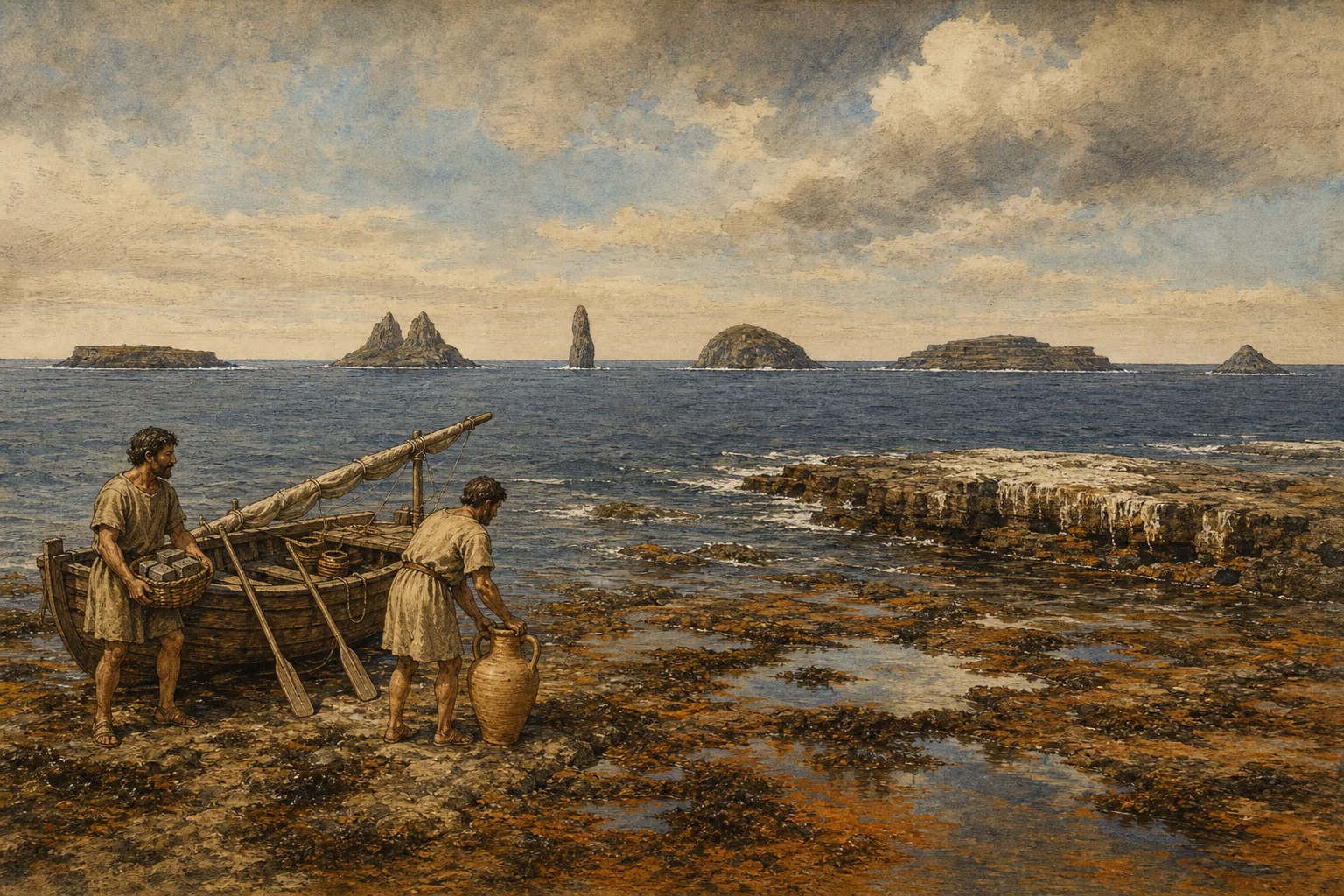
Ex adverso Celtiberiae conplures sunt insulae, Cassiterides dictae Graecis a fertilitate plumbi, et e regione Arrotrebarum promunturi Deorum VI, quas aliqui Fortunatas appellavere. in ipso vero capite Baeticae ab ostio freti p. XXV Gadis, longa, ut Polybius scribit, XII, lata III. abest a continente proxima parte minus pedes DCC, reliqua plus VII. ipsius spatiumXV est. habet oppidum civium Romanorum, qui appellantur Augustani Vrbe Iulia Gaditana. ab eo latere, quo Hispaniam spectat, passibus fere C altera insula est, longa M passus, M lata, in qua prius oppidum Gadium fuit. vocatur ab Ephoro et Philistide Erythea, a Timaeo et Sileno Aphrodisias, ab indigenis Iunonis. maiorem Timaeus Cotinusam aput eos vocitatam ait; nostri Tarteson appellant, Poeni Gadir, ita Punica lingua saepem significante. Erythea dicta est, quoniam Tyri aborigines earum orti ab Erythro mari ferebantur. in hac Geryones habitasse a quibusdam existimatur, cuius armenta Hercules abduxerit. sunt qui aliam esse eam et contra Lusitaniam arbitrentur, eodemque nomine quandam ibi appellant.
English · Bostock & Riley 1855–57
On one side of it lie the North and the Gallic Ocean, on the other the West and the Atlantic. The length of this promontory has been estimated by some persons at sixty miles, by others at ninety. A considerable number of writers estimate the distance from this spot to the Pyrenees at 1250 miles; and, committing a manifest error, place here the nation of the Artabri, a nation that never was here. For, making a slight change in the name, they have placed at this spot the Arrotrebæ, whom we have previously spoken of as dwelling in front of the Celtic Promontory.
Mistakes have also been made as to the more celebrated rivers. From the Minius, which we have previously mentioned, according to Varro, the river Æminius is distant 200 miles, which others suppose to be situate elsewhere, and called Limæa. By the ancients it was called the “River of Oblivion,” and it has been made the subject of many fabulous stories. At a distance of 200 miles from the Durius is the Tagus, the Munda lying between them. The Tagus is famous for its golden sands. At a distance of 160 miles from it is the Sacred Promontory, projecting from nearly the very middle of the front of Spain. From this spot to the middle of the Pyrenees, Varro says, is a distance of 1400 miles; while to the Anas, by which we have mentioned Lusitania as being separated from Bætica, is 126 miles, it being 102 more to Gades.
The peoples are the Celtici, the Turduli, and, about the Tagus, the Vettones. From the river Anas to the Sacred Promontory are the Lusitani. The cities worthy of mention on the coast, beginning from the Tagus, are that of Olisipo, famous for its mares, which conceive from the west wind; Salacia, which is surnamed the Imperial City; Merobrica; and then the Sacred Promontory, with the other known by the name of Cuneus, and the towns of Ossonoba, Balsa, and Myrtili.
The whole of this province is divided into three jurisdictions, those of Emerita, Pax, and Scalabis. It contains in all forty-six peoples, among whom there are five colonies, one municipal town of Roman citizens, three with the ancient Latin rights, and thirty-six that are tributaries. The colonies are those of Augusta Emerita, situate on the river Anas, Metallinum, Pax, and Norba, surnamed Cæsariana. To this last place of jurisdiction the people of Castra Servilia and Castra Cæcilia resort. The fifth jurisdiction is that of Scalabis, which also has the name of Præsidium Julium. Olisipo, surnamed Felicitas Julia, is a municipal city, whose inhabitants enjoy the rights of Roman citizens. The towns in the enjoyment of the ancient Latin rights are Ebora, which also has the name of Liberalitas Julia, and Myrtili and Salacia, which we have previously mentioned. Those among the tributaries whom it may not be amiss to mention, in addition to those already alluded to among the names of those in Bætica, are the Augustobrigenses, the Ammienses, the Aranditani, the Arabricenses, the Balsenses, the Cæsarobricenses, the Caperenses, the Caurenses, the Colarni, the Cibilitani, the Concordienses, the Elbocorii, the Interannienses, the Lancienses, the Mirobrigenses, surnamed Celtici, the Medubrigenses, surnamed Plumbarii, the Ocelenses or Lancienses, the Turduli, also called Barduli, and the Tapori. Agrippa states, that Lusitania, with Asturia and Gallæcia, is 540 miles in length, and 536 in breadth. The provinces of Spain, measured from the two extreme promontories of the Pyrenees, along the sea-line of the entire coast, are thought to be 3922 miles in circumference; while some writers make them to be but 2600.
Opposite to Celtiberia are a number of islands, by the Greeks called Cassiterides, in consequence of their abounding in tin: and, facing the Promontory of the Arrotrebæ, are the six Islands of the Gods, which some persons have called the Fortunate Islands. At the very commencement of Bætica, and twenty-five miles from the mouth of the Straits of Gades, is the island of Gadis, twelve miles long and three broad, as Polybius states in his writings. At its nearest part, it is less than 700 feet distant from the mainland, while in the remaining portion it is distant more than seven miles. Its circuit is fifteen miles, and it has on it a city which enjoys the rights of Roman citizens, and whose people are called the Augustani of the city of Julia Gaditana. On the side which looks towards Spain, at about 100 paces distance, is another long island, three miles wide, on which the original city of Gades stood. By Ephorus and Philistides it is called Erythia, by Timæus and Silenus Aphrodisias, and by the natives the Isle of Juno. Timæus says, that the larger island used to be called Cotinusa, from its olives; the Romans call it Tartessos; the Carthaginians Gadir, that word in the Punic language signifying a hedge. It was called Erythia because the Tyrians, the original ancestors of the Carthaginians, were said to have come from the Erythræan, or Red Sea. In this island Geryon is by some thought to have dwelt, whose herds were carried off by Hercules. Other persons again think, that his island is another one, opposite to Lusitania, and that it was there formerly called by that name.