LIBER V · CAPUT 24
THE EUPHRATES
Latine · Mayhoff 1906
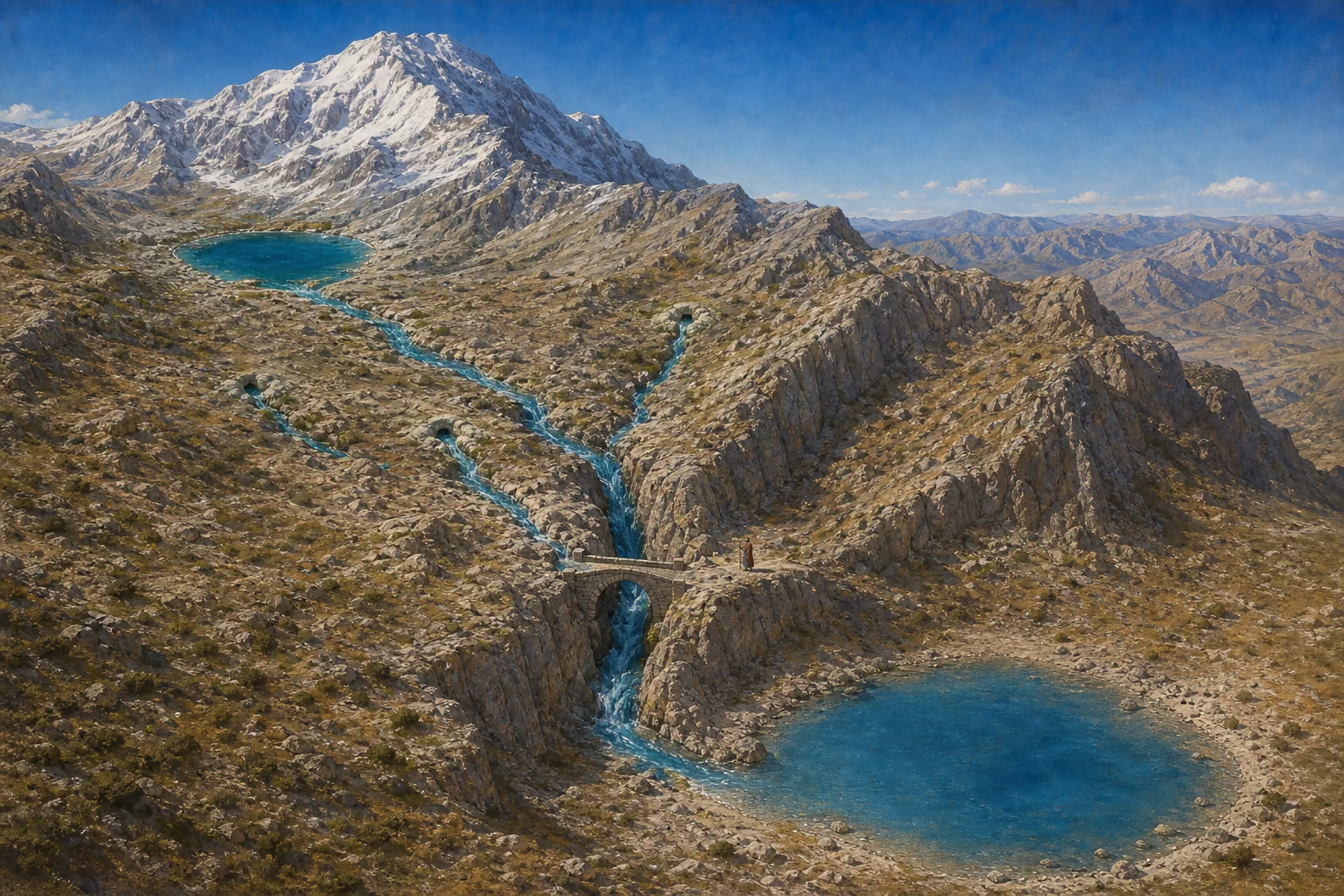
Et de Euphrate hoc in loco dixisse aptissimum fuerit. oritur in praefectura Armeniae Maioris Caranitide, ut prodidere ex iis, qui proxime viderunt, Domitius Corbulo, in monte Aga, Licinius Mucianus, sub radicibus montis, quem Capoten appellant, supra ZimaramXII p., initio Pyxurates nominatus. fluit Derzenen primum, mox Anaeticam, Armeniae regiones a Cappadocia excludens. Dascusa abest a ZimaraLXXV p.; inde navigatur Sartonam L???, Melitenen Cappadociae XXIIII, Elegeam Armeniae X???, acceptis fluminibus Lyco, Arsania, Arsano. apud Elegeam occurrit ei Taurus mons nec resistit, quamquam XII p. latitudine praevalens. Ommam vocant inrumpentem, mox ubi perfregit, Euphraten, ultra quoque saxosum et violentum. Arabiam inde laeva, Orroeon dictam regionem, trischoena mensura, dextraque Commagenen disterminat, pontis tamen, etiam ubi Taurum expugnat, patiens. apud Claudiopolim Cappadociae cursum ad occasum solis agit. primo hunc illic in pugna Taurus aufert victusque et abscisus sibimet alio modo vincit ac fractum expellit in meridiem. ita naturae dimicatio illa aequatur, hoc eunte quo vult, illo prohibente ire qua velit. a catarractis iterum navigatur. XL p. inde Commagenes caput Samosata.
Arabia supra dicta habet oppida Edessam, quae quondam Antiochia dicebatur, Callirrhoen, a fonte nominatam, Carrhas, Crassi clade nobile. iungitur praefectura Mesopotamiae, ab Assyriis originem trahens, in qua Anthemusia et Nicephorium oppida. mox Arabes qui Praetavi vocantur; horum caput Singara. a Samosatis autem latere Syriae Marsyas amnis influit. Cingilla Commagenen finit, Imeneorum civitas incipit. oppida adluuntur Epiphania et Antiochia, quae Ad Euphraten vocantur, item ZeugmaLXXII p. a Samosatis, transitu Euphratis nobile. ex adverso Apameam Seleucus, idem utriusque conditor, ponte iunxerat. qui cohaerent Mesopotamiae, Rhoali vocantur. at in Syria oppida Europum, Thapsacum quondam, nunc Amphipolis; Arabes Scenitae. ita fertur usque Suram locum, in quo conversus ad orientem relinquit Syriae Palmyrenas solitudines, quae usque ad Petram urbem et regionem Arabiae Felicis appellatae pertinent.
English · Bostock & Riley 1855–57
This place, too, will be the most appropriate one for making some mention of the Euphrates. This river rises in Caranitis, a præfecture of Greater Armenia, according to the statement of those who have approached the nearest to its source. Domitius Corbulo says, that it rises in Mount Aba; Licinius Mucianus, at the foot of a mountain which he calls Capotes, twelve miles above Zimara, and that at its source it has the name of Pyxurates. It first flows past Derxene, and then Anaitica, shutting out the regions of Armenia from Cappadocia. Dascusa is distant from Zimara seventy-five miles; from this spot it is navigable as far as Sartona, a distance of fifty miles, thence to Melitene, in Cappadocia, distant seventy-four miles, and thence to Elegia, in Armenia, distant ten miles; receiving in its course the rivers Lycus, Arsanias, and Arsanus. At Elegia it meets the range of Mount Taurus, but no effectual resistance is offered to its course, although the chain is here twelve miles in width. At its passage between the mountains, the river bears the name of Omma; but afterwards, when it has passed through, it receives that of Euphrates. Beyond this spot it is full of rocks, and runs with an impetuous tide. It then divides that part of Arabia which is called the country of the Orei, on the left, by a channel three schœni in width, from the territory of the Commageni on the right, and it admits of a bridge being thrown across it, even where it forces a passage through the range of Taurus. At Claudiopolis, in Cappadocia, it takes an easterly direction; and here, for the first time in this contest, Taurus turns it out of its course; though conquered before, and rent asunder by its channel, the mountain-chain now gains the victory in another way, and, breaking its career, compels it to take a southerly direction. Thus is this warfare of nature equally waged,—the river proceeding onward to the destination which it intends to reach, and the mountains forbidding it to proceed by the path which it originally intended. After passing the Cataracts, the river again becomes navigable; and, at a distance of forty miles from thence, is Samosata, the capital of Commagene.
Arabia, above mentioned, has the cities of Edessa, formerly called Antiochia, and, from the name of its fountain, Callirhoë, and Carrhæ, memorable for the defeat of Crassus there. Adjoining to this is the præfecture of Mesopotamia, which derives its origin from the Assyrians, and in which are the towns of Anthemusia and Nicephorium; after which come the Arabians, known by the name of Prætavi, with Singara for their capital. Below Samosata, on the side of Syria, the river Marsyas flows into the Euphrates. At Cingilla ends the territory of Commagene, and the state of the Immei begins. The cities which are here washed by the river are those of Epiphania and Antiochia, generally known as Epiphania and Antiochia on the Euphrates; also Zeugma, seventy-two miles distant from Samosata, famous for the passage there across the Euphrates. Opposite to it is Apamia, which Seleucus, the founder of both cities, united by a bridge. The people who join up to Mesopotamia are called the Rhoali. Other towns in Syria are those of Europus, and what was formerly Thapsacus, now Amphipolis. We then come to the Arabian Scenitæ. The Euphrates then proceeds in its course till it reaches the place called Ura, at which, taking a turn to the east, it leaves the Syrian Deserts of Palmyra, which extend as far as the city of Petra and the regions of Arabia Felix.