LIBER V · CAPUT 29
LYDIA
Latine · Mayhoff 1906
imposita est Lyco flumini, latera adluentibus Asopo et Capro, appellata primo Diospolis, dein Rhoas. reliqui in eo conventu, quos nominare non pigeat, Hydrelitae, Themisones, Hierapolitae. alter conventus a Synnade accepit nomen; conveniunt Lycaones, Appiani, Corpeni, Dorylaei, Midaei, lulienses et reliqui ignobiles populi XV. tertius Apameam vadit, ante appellatam Celaenas, deinde Ciboton. sita est in radice montis Signiae, circumfusa Marsya, Obrima, Orba fluminibus in Maeandrum cadentibus. Marsyas ibi redditur, ortus ac paulo mox conditus. ubi certavit tibiarum cantu cum Apolline, Aulocreneest; ita vocatur convallis, X??? p. ab Apamea Phrygiam petentibus. ex hoc conventu deceat nominare Metropolitas, Dionysopolitas, Euphorbenos, Acmonenses, Peltenos, Silbianos. reliqui ignobiles VIIII.
Doridis in sinu Leucopolis, Hamaxitos, Eleus, Etene. dein Cariae oppida Pitaium, Eutane, Halicarnasus. sex oppida contributa ei sunt a Magno Alexandro, Theangela, Side, Medmassa, Vranium, Pedasum, Telmisum. habitatur inter duos sinus, Ceramicum et Iasium. inde Myndos et ubi fuit Palaemyndus, Nariandos, Neapolis, Caryanda, Termera libera, Bargylia et, a quo sinus Iasius, oppidum Iasus. Caria interiorum nominum fama praenitet. quippe ibi sunt oppida Mylasa libera, Antiochia, ubi fuere Symmaethos et Cranaos oppida; nunc eam circumfluunt Maeander et Morsynus. fuit in eo tractu et Maeandropolis, est Eumenia, Cludro flumini adposita, Glaucus amnis, Lysias oppidum et Orthosia, Berecynthius tractus, Nysa, Trallis, eadem Euanthia et Seleucia et Antiochia dicta; adluitur Eudone amne, perfunditur Thebaite. quidam ibi Pygmaeos habitasse tradunt. praeterea sunt Thydonos, Pyrrha, Eurome, Heraclea, Amyzon, Alabanda libera, quae conventum eum cognominavit, Stratonicea libera, Labrayndos, Ceramus, Troezene, Phorontis. longinquiores eodem foro disceptant Orthronienses, Alindienses, Euhippini, Xystiani, Hydissenses, Apolloniatae, Trapezopolitae, Aphrodisienses liberi. praeter haec sunt Coscinus, Harpasa, adposita fluvio Harpaso, quo et Trallicon, cum fuit, adluebatur.
Lydia autem perfusa flexuosis Maeandri amnis recursibus super Ioniam procedit, Phrygiae ab exortu solis vicina, ad septentrionem Mysiae, meridiana parte Cariam amplectens, Maeonia ante appellata. celebratur maxime Sardibus in latere Tmoli montis, qui ante Timolus appellabatur, conditis; ex quo profluente Pactolo eodemque Chrysorroa ac fonte Tarni a Maeonis civitas ipsa Hyde vocitata est, clara stagno Gygaeo. Sardiana nunc appellatur ea iurisdictio, conveniuntque in eam extra praedictos Macedones Cadieni, Philadelphini et ipsi in radice Tmoli Cogamo flumini adpositi Maeonii, Tripolitani, iidem et Antoniopolitae — Maeandro adluuntur —, Apollonhieritae, Mysotimolitae et alii ignobiles.
Ionia, ab Iasio sinu incipiens, numerosiore ambitu litorum flectitur. in ea primus sinus Basilicus, Posideum promunturium et oppidum, Oraculum Branchidarum appellatum, nunc Didymei Apollinis, a litore stadiis XX, et inde CLXXX Miletus, Ioniae caput, Lelegeis ante et Pityusa et Anactoria nominata, super LXXXX urbium per cuncta maria genetrix nec fraudanda cive Cadmo, qui primus prorsam orationem condere instituit. amnis Maeander, ortus e lacu in monte Aulocrene plurimisque adfusus oppidis et repletus fluminibus crebris, ita sinuosus flexibus, ut saepe credatur reverti, Apamenam primum pervagatur regionem, mox Eumeneticam ac deinde Hyrgaleticos campos, postremo Cariam, placidus omnesque eos agros fertilissimo rigans limo, ad decumum a Mileto stadium lenis inlabitur mari. inde mons Latmus, oppida Heraclea, montis eius cognominis Carice, Myuus, quod primo condidisse ones narrantur Athenis profecti, Naulochum, Priene, in ora, quae Troglea appellatur, Gaesus amnis, regio omnibus Ionibus sacra et ideo Panionia appellata; iuxta fugitivis conditum, uti nomen indicio est, Phygela fuit et Marathesium oppidum. supra haec Magnesia Maeandri cognomine insignis, Thessalica Magnesia orta. abest Epheso XV p., Trallibus eo amplius MMM. antea Thessaloche et Mandrolytia nominata et litori adposita Derasidas insulas secum abstulit mari. intus et Thyatira adluitur Lyco, Pelopia aliquando et Euhippia cognominata. in ora autem Matium, Ephesus, Amazonum opus, multis antea expetita nominibus, Alopes, cum pugnatum apud Troiam est, mox Ortygiae, Amorges. vocata et Smyrna est, cognomine Trachia, et Haemonion et Ptelea. attollitur monte Pione, adluitur Caystro, in Cilbianis iugis orto multosque amnes deferente et stagnum Pegaseum, quod Phyrites amnis expellit. ab iis multitudo limi est, qua terras propagat mediisque iam campis Syrien insulam adiecit. fons in urbe Callippia et templum Dianae conplexi e diversis regionibus duo Selenuntes. ab Epheso Matium aliud Colophoniorum et intus ipsa Colophon, Haleso adfluente. inde Apollinis Clarii fanum, Lebedos — fuit et Notium oppidum —, promunturium Cyrenaeum, mons MimasCLp. excurrens atque in continentibus campis residens. quo in loco Magnus Alexander intercidi planitiem eam iusserat VII. D p. longitudine, ut duos sinus iungeret Erythrasque cum Mimante circumfunderet. iuxta eas fuerunt oppida Pteleon, Helos, Dorion, nunc est Aleon fluvius, Corynaeum, Mimantis promunturium, Clazomenae, Parthenie et Hippi, Chytrophoria appellatae, cum insulae essent. iusserat Alexander idem per duo stadia continenti adnecti interiere intus Daphnus et Hermesta et Sipylum, quod ante Tantalis vocabatur, caput Maeoniae, ubi nunc est stagnum Sale. obiit et Archaeopolis, substituta Sipylo, et inde illi Colpe et huic Libade. regredientibus inde abest XII p., ab Amazone condita, restituta ab Alexandro, in ora Zmyrna, amne Melete gaudens non procul orto. montes Asiae nobilissimi in hoc tractu fere explicant se: Mastusia a tergo Zmyrnae et Termetis Olympi radicibus iunctus in Dracone desinit, Draco in Tmolo, Tmolus in Cadmo, ille in Tauro. a Zmyrna Hermus amnis campossecat et nomini suo adoptat. oritur iuxta Dorylaum, Phrygiae civitatem, multosque colligit fluvios, inter quos Phrygem, qui nomine genti dato a Caria eam disterminat, Hyllum et Cryon, ipsos Phrygiae, Mysiae, Lydiae amnibus repletos. fuit in ore eius oppidum Temnos, nunc in extremo sinu Myrmeces scopuli, oppidum Leucae in promunturio, quod insula fuit, finisque Ioniae Phocaea. Zmyrnaeum conventum magna pars et Aeoliae, quae mox dicetur, frequentat praeterque Macedones Hyrcani cognominati et Magnetes a Sipylo. verum Ephesum, alterum lumen Asiae, remotiores conveniunt Caesarienses, Metropolitae, Cilbiani Inferiores et Superiores, Mysomacedones, Mastaurenses, Briullitae, Hypaepeni, Dioshieritae.
English · Bostock & Riley 1855–57
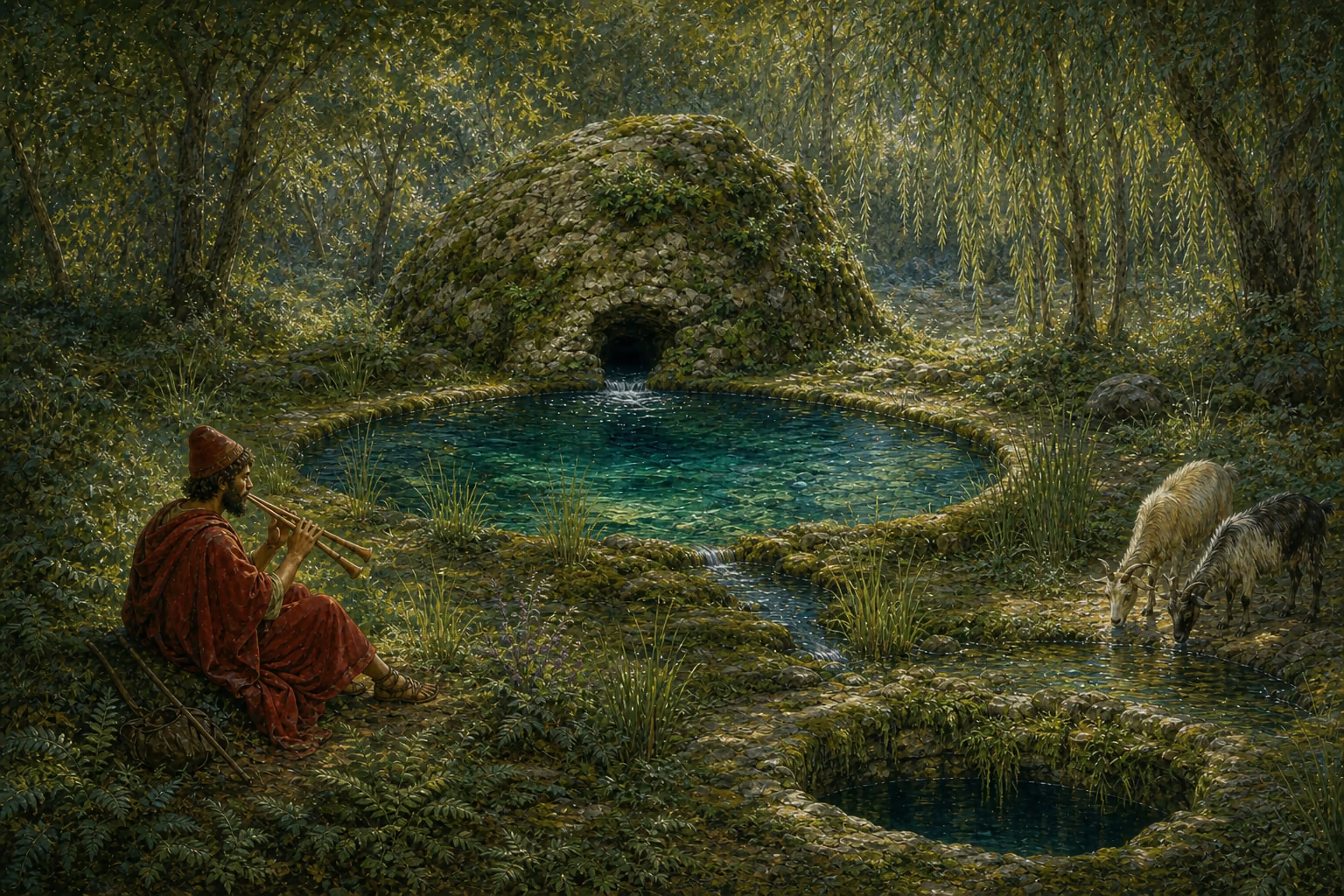
This place at first bore the name of Diospolis, and after that of Rhoas, and is situate on the river Lycus, the Asopus and the Caprus washing its sides. The other people belonging to the same jurisdiction, whom it may be not amiss to mention, are the Hydrelitæ, the Themisones, and the Hierapolitæ. The second jurisdiction receives its title from Synnas; to it resort the Lycaones, the Appiani, the Eucarpeni, the Dorylæi, the Midæi, the Julienses, and fifteen other peoples of no note. The third jurisdiction has its seat at Apamea, formerly called Celænæ, and after that Cibotos. This place is situate at the foot of Mount Signia, the Marsyas, the Obrima, and the Orga, rivers which fall into the Mæander, flowing past it. Here the Marsyas, rising from the earth, again makes its appearance, but soon after buries itself once more at Aulocrenæ, the spot where Marsyas had the musical contest with Apollo as to superiority of skill in playing on the flute. Aulocrenæ is the name given to a valley which lies ten miles on the road towards Phrygia from Apamea. As belonging to this jurisdiction, it may be as well to mention the Metropolitæ, the Dionysopolitæ, the Euphorbeni, the Acmonenses, the Pelteni, and the Silbiani, besides nine other nations of no note.
Upon the Gulf of Doris we have Leucopolis, Hamaxitos, Eleus, and Euthene. We then come to Pitaium, Eutane, and Halicarnassus, towns of Caria. To the jurisdiction of this last place six towns were appended by Alexander the Great, Theangela, Sibde, Medmasa, Euralium, Pedasus, and Telmissus. Halicarnassus lies between two gulfs, those of Ceramus and Iasus. We then come to Myndos, and the former site of Palæomyndos; also Nariandos, Neapolis, Caryanda, the free town of Termera, Bargyla, and the town of Iasus, from which the Iasian Gulf takes its name.
Caria is especially distinguished for the fame of its places in the interior; for here are Mylasa, a free town, and that of Antiochia, on the site of the former towns of Symmæthos and Cranaos: it is now surrounded by the rivers Mæander and Orsinus. In this district also was formerly Mæandropolis; we find also Eumenia, situate on the river Cludros, the river Glaucus, the town of Lysias and Orthosa, the district of Berecynthus, Nysa, and Tralles, also called Euanthia, Seleucia, and Antiochia: it is washed by the river Eudon, while the Thebais runs through it. Some authors say that a nation of Pygmies formerly dwelt here. Besides the preceding towns, there are Thydonos, Pyrrha, Eurome, Heraclea, Amyzon, the free town of Alabanda, which has given name to that jurisdiction, the free town of Stratonicea, Hynidos, Ceramus, Trœzene, and Phorontis. At a greater distance, but resorting to the same place of jurisdiction, are the Orthronienses, the Alindienses or Hippini, the Xystiani, the Hydissenses, the Apolloniatæ, the Trapezopolitæ, and the Aphrodisienses, a free people. Besides the above, there are the towns of Coscinus, and Harpasa, situate on the river Harpasus, which also passed the town of Trallicon when it was in existence.
Lydia, bathed by the sinuous and ever-recurring windings of the river Mæander, lies extended above Ionia; it is joined by Phrygia on the east and Mysia on the north, while on the south it runs up to Caria: it formerly had the name of Mæonia. Its place of the greatest celebrity is Sardes, which lies on the side of Mount Tmolus, formerly called Timolus. From this mountain, which is covered with vineyards, flows the river Pactolus, also called the Chrysorroas, and the sources of the Tarnus: this famous city, which is situate upon the Gygæan Lake, used to be called Hyde by the people of Mæonia. This jurisdiction is now called that of Sardes, and besides the people of the places already mentioned, the following now resort to it—the Macedonian Cadueni, the Loreni, the Philadelpheni, the Mæonii, situate on the river Cogamus at the foot of Mount Tmolus, the Tripolitani, who are also called the Antoniopolitæ, situate on the banks of the Mæander, the Apollonihieritæ, the Mesotimolitæ, and some others of no note.
Ionia begins at the Gulf of Iasos, and has a long winding coast with numerous bays. First comes the Gulf of Basilicum, then the Promontory and town of Posideum, and the oracle once called the oracle of the Branchidæ, but now of Didymæan Apollo, a distance of twenty stadia from the sea-shore. One hundred and eighty stadia thence is Miletus, the capital of Ionia, which formerly had the names of Lelegëis, Pityusa, and Anactoria, the mother of more than ninety cities, founded upon all seas; nor must she be deprived of the honour of having Cadmus for her citizen, who was the first to write in prose. The river Mæander, rising from a lake in Mount Aulocrene, waters many cities and receives numerous tributary streams. It is so serpentine in its course, that it is often thought to turn back to the very spot from which it came. It first runs through the district of Apamea, then that of Eumenia, and then the plains of Bargyla; after which, with a placid stream it passes through Caria, watering all that territory with a slime of a most fertilizing quality, and then at a distance of ten stadia from Miletus with a gentle current enters the sea. We then come to Mount Latmus, the towns of Heraclea, also called by the same name as the mountain, Carice, Myus, said to have been first built by Ionians who came from Athens, Naulochum, and Priene. Upon that part of the coast which bears the name of Trogilia is the river Gessus. This district is held sacred by all the Ionians, and thence receives the name of Panionia. Near to it was formerly the town of Phygela, built by fugitives, as its name implies, and that of Marathesium. Above these places is Magnesia, distinguished by the surname of the “Mæandrian,” and sprung from Magnesia in Thessaly: it is distant from Ephesus fifteen miles, and three more from Tralles. It formerly had the names of Thessaloche and Androlitia, and, lying on the sea-shore, it has withdrawn from the sea the islands known as the Derasidæ and joined them to the mainland. In the interior also is Thyatira, washed by the Lycus; for some time it was also called Pelopia and Euhippia.
Upon the coast again is Mantium, and Ephesus, which was founded by the Amazons, and formerly called by so many names: Alopes at the time of the Trojan war, after that Ortygia and Morges, and then Smyrna, with the surname of Trachia, as also Samornion and Ptelea. This city is built on Mount Pion, and is washed by the Caÿster, a river which rises in the Cilbian range and brings down the waters of many streams, as also of Lake Pegasæus, which receives those discharged by the river Phyrites. From these streams there accumulates a large quantity of slime, which vastly increases the soil, and has added to the mainland the island of Syrie, which now lies in the midst of its plains. In this city is the fountain of Calippia and the temple of Diana, which last is surrounded by two streams, each known by the name of Selenus, and flowing from opposite directions.
After leaving Ephesus there is another Mantium, belonging to the Colophonians, and in the interior Colophon itself, past which the river Halesus flows. After this we come to the temple of the Clarian Apollo, and Lebedos: the city of Notium once stood here. Next comes the Promontory of Coryceium, and then Mount Mimas, which projects 150 miles into the sea, and as it approaches the mainland sinks down into extensive plains. It was at this place that Alexander the Great gave orders for the plain to be cut through, a distance of seven miles and a half, for the purpose of joining the two gulfs and making an island of Erythræ and Mimas. Near Erythræ formerly stood the towns of Pteleon, Helos, and Dorion; we now find the river Aleon, Corynæum, a Promontory of Mount Mimas, Clazomenæ, Parthenie, and Hippi, known by the name of Chytrophoria, when it formed a group of islands; these were united to the continent by the same Alexander, by means of a causeway two stadia in length. In the interior, the cities of Daphnus, Hermesia, and Sipylum, formerly called Tantalis, and the capital of Mæonia, where Lake Sale now stands, are now no longer in existence: Archæopolis too, which succeeded Sipylum, has perished, and in their turns Colpe and Libade, which succeeded it.
On returning thence towards the coast, at a distance of twelve miles we find Smyrna, originally founded by an Amazon [of that name], and rebuilt by Alexander; it is refreshed by the river Meles, which rises not far off. Through this district run what may almost be called the most famous mountains of Asia, Mastusia in the rear of Smyrna, and Termetis, joining the foot of Olympus. Termetis is joined by Draco, Draco running into Tmolus, Tmolus into Cadmus, and Cadmus into Taurus. Leaving Smyrna, the river Hermus forms a tract of plains, and gives them its own name. It rises near Dorylæum, a city of Phrygia, and in its course receives several rivers, among them the one called the Phryx, which divides Caria from the nation to which it gives name; also the Hyllus and the Cryos, themselves swollen by the rivers of Phrygia, Mysia, and Lydia. At the mouth of the Hermus formerly stood the town of Temnos: we now see at the extremity of the gulf the rocks called Myrmeces, the town of Leuce on a promontory which was once an island, and Phocæa, the frontier town of Ionia.
A great part also of Æolia, of which we shall have presently to speak, has recourse to the jurisdiction of Smyrna; as well as the Macedones, surnamed Hyrcani, and the Magnetes from Sipylus. But to Ephesus, that other great luminary of Asia, resort the more distant peoples known as the Cæsarienses, the Metropolitæ, the Cilbiani, both the Lower and Upper, the Mysomacedones, the Mastaurenses, the Briulitæ, the Hypæpeni, and the Dioshïeritæ.