LIBER VI · CAPUT 11
THE PASSES OF THE CAUCASUS
Latine · Mayhoff 1906
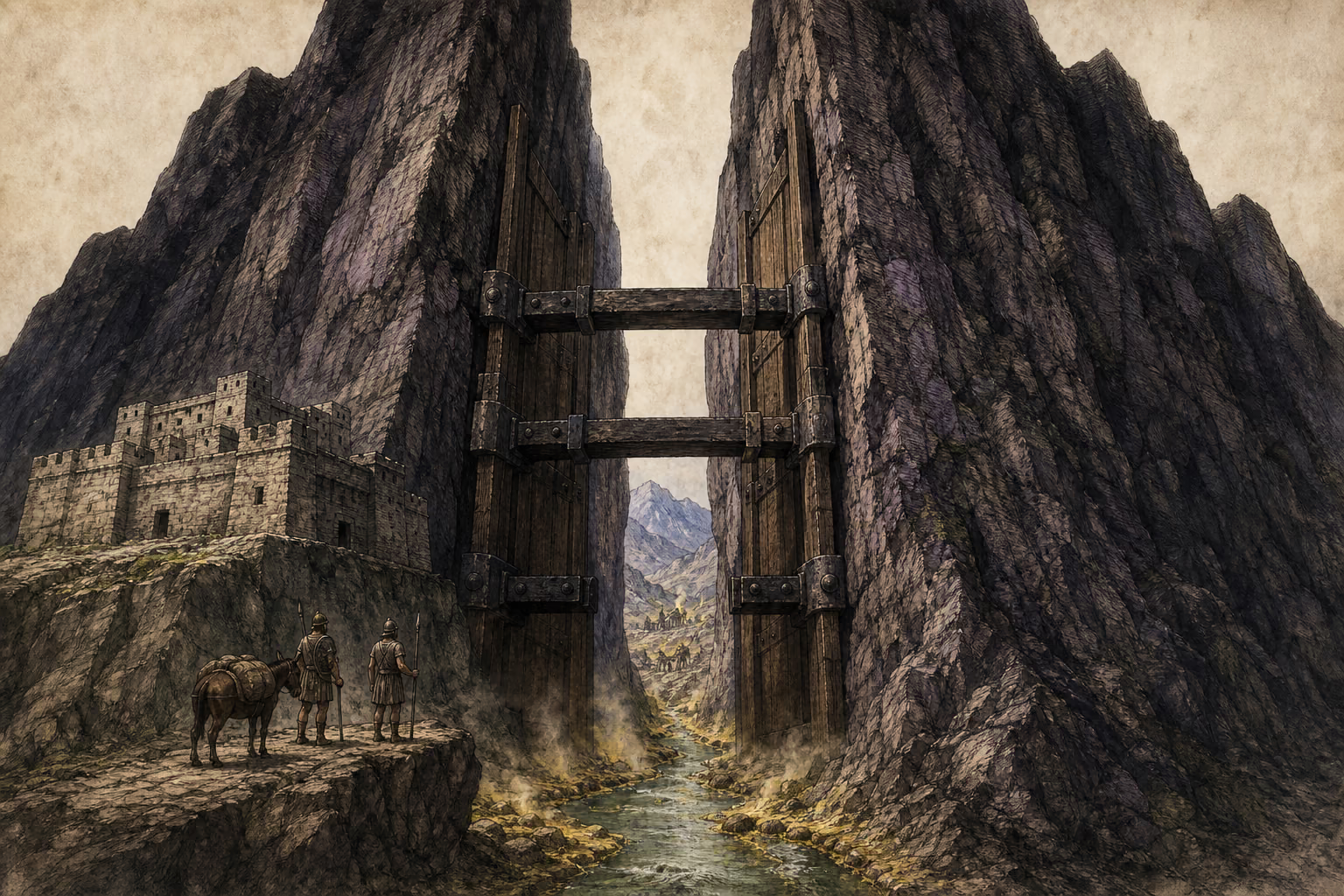
Ab iis sunt Portae Caucasiae, magno errore multis Caspiae dictae, ingens naturae opus montibus interruptis repente, ubi fores additae ferratis trabibus, subter medias amne diri odoris fluente citraque in rupe castello, quod vocatur Cumania, communito ad arcendas transitu gentes innumeras, ibi loci terrarum orbe portis discluso, ex adverso maxime Harmasti oppidi Hiberum. a Portis Caucasis per montes Gurdinios Valli, Suani, in- domitae gentes, auri tamen metalla fodiunt. ab his ad Pontum usque Heniochorum plurima genera, mox Achaeorum. ita se habet haec terrarum e clarissimis. aliqui inter Pontum et Caspium mare CCCLXXV p. non amplius interesse tradiderunt, Cornelius Nepos CCL: tantis iterum angustiis infestatur Asia. Claudius Caesar a Cimmerio Bosporo ad Caspium mare CL prodidit eaque perfodere cogitasse Nicatorem Seleucum quo tempore sit ab Ptolemaeo Cerauno interfectus. a Portis Caucasiis ad Pontum CC esse constat fere.
English · Bostock & Riley 1855–57
After passing the last, we come to the Gates of Caucasus, by many persons most erroneously called the Caspian Passes; a vast work of nature, which has suddenly wrenched asunder in this place a chain of mountains. At this spot are gates barred up with beams shod with iron, while beneath the middle there runs a stream which emits a most fetid odour; on this side of it is a rock, defended by a fortress, the name of which is Cumania, erected for the purpose of preventing the passage of the innumerable tribes that lie beyond. Here, then, we may see the habitable world severed into two parts by a pair of gates; they are just opposite to Harmastis, a town of the Iberi.
Beyond the Gates of Caucasus, in the Gordyæan Mountains, the Valli and the Suani, uncivilized tribes, are found; still, however, they work the mines of gold there. Beyond these nations, and extending as far away as Pontus, are numerous nations of the Heniochi, and, after them, of the Achæi. Such is the present state of one of the most famous tracts upon the face of the earth.
Some writers have stated that the distance between the Euxine and the Caspian Sea is not more than three hundred and seventy-five miles; Cornelius Nepos makes it only two hundred and fifty. Within such straits is Asia pent up in this second instance by the agency of the sea! Claudius Cæsar has informed us that from the Cimmerian Bosporus to the Caspian Sea is a distance of only one hundred and fifty miles, and that Nicator Seleucus contemplated cutting through this isthmus just at the time when he was slain by Ptolemy Ceraunus. It is a well-known fact that the distance from the Gates of Caucasus to the shores of the Euxine is two hundred miles.