LIBER VII · CAPUT 15
REMARKABLE CIRCUMSTANCES CONNECTED WITH THE MENSTRUAL DISCHARGE
Latine · Mayhoff 1906
Solum autem animal menstruale mulier est; inde unius utero quas appellaverunt molas. ea est caro informis, inanima, ferri ictum et aciem respuens. movetur sistitque et menses, ut partus, alias letalis, alias una senescens, aliquando alvo citatiore excidens. simile quiddam et viris in ventre gignitur, quod vocant scirron, sicut Oppio Capitoni praetorio viro. sed nihil facile reperiatur mulierum profluvio magis monstrificum. acescunt superventu musta, sterilescunt tactae fruges, moriuntur insita, exuruntur hortorum germina, fructus arborum, quibus insidere, decidunt, speculorum fulgor aspectu ipso hebetatur, acies ferri praestringitur, eboris nitor, alvi apium moriuntur, aes etiam ac ferrum robigo protinus corripit odorque dirus aera, et in rabiem aguntur gustato eo canes atque insanabili veneno morsus inficitur. quin et bituminum sequax alioqui ac lenta natura in lacu Iudaeae, qui vocatur Asphaltites, certo tempore anni supernatans non quit sibi avelli, ad omnem contactum adhaerens praeterquam filo..., quem tale virus infecerit. etiam formicis, animali minimo, inesse sensum eius ferunt abicique gustatas fruges nec postea repeti. et hoc tale tantumque omnibus tricenis diebus malum in muliere existit et trimenstri spatio largius, quibusdam vero saepius mense, sicut aliquis numquam. sed tales non gignunt, quando haec est generando homini materia, germine e maribus coaguli modo hoc in sese glomerante, quod deinde tempore ipso animatur corporaturque. ergo cum gravidis fluxit, invalidi aut non vitales partus eduntur aut saniosi, ut auctor est Nigidius; —
English · Bostock & Riley 1855–57
Among the whole range of animated beings, the human female is the only one that has the monthly discharge, and in whose womb are found what we term “moles.” These moles consist of a shapeless mass of flesh, devoid of all life, and capable of resisting either the edge or the point of the knife; they are movable in the body, and obstruct the menstrual discharge; sometimes, too, they are productive of fatal consequences to the woman, in the same manner as a real fœtus; while, at other times, they remain in the body until old age; in some cases, again, they are discharged, in consequence of an increased action of the bowels. Something of a very similar nature is produced in the body of the male, which is called a “schirrus;” this was the case with Oppius Capito, a man of prætorian rank.
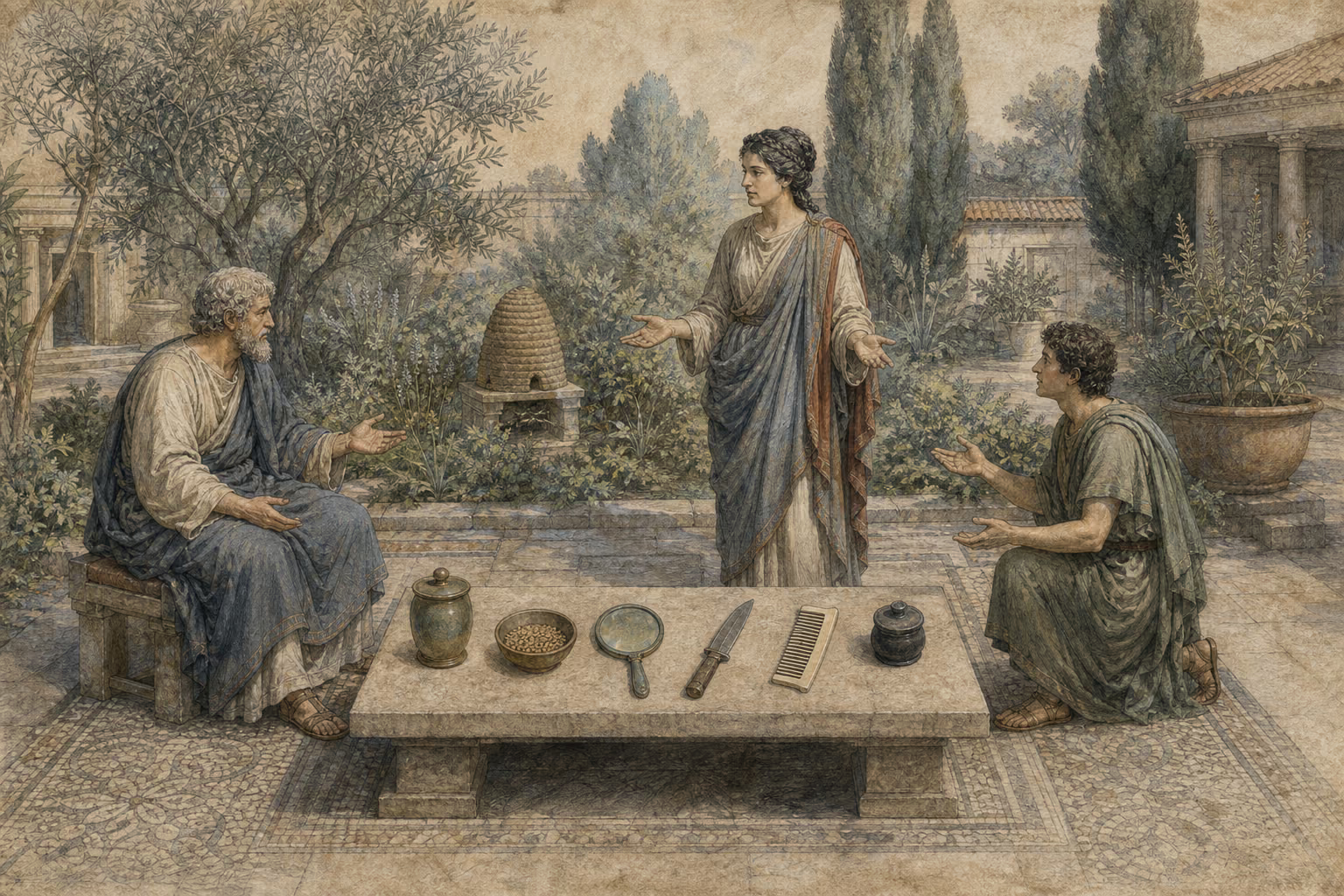
It would indeed be a difficult matter to find anything which is productive of more marvellous effects than the menstrual discharge. On the approach of a woman in this state, must will become sour, seeds which are touched by her become sterile, grafts wither away, garden plants are parched up, and the fruit will fall from the tree beneath which she sits. Her very look, even, will dim the brightness of mirrors, blunt the edge of steel, and take away the polish from ivory. A swarm of bees, if looked upon by her, will die immediately; brass and iron will instantly become rusty, and emit an offensive odour; while dogs which may have tasted of the matter so discharged are seized with madness, and their bite is venomous and incurable.
In addition to this, the bitumen which is found at certain periods of the year, floating on the lake of Judæa, known as Asphaltites, a substance which is peculiarly tenacious, and adheres to everything that it touches, can only be divided into separate pieces by means of a thread which has been dipped in this virulent matter. It is said that the ant, even an insect so extremely minute, is sensible of its presence, and rejects the grains which it has been carrying, and will not return to them again.
This discharge, which is productive of such great and singular effects, occurs in women every thirty days, and in a greater degree every three months. In some individuals it occurs oftener than once a month, and in others, again, it never takes place. Women of this nature, however, are not capable of bearing children, because it is of this substance that the infant is formed. The seed of the male, acting as a sort of leaven, causes it to unite and assume a form, and in due time it acquires life, and assumes a bodily shape. The consequence is, that if the flow continues during pregnancy, the child will be weak, or else will not live; or if it does, it will be full of gross humours, Nigidius says.