LIBER VII · CAPUT 25
VIGOR OF MIND
Latine · Mayhoff 1906
Animi vigore praestantissimum arbitror genitum Caesarem dictatorem, nec virtutem constantiamque nunc commemoro nec sublimitatem omnium capacem quae caelo continentur, sed proprium vigorem celeritatemque quodam igne volucrem. scribere aut legere, simul dictare et audire solitum accepimus, epistulas vero tantarum rerum quaternas pariter dictare [librariis aut, si nihil aliud ageret, septenas]. idem signis conlatis bis et quinquagiens dimicavit, solus M. Marcellum transgressus, qui undequadragiens dimicavit. nam praeter civiles victorias undeciens centena et nonaginta duo milia hominum occisa proeliis ab eo non equidem in gloria posuerim, tantam etiam coactam humani generis iniuriam, quod ita esse confessus est ipse bellorum civilium stragem non prodendo.
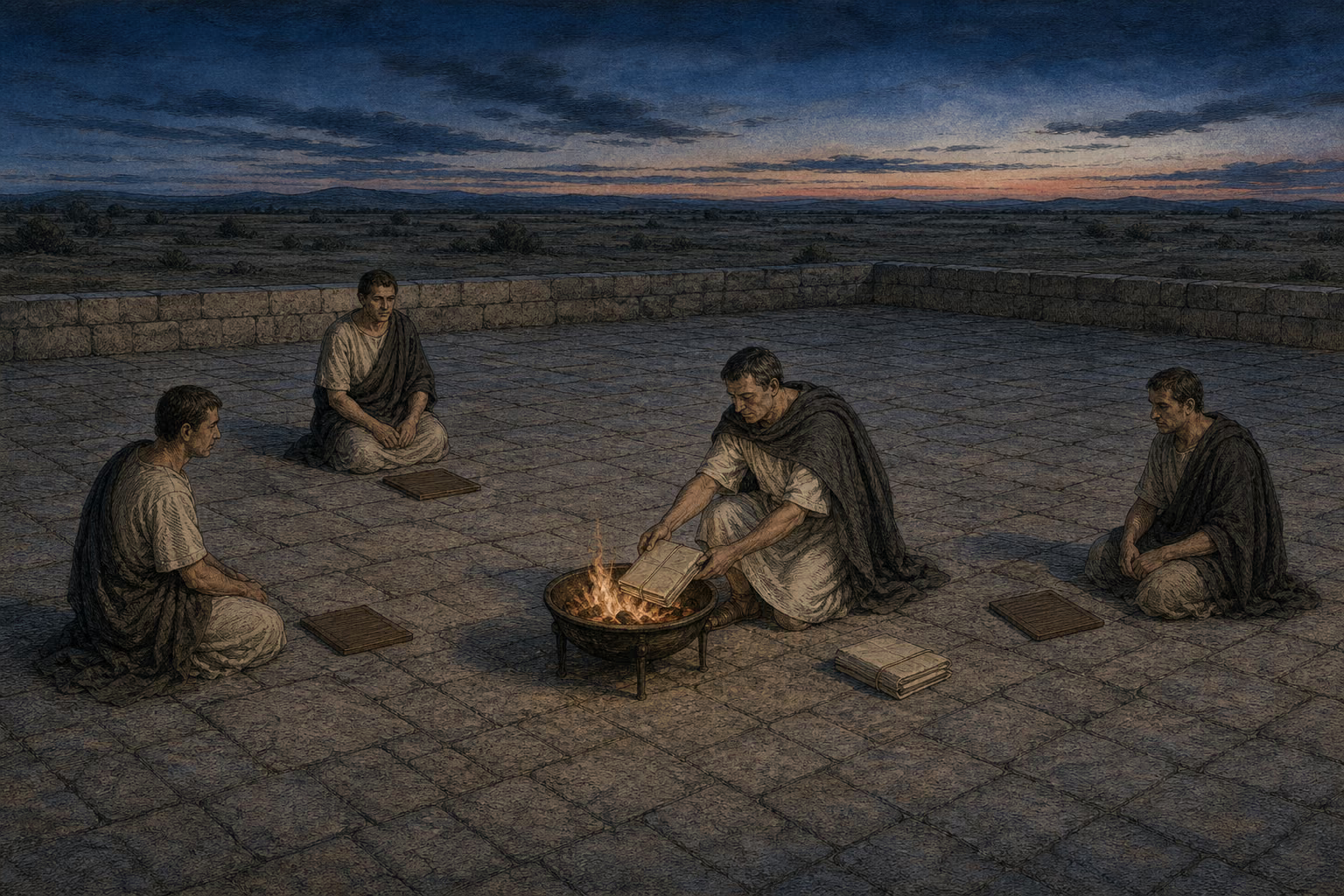
lustius Pompeio Magno tribuatur DCCCXLVI naves piratis ademisse: Caesari proprium et peculiare sit praeter supra dicta clementiae insigne, qua usque ad paenitentiam omnes superavit. idem magnanimitatis perhibuit exemplum, cui comparari non possit aliud. spectacula enim edita effusasque opes aut operum magnificentiam in hac parte enumerare luxuriae faventis est: illa fuit vera et incomparabilis invicti animi sublimitas, captis apud Pharsaliam Pompei Magni scriniis epistularum iterumque apud Thapsum Scipionis concremasse ea optima fide atque non legisse.
English · Bostock & Riley 1855–57
The most remarkable instance, I think, of vigour of mind in any man ever born, was that of Cæsar, the Dictator. I am not at present alluding to his valour and courage, nor yet his exalted genius, which was capable of embracing everything under the face of heaven, but I am speaking of that innate vigour of mind, which was so peculiar to him, and that promptness which seemed to act like a flash of lightning. We find it stated that he was able to write or read, and, at the same time, to dictate and listen. He could dictate to his secretaries four letters at once, and those on the most important business; and, indeed, if he was busy about nothing else, as many as seven. He fought as many as fifty pitched battles, being the only commander who exceeded M. Marcellus, in this respect, he having fought only thirty-nine. In addition, too, to the victories gained by him in the civil wars, one million one hundred and ninety-two thousand men were slain by him in his battles. For my own part, however, I am not going to set it down as a subject for high renown, what was really an outrage committed upon mankind, even though he may have been acting under the strong influence of necessity; and, indeed, he himself confesses as much, in his omission to state the number of persons who perished by the sword in the civil wars.
With much more justice we may award credit to Pompeius Magnus, for having taken from the pirates no less than eight hundred and forty-six vessels: though at the same time, over and above the great qualities previously mentioned, we must with equal justice give Cæsar the peculiar credit of a remarkable degree of clemency, a quality, in the exercise of which, even to repentance, he excelled all other individuals whatsoever. The same person has left us one instance of magnanimity, to which there is nothing that can be at all compared. While one, who was an admirer of luxury, might perhaps on this occasion have enumerated the spectacles which he exhibited, the treasures which he lavished away, and the magnificence of his public works, I maintain that it was the great proof, and an incomparable one, of an elevated mind, for him to have burnt with the most scrupulous carefulness the papers of Pompeius, which were taken in his desk at the battle of Pharsalia, and those of Scipio, taken at Thapsus, without so much as reading them.