LIBER VII · CAPUT 3
MARVELLOUS BIRTHS
Latine · Mayhoff 1906
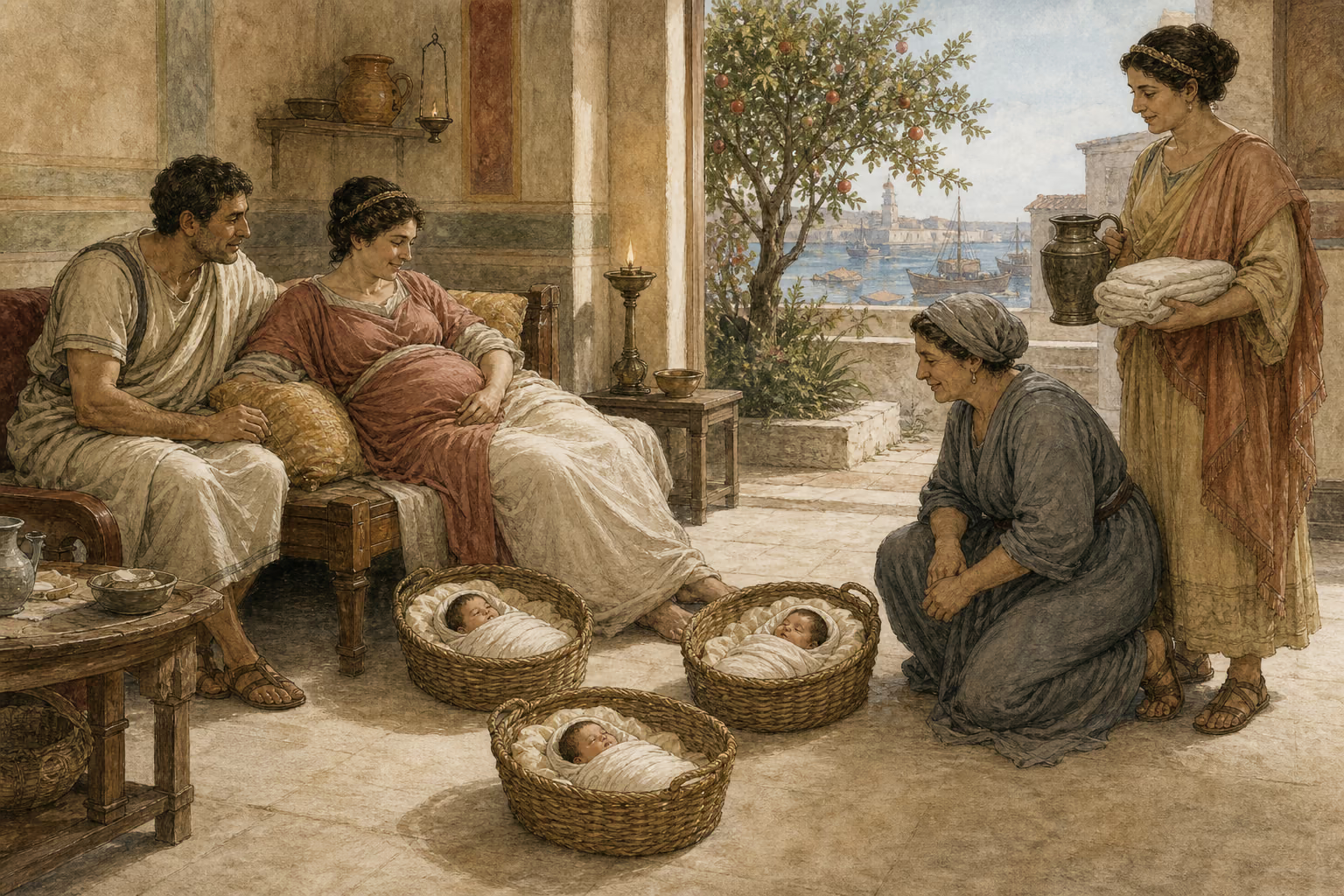
Tergeminos nasci certum est Horatiorum Curiatiorumque exemplo. super inter ostenta ducitur praeterquam in Aegypto, ubi fetifer potu Nilus amnis. proxime supremis Divi Augusti Fausta quaedam e plebe Ostiae duos mares, totidem feminas enixa famem, quae consecuta est, portendit hand dubie. reperitur et in Peloponnesoquinos quater enixa, maioremquepartem ex omni eius vixisse partu. et in Aegypto septenos uno utero simul gigni auctor est Trogus.
Gignuntur et utriusque sexus quos hermaphroditos vocamus, olim androgynos vocatos et in prodigiis habitos, nunc vero in deliciis. Pompeius Magnus in ornamentis theatri mirabiles fama posuit effigies, ob id diligentius magnorum artificum ingeniis elaboratas, inter quas legitur Eutychis a XX liberis rogo inlata Trallibus, enixa XXX partus, Alcippe elephantum. quamquam id inter ostenta est. namque et serpentem peperit inter initia Marsici belli ancilla, et multiformes pluribus modis inter monstra partus eduntur. Claudius Caesar scribit hippocentaurum in Thessalia natum eodem die interisse, et nos principatu eius adlatum illi ex Aegypto in melle vidimus. est inter exempla in uterum protinus reversus infans Sagunti quo anno deleta ab Hannibale est.
English · Bostock & Riley 1855–57
That three children are sometimes produced at one birth, is a well-known fact; the case, for instance, of the Horatii and the Curiatii. Where a greater number of children than this is produced at one birth, it is looked upon as portentous, except, indeed, in Egypt, where the water of the river Nile, which is used for drink, is a promoter of fecundity. Very recently, towards the close of the reign of the Emperor Augustus, now deified, a certain woman of the lower orders, at Ostia, whose name was Fausta, brought into the world, at one birth, two male children and two females, a presage, no doubt, of the famine which shortly after took place. We find it stated, also, that in Peloponnesus, a woman was delivered of five children at a birth four successive times, and that the greater part of all these children survived. Trogus informs us, that in Egypt, as many as seven children are occasionally produced at one birth.
Individuals are occasionally born, who belong to both sexes; such persons we call by the name of hermaphrodites; they were formerly called Androgyni, and were looked upon as monsters, but at the present day they are employed for sensual purposes.
Pompeius Magnus, among the decorations of his theatre, erected certain statues of remarkable persons, which had been executed with the greatest care by artists of the very highest reputation. Among others, we here read an inscription to the following effect: “Eutychis, of Tralles, was borne to the funeral pile by twenty of her children, having had thirty in all.” Also, Alcippe was delivered of an elephant —but then that must be looked upon as a prodigy; as in the case, too, where, at the commencement of the Marsian war, a female slave was delivered of a serpent. Among these monstrous births, also, there are beings produced which unite in one body the forms of several creatures. For instance, Claudius Cæsar informs us, in his writings, that a Hippocentaur was born in Thessaly, but died on the same day: and indeed I have seen one myself, which in the reign of that emperor was brought to him from Egypt, preserved in honey. We have a case, also, of a child at Saguntum, which returned immediately into its mother’s womb, the same year in which that place was destroyed by Hannibal.