LIBER VII · CAPUT 36
INSTANCES OF THE HIGHEST DEGREE OF AFFECTION
Latine · Mayhoff 1906
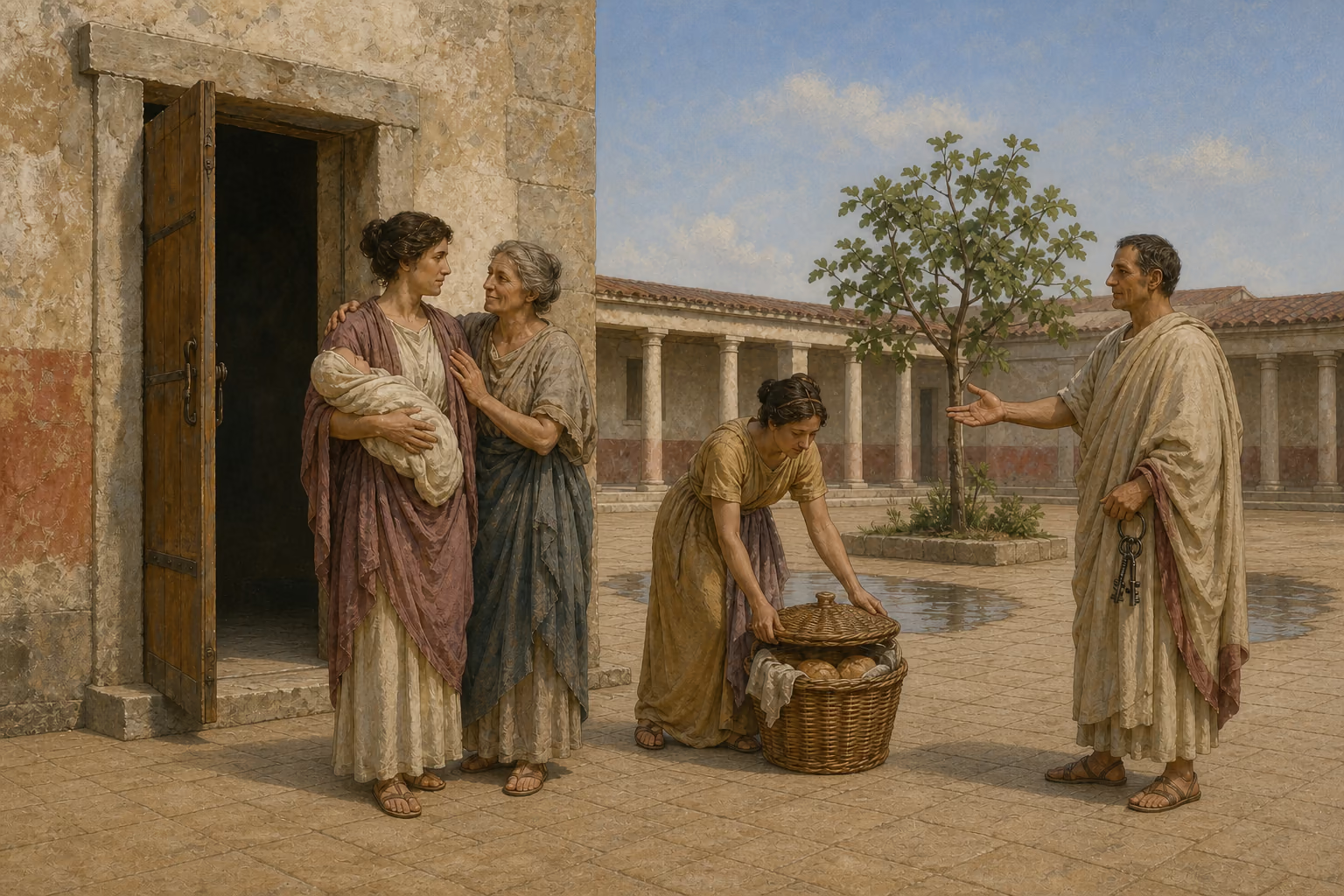
Pietatis exempla infinita quidem toto orbe extitere, sed Romae unum, cui comparari cuncta non possint. humilis in plebe et ideo ignobilis puerpera, supplicii causa carcere inclusa matre cum impetrasset aditum, a ianitore semper excussa ante, ne quid inferret cibi, deprehensa est uberibus suis alens earn. quo miraculo matris salus donata pietati est, ambaeque perpetuis alimentis, et locus ille eidem consecratus deae, C. Quinctio M'. Acilio cos. templo Pietatis extructo in illius carceris sede, ubi nunc Marcelli theatrum est. Gracchorum pater anguibus prehensis in domo, cum responderetur ipsum victurum alterius sexus interempto: immo vero, inquit, meum necate, Cornelia enim iuvenis est et parere adhuc potest. hoc erat uxori parcere et rei publicae consulere; idque mox consecutum est. M. Lepidus Appuleiae uxoris caritate post repudium obiit. P. Rutilius morbo levi impeditus nuntiata fratris repulsa in consulatus petitione ilico expiravit. P. Catienus Philotimus patronum adeo dilexit, ut heres omnibus bonis institutus in rogum eius se iaceret.
English · Bostock & Riley 1855–57
Infinite is the number of examples of affection which have been known in all parts of the world: but one in particular occurred at Rome, to which no other can possibly be compared. A woman of quite the lower class, and whose name has consequently not come down to us, having lately given birth to a child, obtained permission to visit her mother, who was confined in prison; but was always carefully searched by the gaoler before being admitted, to prevent her from introducing any food. At last, however, she was detected nourishing her mother with the milk of her breast; upon which, in consideration of the marvellous affection of the daughter, the mother was pardoned, and they were both maintained for the rest of their days at the public charge; the spot, too, was consecrated to Piety, a temple to that goddess being built on the site of the prison, in the consulship of C. Quintius and M. Acilius, where the theatre of Marcellus now stands.
The father of the Gracchi, on finding two serpents in his house, consulted the soothsayers, and received an answer to the effect, that he would survive if the serpent of the other sex was put to death.—“No,” said he, “rather kill the serpent of my own sex, for Cornelia is still young, and may yet bear children.” Thus did he shew himself ready, at the same moment, to spare his wife and to benefit the state; and shortly after, his wish was accomplished. M. Lepidus died of regret for his wife, Apuleia, after having been divorced from her. P. Rupilius, who was at the time affected by a slight disease, instantly expired, upon news being brought to him that his brother had failed in obtaining the consulship. P. Catienus Plotinus was so much attached to his patron, that on finding himself named heir to all his property, he threw himself on the funeral pile.