LIBER VII · CAPUT 40
SUPREME HAPPINESS
Latine · Mayhoff 1906
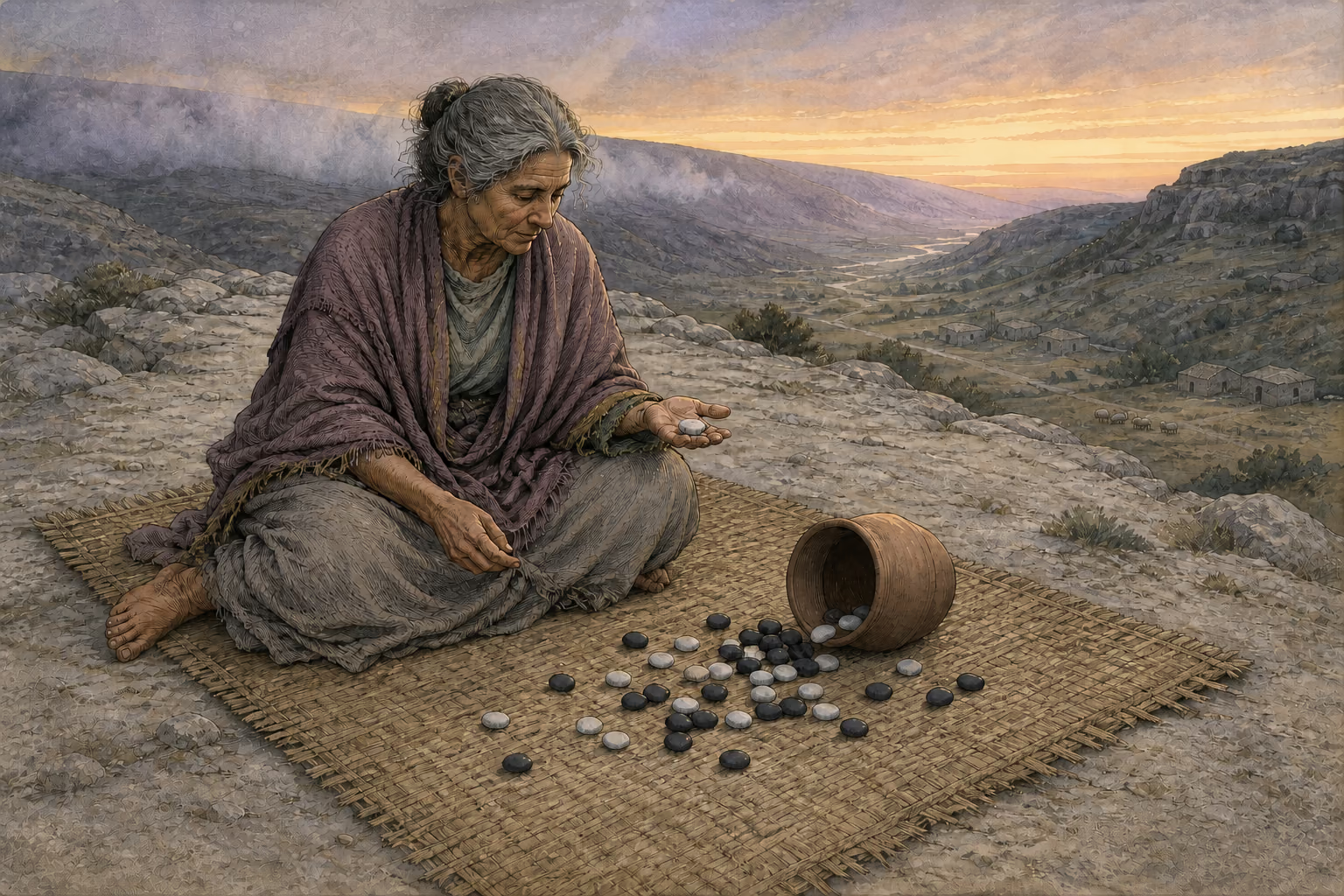
Gentium in toto orbe praestantissima una omnium virtute haud dubie Romana extitit. felicitas cui praecipua fuerit homini, non est humani iudicii, cum prosperitatem ipsam alius alio modo et suopte ingenio quisque determinet. si verum facere iudicium volumus ac repudiata omni fortunae ambitione decernere, nemo mortalium est felix. abunde agitur atque indulgenter a fortuna deciditur cum eo, qui iure dici non infelix potest. quippe ut alia non sint, certe ne lassescat fortuna metus est, quo semel recepto solida felicitas non est. quid, quod nemo mortalium omnibus horis sapit? utinamque falsum hoc et non ut a vate dictum quam plurimi iudicent! vana mortalitas et ad circumscribendam se ipsam ingeniosa conputat more Thraciae gentis, quae calculos colore distinctos pro experimento cuiusque diei in urnam condit ac supremo die separates dinumerat atque ita de quoque pronuntiat. quid, quod iste calculi candore illo laudatus dies originem mali habuit? quam multos accepta adflixere imperia! quam multos bona perdidere et ultimis mersere suppliciis, ista nimirum bona, cum interim illa hora in gaudio fuit! ita est profecto: alius de alio iudicat dies et tantum supremus de omnibus, ideoque nullis credendum est. quid, quod bona malis paria non sunt etiam pari numero, nec laetitia ulla minimo maerore pensanda? heu vana et inprudens diligentia! numerous dierum conparatur, ubi quaeritur pondus!
English · Bostock & Riley 1855–57
Of all nations of the earth, the Romans have, without doubt, excelled every other in the display of valour. The human judgment cannot, however, possibly decide what man has enjoyed the highest degree of happiness, seeing that every one defines a state of prosperity in a way different from another, and entirely in conformity with his own notions. If we wish to form a true judgment and come to a decision, casting aside all the allurements and illusions of fortune, we are bound to say that no mortal is happy. Fortune has dealt well, and, indeed, indulgently, to him who feels that he has a right to say that he is not unhappy. For if there is nothing else, at all events, there is the fear lest fortune should fail at last; which fear itself, when it has once fastened upon us, our happiness is no longer unalloyed. And then, too, is it not the case that there is no mortal who is always wise? Would that there were many to be found, who could feel a conviction that this is false, and that it had not been enunciated by an oracle itself, as it were! Mortals, vain as they are, and ingenious in deceiving themselves, calculate in the same way as the Thracians, who, according to their experience of each day, deposit in an urn a black or a white pebble; at the close of their life, these pebbles are separated, and from the relative number of each kind, they form their conclusions. But really, may not that very day that has been complimented with a white pebble, have contained in itself the germ of some misfortune? How many a man has got into trouble by the very power which has been bestowed upon him? How many have been brought to ruin and plunged into the deepest misery by their own blessings? or rather, by what have been looked upon too fondly as blessings, for the hour during which they were in the full enjoyment of them. But most true it is, that it is the day after, that is the judge of the day before; and after all, it is only the last day that is to set its stamp on the whole; the consequence is, that we can put our trust in none of them. And then, too, is it not the fact that the blessings of life would not be equal to its evils, even though they were equal in number? For what pleasure is there that can compensate for the slightest grief? Alas! what a vain and unreasonable task we impose upon ourselves! We trouble ourselves with counting the number of days, when it is their weight that ought to be taken into consideration.