LIBER VIII · CAPUT 27
THE MEDICINAL REMEDIES WHICH HAVE BEEN BORROWED FROM ANIMALS
Latine · Mayhoff 1906
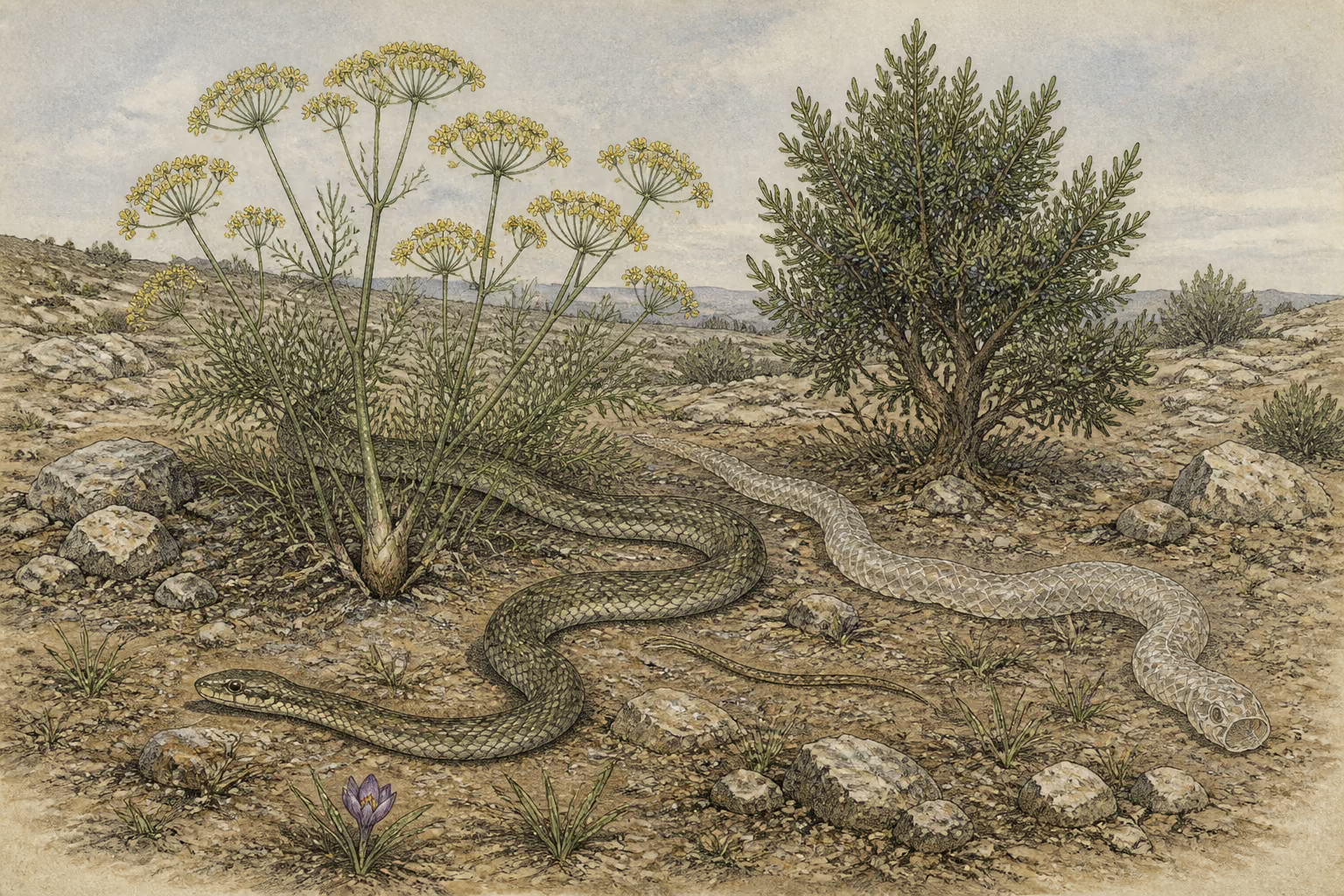
Simile quiddam et volucris in eadem Aegypto monstravit, quae vocatur ibis, rostri aduncitate per eam partem se perluens, qua reddi ciborum onera maxime sa- lubre est. nec haec sola: multis animalibus reperta sunt usui futura et homini. dictamnum herbam extrahendis sagittis cervi monstravere percussi eo telo pastuque herbae eius eiecto; iidem percussi a phalangio, quod est aranei genus, aut aliquo simili cancros edendo sibi medentur. est et ad serpentium ictus praecipua qua se lacerti, quotiens cum his conseruere pugnam, vulnerati refovent. chelidoniam visui saluberrimam hirundines monstravere vexatis pullorum oculis illa medentes. testudo cunilae, quam bubulam vocant, pastu vires contra serpentes refovet, mustella ruta in murium venatu cum iis dimicatione conserta. ciconia origano, hedera apri in morbis sibi medentur et cancros vescendo maxime mari eiectos. anguis, hiberno situ membrana corporis obducta, feniculi suco inpedimentum 5 illud exuit nitidusque vernat. exuit autem a capite primum nec celerius quam uno die et nocte, replicans, ut extra fiat membranae quod fuerit intus. idem hiberna latebra visu obscurato maratho herbae se adfricans oculos inunguit ac refovet; si vero squamae obtorpuere, spinis iuniperi se scabit. draco vernam nausiam silvestris lactucae suco restinguit. pantheras per fricatas carnes aconito barbari venantur. occupat ilico fauces earum angor, quare pardalianches id venenum appellavere quidam; at fera contra hoc excrementis hominis sibi medetur, et alias tam avida eorum, ut a pastoribus ex industria in aliquo vase suspensa altius, quam ut queat saltu attingere, iaculando se appetendoque deficiat et postremo expiret, alioqui vivacitatis adeo lentae, ut eiectis interaneis diu pugnet. elephans, chamaeleone concolori frondi devorato, occurrit oleastro huic veneno suo. ursi cum mandragorae mala gustavere, formicas lambunt. cervus herba cinare venenatis pabulis resistit. palumbes, graculi, merulae, perdices lauri folio annuum fastidiul purgant, columbae, turtures et gallinacei herba quae vocatur helxine, anates, anseresceteraeque aquaticae herba siderite, grues et similes iunco palustri. corvus occiso chamaeleone, qui etiam victori suo nocet, lauro infestum virus extinguit.
English · Bostock & Riley 1855–57
The bird also, which is called the ibis, a native of the same country of Egypt, has shewn us some things of a similar nature. By means of its hooked beak, it laves the body through that part, by which it is especially necessary for health that the residuous food should be discharged. Nor, indeed, are these the only inventions which have been borrowed from animals, to prove of use to man. The power of the herb dittany, in extracting arrows, was first disclosed to us by stags that had been struck by that weapon; the weapon being discharged on their feeding upon this plant. The same animals, too, when they happen to have been wounded by the phalangium, a species of spider, or by any insect of a similar nature, cure themselves by eating crabs. One of the very best remedies for the bite of the serpent, is the plant with which lizards treat their wounds when injured in fighting with each other. The swallow has shown us that the chelidonia is very serviceable to the sight, by the fact of its employing it for the cure of its young, when their eyes are affected. The tortoise recruits its powers of effectually resisting serpents, by eating the plant which is known as cunile bubula; and the weasel feeds on rue, when it fights with the serpent in the pursuit of mice. The stork cures itself of its diseases with wild marjoram, and the wild boar with ivy, as also by eating crabs, and more particularly those that have been thrown up by the sea. The snake, when the membrane which covers its body has been contracted by the cold of winter, throws it off in the spring by the aid of the juices of fennel, and thus becomes sleek and youthful in appearance. First of all, it disengages the head, and it then takes no less than a day and a night in working itself out, and divesting itself of the membrane in which it has been enclosed. The same animal, too, on finding its sight weakened during its winter retreat, anoints and refreshes its eyes by rubbing itself on the plant called fennel or marathrum; but if any of the scales are slow in coming off, it rubs itself against the thorns of the juniper. The dragon relieves the nausea which affects it in spring, with the juices of the lettuce. The barbarous nations go to hunt the panther, provided with meat that has been rubbed with aconite, which is a poison. Immediately on eating it, compression of the throat overtakes them, from which circumstance it is, that the plant has received the name of pardalianches. The animal, however, has found an antidote against this poison in human excrements; besides which, it is so eager to get at them, that the shepherds purposely suspend them in a vessel, placed so high, that the animal cannot reach them even by leaping, when it endeavours to get at them; accordingly, it continues to leap until it has quite exhausted itself, and at last expires: otherwise, it is so tenacious of life, that it will continue to fight long after its intestines have been dragged out of its body.
When an elephant has happened to devour a chameleon, which is of the same colour with the herbage, it counteracts this poison by means of the wild olive. Bears, when they have eaten of the fruit of the mandrake, lick up numbers of ants. The stag counteracts the effect of poisonous plants by eating the artichoke. Wood-pigeons, jackdaws, blackbirds, and partridges, purge themselves once a year by eating bay leaves; pigeons, turtle-doves, and poultry, with wall-pellitory, or helxine; ducks, geese, and other aquatic birds, with the plant sideritis or vervain; cranes, and birds of a similar nature, with the bulrush. The raven, when it has killed a chameleon, a contest in which even the conqueror suffers, counteracts the poison by means of laurel.