LIBER VIII · CAPUT 39
VIPERS AND SNAILS
Latine · Mayhoff 1906
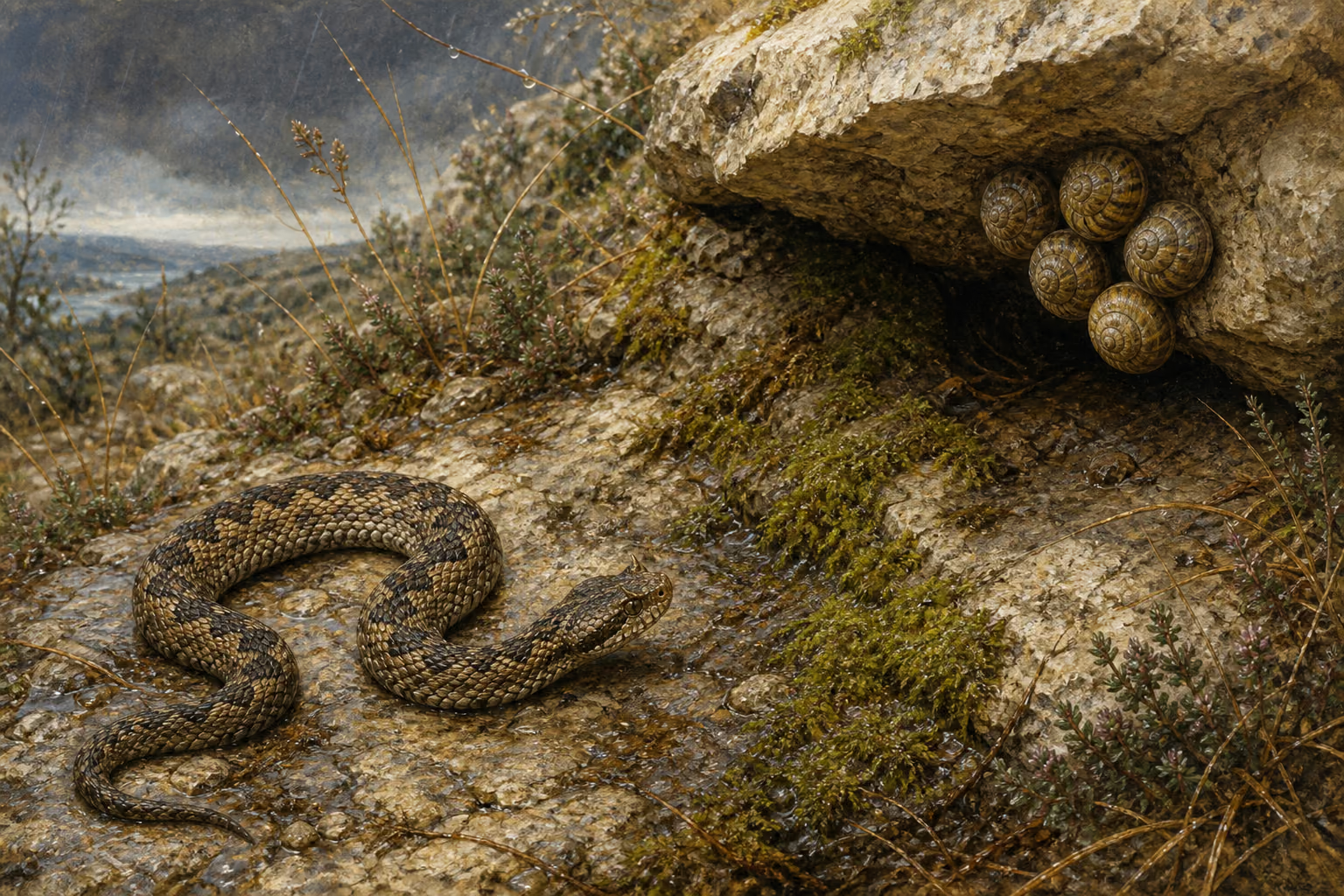
Serpentium vipera sola terra dicitur condi, ceterae arborum aut saxorum cavis. et alias vel annua fame durant, algore modo dempto. omnia secessus tempore veneno orba dormiunt. simili modo et cocleae, illae quidem iterum et aestatibus, adhaerentes maxime saxis aut, etiam iniuria resupinatae avolsaeque, non tamen exeuntes. in Baliaribus vero insulis cavaticae appellatae non prorepunt e cavis terrae — neque herba vivunt —, sed uvae modo inter se cohaerent. est et aliud genus minus vulgare adhaerente operculo eiusdem testae se operiens. obrutae terra semper hae et circa maritimas tantum Alpes quondam effossae coepere iam erui et in Veliterno. omnium tamen laudatissimae in Astypalaea insula.
Lacertae, inimicissimum genus cocleis, negantur semenstrem vitam excedere. lacerti Arabiae cubitales, in Indiae vero Nyso monte XXIIII in longitudinem pedum, colore fulvi aut punicei aut caerulei.
English · Bostock & Riley 1855–57
It is said, that the viper is the only one among the serpents that conceals itself in the earth; the others lurking either in the hollows of trees or in holes in the rocks. Provided they are not destroyed by cold, they can live there, without taking food, for a whole year. During the time that they are asleep in their retreat, none of them are venomous.
A similar state of torpor exists also in snails. These animals again become dormant during the summer, adhering very powerfully to stones; and even, when turned up and pulled away from the stones, they will not leave their shells. In the Balearic isles, the snails which are known as the cave-snail, do not leave their holes in the ground, nor do they feed upon any green thing, but adhere to each other like so many grapes. There is another less common species also, which is closed by an operculum that adheres to the shell. These animals always burrow under the earth, and were formerly never found, except in the environs of the Maritime Alps: they have, however, of late been dug up in the territory of Liternum; the most valued, however, of all, are those of the island of Astypalæa.
It is said, that the lizard, the greatest enemy of all to the snail, never prolongs its life beyond six months. The lizards of Arabia are a cubit in length, while those upon Nysa, a mountain of India, are twenty-four feet long, their colour being either yellow, purple, or azure blue.