LIBER VIII · CAPUT 44
THE NATURE OF MULES, AND OF OTHER BEASTS OF BURDEN
Latine · Mayhoff 1906
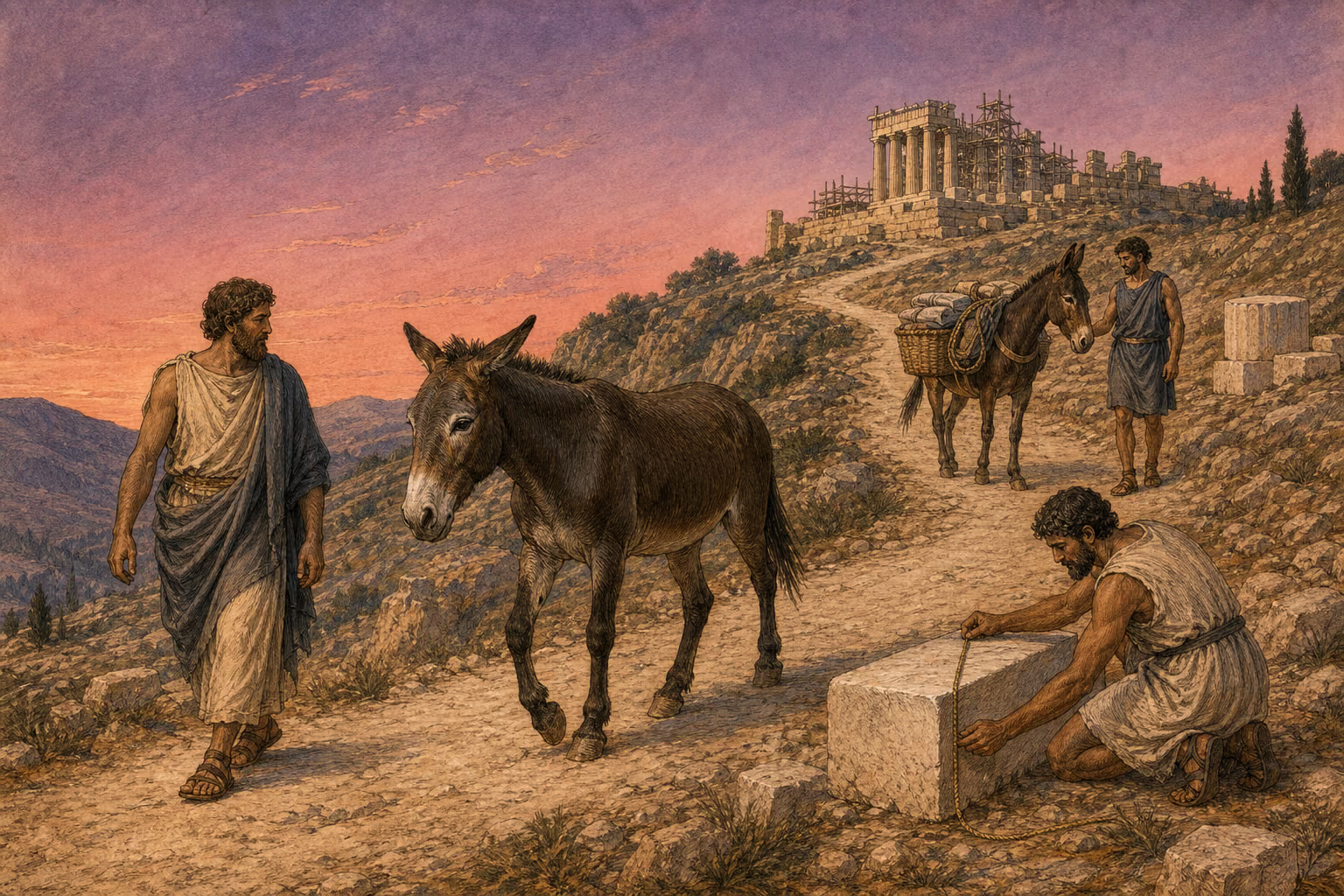
Ex asino et equa mula gignitur mense XIII, animal viribus in labores eximium. ad tales partus equas neque quadrimis minores neque decennibus maiores legunt arcerique utrumque genus ab altero narrant nisi in infantia eius generis quod ineat lacte hausto. quapropter subreptos pullos in tenebris equarum uberi asinarumve eculeos admovent. gignitur autem mula et ex equo et asina, sed effrenis et tarditatis indomitae. lenta omnia et e vetulis. conceptum ex equo secutus asini coitus abortu perimit, non item asini equus. feminas a partu optime septimo die inpleri observatum, mares fatigatos melius inplere. quae non prius, quam dentes quos pullinos appellant iaciat, conceperit, sterilis intellegitur et quae non primo initu generare coeperit. equo et asina genitos mares hinnulos antiqui vocabant contraque mulos quos asini et equae generarent. observatum ex duobus diversis generibus nata tertii generis fieri et neutri parentium esse similia eaque ipsa, quae sunt ita nata, non gignere in omni animalium genere; idcirco mulas non parere. est in annalibus nostris peperisse saepe, verum prodigii loco habitum. Theophrastus vulgo parere in Cappadocia tradit, sed esse id animal ibi sui generis. 20 mulae calcitratus inhibetur vini crebriore potu. in plurium Graecorum est monumentis cum equa muli coitu natum quod vocaverint ginnum, id est parvum mulum. generantur ex equa et onagris mansuefactis mulae veloces in cursu, duritia eximia pedum, verum strigoso corpore, indomito animo. sed generator onagro et asina genitus omnes antecellit. onagri in Phrygia et Lycaonia praecipui. pullis eorum ceu praestantibus sapore Africa gloriatur, quos lalisiones appellat. mulum LXXX annis vixisse Atheniensium monimentis apparet; gavisi namque, cum templum in arce facerent, quod derelictus senecta scandentia iumenta comitatu nisuque exhortaretur, decretum fecere ne frumentarii negotiatores ab incerniculis eum arcerent.
English · Bostock & Riley 1855–57
From the union of the male ass and the mare a mule is produced in the thirteenth month, an animal remarkable for its strength in laborious work. We are told that, for this purpose, the mare ought not to be less than four years old, nor more than ten. It is said also that these two species will repulse each other, unless the male has been brought up, in its infancy, upon the milk of the other species; for which reason they take the foals away from the mare, in the dark, and substitute for them the male colts of the ass. A mule may also be produced from a horse and a female ass; but it can never be properly broken in, and is incorrigibly sluggish, being in all respects as slow as an old animal. If a mare has conceived by a horse, and is afterwards covered by an ass, the first conception is abortive; but this is not the case when the horse comes after the ass. It has been observed, that the female is in the best state for receiving the male in the seventh day after parturition, and that the males are best adapted for the purpose when they are fatigued. A female ass, which has not conceived before shedding what are called the milk-teeth, is considered to be barren; which is also looked upon as the case when a she-ass does not become pregnant after the first covering. The male which is produced from a horse and a female ass, was called by the ancients “hinnulus,” and that from an ass and a mare “mulus.” It has been observed that the animal which is thus produced by the union of the two species is of a third species, and does not resemble either of the parents; and that all animals produced in this way, of whatever kind they may be, are incapable of reproduction; she-mules are therefore barren. It is said, indeed, in our Annals, that they have frequently brought forth; but such cases must be looked upon only as prodigies. Theophrastus says that they commonly bring forth in Cappadocia; but that the animal of that country is of a peculiar species. The mule is prevented from kicking by frequently giving it wine to drink. It is said in the works of many of the Greek writers, that from the union of a mule with a mare, the dwarf mule is produced, which they call “ginnus.” From the union of the mare and the wild ass, when it has been domesticated, a mule is produced which is remarkably swift in running, and has extremely hard feet, and a thin body, while it has a spirit that is quite indomitable. The very best stallion of all, however, for this purpose, is one produced from a union of the wild ass and the female domesticated ass. The best wild asses are those of Phrygia and Lycaonia. Africa glories in the wild foals which she produces, as excelling all others in flavour; these are called “lalisiones.” It appears from some Athenian records, that a mule once lived to the age of eighty years. The people were greatly delighted with this animal, because on one occasion, when, on the building of a temple in the citadel, it had been left behind on account of its age, it persisted in promoting the work by accompanying and assisting them; in consequence of which a decree was passed, that the dealers in corn were not to drive it away from their sieves.