LIBER VIII · CAPUT 53
ANIMALS IN A HALF-WILD STATE
Latine · Mayhoff 1906
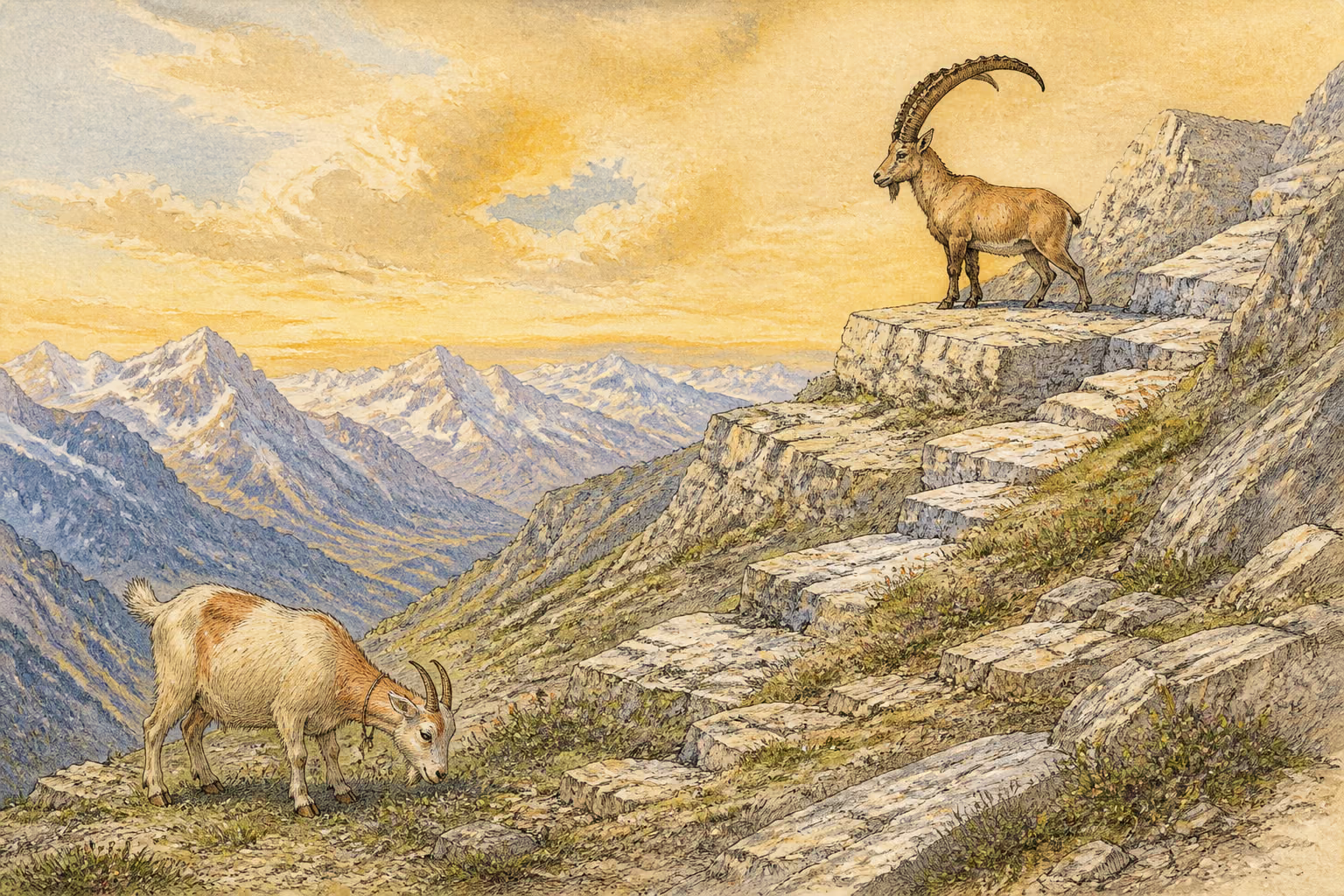
In nullo genere aeque facilis mixtura cum fero, qualiter natos antiqui hybridas vocabant ceu semiferos, ad homines quoque, ut C. Antonium Ciceronis in consulate collegam, appellatione tralata. non in suibus autem tantum, sed in omnibus quoque animalibus, cuiuscumque generis ullum est placidum, eiusdem invenitur et ferum, utpote cum hominum etiam silvestrium tot genera praedicta sint. caprae tamen in plurimas similitudines transfigurantur. sunt caprae, sunt rupicaprae, sunt ibices pernicitatis mirandae, quamquam onerato capite vastis cornibus gladiorum ceu vaginis. in haec se librat, ut tormento aliquo rotatus, in petras potissimum, e monte aliquo in alium transilire quaerens, atque recussu pernicius quo libuit exultat. sunt et oryges, soli quibusdam dicti contrario pilo vestiri et ad caput verso. sunt et dammae et pygargi et strepsicerotes multaque alia haut dissimilia. sed illa Alpes, haec transmarini situs mittunt.
English · Bostock & Riley 1855–57
In no species is the union with the wild animal so easy as in that of the swine; the produce of such unions was called by the ancients hybrid, or half savage; which appellation has also been transferred to the human race, as it was to C. Antonius, the colleague of Cicero in his consulship. Not only, however, with respect to the hog, but all other animals as well, wherever there is a tame species, there is a corresponding wild one as well; a fact which is equally true with reference to man himself, as is proved by the many races of wild men of which we have already spoken. There is no kind of animal, however, that is divided into a greater number of varieties than the goat. There are the capræa, the rupicapra or rock-goat, and the ibex, an animal of wonderful swiftness, although its head is loaded with immense horns, which bear a strong resemblance to the sheath of a sword. By means of these horns the animal balances itself, when it darts along the rocks, as though it had been hurled from a sling; more especially when it wishes to leap from one eminence to another. There are the oryges also, which are said to be the only animals that have the hair the contrary way, the points being turned towards the head. There are the dama also, the pygargus, and the strepsiceros, besides many others which strongly resemble them. The first mentioned of these animals, however, dwell in the Alps; all the others are sent to us from the parts beyond sea.