LIBER VIII · CAPUT 55
THE DIFFERENT SPECIES OF HARES
Latine · Mayhoff 1906
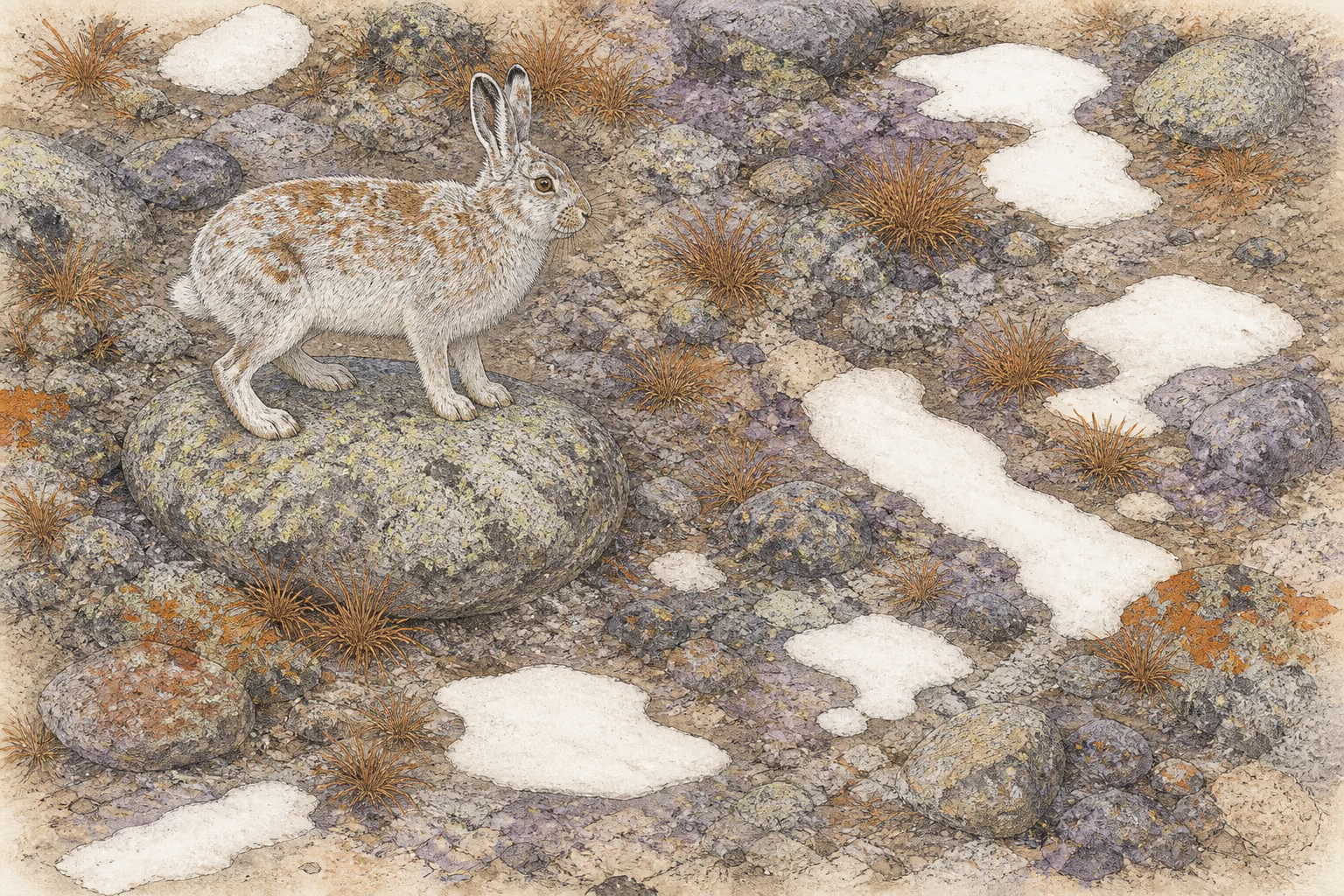
Et leporum plura sunt genera. in Alpibus candidi, quibus hibernis mensibus pro cibatu nivem credunt esse; certe liquescente ea rutilescunt annis omnibus, et est alioqui animal intolerandi rigoris alumnum. leporum generis sunt et quos Hispania cuniculos appellat, fecunditatis innumerae famemque Baliarum insulis populatis messibus adferen tis.— (Fetus ventri exectos vel uberibus ablatos, non repurgatis interaneis, gratissimo in cibatu habent; laurices vocant) — certum est Baliaricos adversus proventum eorum auxilium militare a Divo Augusto petisse. magna propter venatum eum viverris gratia est; iniciunt eas in specus, qui sunt multifores in terra — unde et nomen animali —, atque ita eiectos superne capiunt. Archelaus auctor est, quot sint corporis cavernae ad excrementa lepori, totidem annos esse aetatis; varius certe numerus reperitur. idem utramque vim singulis inesse ac sine mare aeque gignere. benigna circa hoc natura innocua et esculenta animalia fecunda generavit. lepus, omnium praedae nascens, solus praeter dasypodem superfetat, aliud educans, aliud in utero pilis vestitum, aliud inplume, aliud inchoatum gerens pariter. nec non et vestes leporino pilo facere temptatum est, tactu non perinde molli ut in cute, propter brevitatem pili dilabidas.
English · Bostock & Riley 1855–57
There are also numerous species of hares. Those in the Alps are white, and it is believed that, during the winter, they live upon snow for food; at all events, every year, as the snow melts, they acquire a reddish colour; it is, moreover, an animal which is capable of existing in the most severe climates. There is also a species of hare, in Spain, which is called the rabbit; it is extremely prolific, and produces famine in the Balearic islands, by destroying the harvests. The young ones, either when cut from out of the body of the mother, or taken from the breast, without having the entrails removed, are considered a most delicate food; they are then called laurices. It is a well-known fact, that the inhabitants of the Balearic islands begged of the late Emperor Augustus the aid of a number of soldiers, to prevent the too rapid increase of these animals. The ferret is greatly esteemed for its skill in catching them. It is thrown into the burrows, with their numerous outlets, which the rabbits form, and from which circumstance they derive their name, and as it drives them out, they are taken above. Archelaus informs us, that in the hare, the number of cavernous receptacles in the body for the excrements always equals that of its years; but still the numbers are sometimes found to differ. He says also, that the same individual possesses the characteristics of the two sexes, and that it becomes pregnant just as well without the aid of the male. It is a kind provision of Nature, in making animals which are both harmless and good for food, thus prolific. The hare, which is preyed upon by all other animals, is the only one, except the dasypus, which is capable of superfœtation; while the mother is suckling one of her young, she has another in the womb covered with hair, another without any covering at all, and another which is just beginning to be formed. Attempts have been made to form a kind of stuff of the hair of these animals; but it is not so soft as when attached to the skin, and, in consequence of the shortness of the hairs, soon falls to pieces.