LIBER VIII · CAPUT 57
ANIMALS WHICH ARE TAMED IN PART ONLY
Latine · Mayhoff 1906
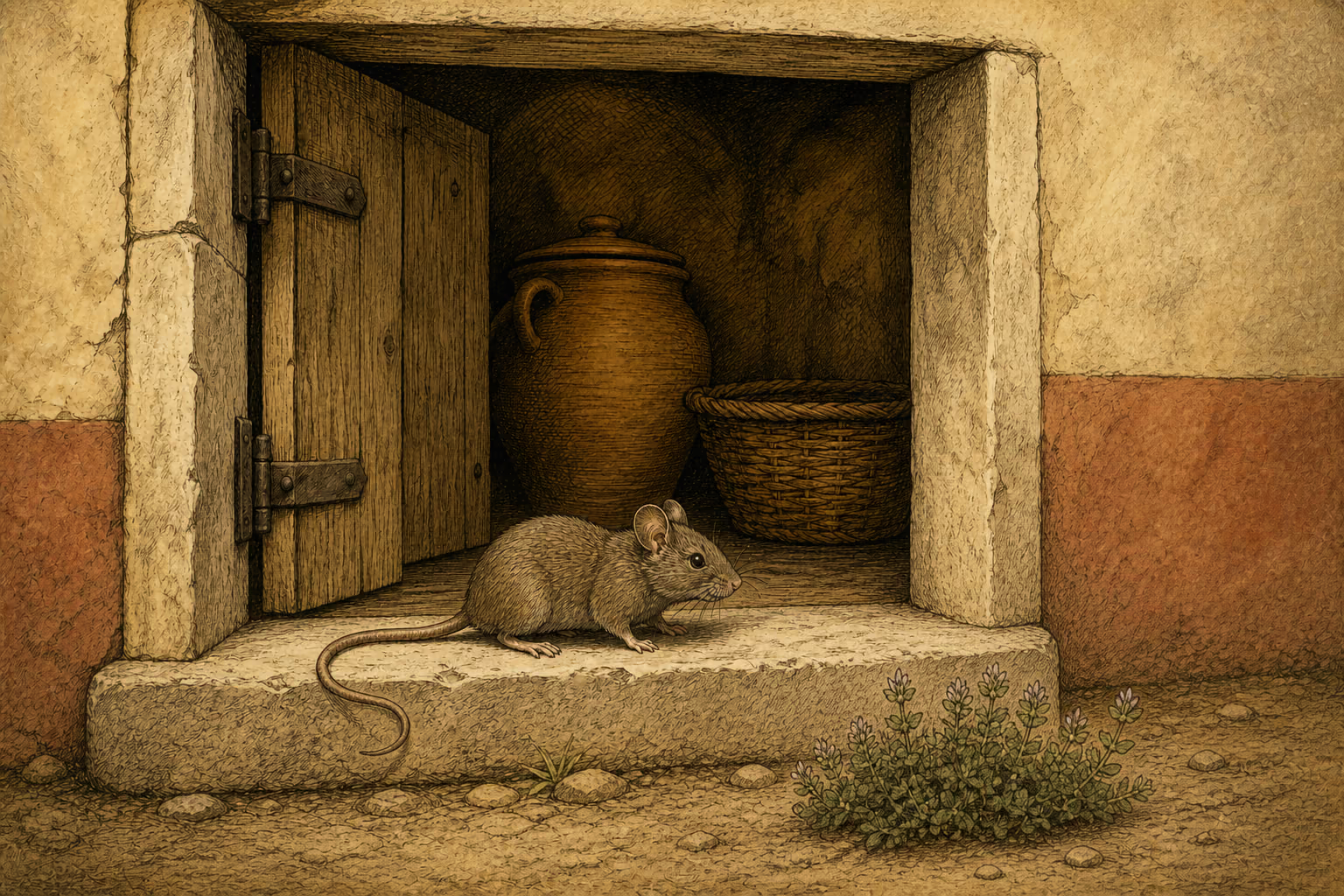
Quo in genere multi et hos incolas domuum posuere mures, haut spernendum in ostentis etiam publicis animal. adrosis Lanuvi clipeis argenteis Marsicum portendere bellum, Carboni imperatori apud Clusium fasceis, quibus in calciatu utebatur, exitium. plura eorum genera in Cyrenaica regione, alii lata fronte, alii acuta, alii irenaceorum genere pungentibus pilis. Theophrastus auctor est, in Gyara insula, cum incolas fugaverint, ferrum quoque rosisse eos, id quod natura quadam et ad Chalybas facere in ferrariis officinis. aurariis quidem in metallis ob hoc alvos eorum excidi semperque furtum id deprehendi; tantam esse dulcedinem furandi. venisse murem CC denariis Casilinum obsidente Hannibale eumque qui vendiderat fame interisse, emptorem vixisse annales tradunt. cum candidi provenere, laetum faciunt ostentum. nam sauricum occentu dirimi auspicia annales refertos habemus. saurices et ipsos hieme condi auctor est Nigidius, sicut glires, quos censoriae leges princepsque M. Scaurus in consulatu non alio modo cenis ademerequam conchylia aut ex alio orbe convectas aves. semiferum et ipsum animal, cui vivaria in doliis idem qui apris instituit. qua in re notatum, non congregarese nisi populares eiusdem silvae et, si misceantur alienigenae amne vel monte discreti, interire dimicando. genitores suos fessos senecta alunt insigni pietate. senium finitur hiberna quiete — conditi enim et hi cubant —, rursus aestate iuvenescunt. similis et nitelis quies est hieme.
English · Bostock & Riley 1855–57
Many persons have placed that inhabitant of our houses, the mouse, in this class also; an animal which is not to be despised, for the portents which it has afforded, even in relation to public events. By gnawing the silver shields at Lanuvium, mice prognosticated the Marsian war; and the death of our general, Carbo, at Clusium, by gnawing the latchets with which he fastened his shoes. There are many species of this animal in the territory of Cyrenaica; some of them with a wide, others with a projecting, forehead, and some again with bristling hair, like the hedgehog. We are informed by Theophrastus, that after the mice had driven the inhabitants of Gyara from their island, they even gnawed the iron; which they also do, by a kind of natural instinct, in the iron forges among the Chalybes. In gold mines, too, their stomachs are opened for this purpose, and some of the metal is always to be found there, which they have pilfered, so great a delight do they take in stealing! We learn from our Annals, also, that at the siege of Casilinum, by Hannibal, a mouse was sold for two hundred denarii, and that the person who sold it perished with hunger, while the purchaser survived. To be visited by white mice is considered as indicative of a fortunate event; but our Annals are full of instances in which the singing of a mouse has interrupted the auspices. Nigidius informs us, that the field-mouse conceals itself during winter: this is also said to be the case with the dormouse, which the regulations of the censors, and of M. Scaurus, the chief of the senate, when he was consul, have banished from our tables, no less than shell-fish and birds, which are brought from a foreign country. The dormouse is also a half-wild animal, and the same person made warrens for them in large casks, who first formed parks for wild boars. In relation to this subject, it has been remarked that dormice will not mate, unless they happen to be natives of the same forest; and that if those are put together that are brought from different rivers or mountains, they will fight and destroy each other. These animals nourish their parents, when worn out with old age, with a singular degree of affection. This old age of theirs is put an end to by their winter’s rest, when they conceal themselves and sleep; they are young again by the summer. The field-mouse also enjoys a similar repose.