LIBER VIII · CAPUT 8
THE WAY IN WHICH ELEPHANTS ARE CAUGHT
Latine · Mayhoff 1906
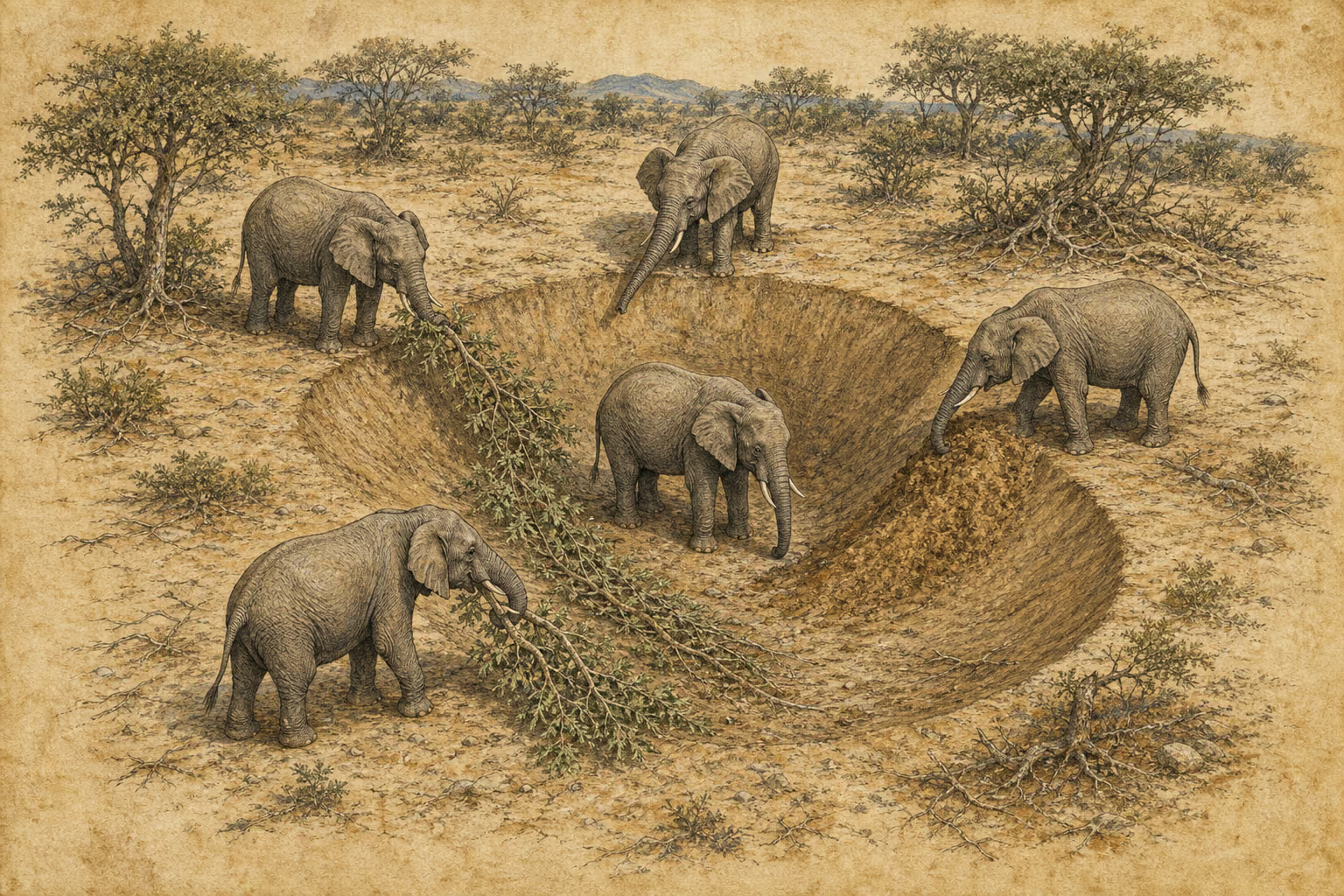
Capti celerrime mitificantur hordei suco. capiuntur autem in India unum ex domitis agente rectore, qui deprehensum solitarium abactumve a grege verberet ferum: quo fatigato transcendit in eum nec secus ac priorem regit. Africa foveis capit, in quas derrlante aliquo protinus ceteri congerunt ramos, moles devolvunt, aggeres construunt omnique vi conantur extrahere. ante domitandi gratia reges equitatu cogebant in vallem manu factam et longo tractu fallacem, cuius inclusos ripis fossisque fame domabant. argumentum erat ramus homine porrigente clementer acceptus. nunc dentium causa pedes eorum iaculantur alioqui mollissimos. Trogodytae contermini Aethiopiae, qui hoc solo venatu aluntur, propinquas itineri eorum conscendunt arbores; inde totius agminis novissimum speculati extremas in dunes desiliunt. laeva adprehenditur cauda, pedes stipantur in sinistro femine: ita pendens alterum poplitem dextra caedit ac praeacuta bipenni hoc crure tardato profugiens alterius poplitis nervos ferit, cuncta praeceleri pernicitate peragens. alii tutiore genere, sed magis fallaci, ingentes arcus intentos defigunt humi longius; hos praecipui viribus iuvenes continent, alii conixi pari conatu contendunt ac praetereuntibus sagittarum venabula infigunt, mox sanguinis vestigiis secuntur.
English · Bostock & Riley 1855–57
In India they are caught by the keeper guiding one of the tame elephants towards a wild one which he has found alone or has separated from the herd; upon which he beats it, and when it is fatigued mounts and manages it just the same way as the other. In Africa they take them in pit-falls; but as soon as an elephant gets into one, the others immediately collect boughs of trees and pile up heaps of earth, so as to form a mound, and then endeavour with all their might to drag it out. It was formerly the practice to tame them by driving the herds with horsemen into a narrow defile, artificially made in such a way as to deceive them by its length; and when thus enclosed by means of steep banks and trenches, they were rendered tame by the effects of hunger; as a proof of which, they would quietly take a branch that was extended to them by one of the men. At the present day, when we take them for the sake of their tusks, we throw darts at their feet, which are in general the most tender part of their body. The Troglodytæ, who inhabit the confines of Æthiopia, and who live entirely on the flesh of elephants procured by the chase, climb the trees which lie near the paths through which these animals usually pass. Here they keep a watch, and look out for the one which comes last in the train; leaping down upon its haunches, they seize its tail with the left hand, and fix their feet firmly upon the left thigh. Hanging down in this manner, the man, with his right hand, hamstrings the animal on one side, with a very sharp hatchet. The elephant’s pace being retarded by the wound, he cuts the tendons of the other ham, and then makes his escape; all of which is done with the very greatest celerity. Others, again, employ a much safer, though less certain method; they fix in the ground, at considerable intervals, very large bows upon the stretch; these are kept steady by young men remarkable for their strength, while others, exerting themselves with equal efforts, bend them, and so wound the animals as they pass by, and afterwards trace them by their blood. The female elephant is much more timid by nature than the male.