LIBER IX · CAPUT 10
TURTLES. THE VARIOUS KINDS OF TURTLES, AND HOW THEY ARE CAUGHT
Latine · Mayhoff 1906
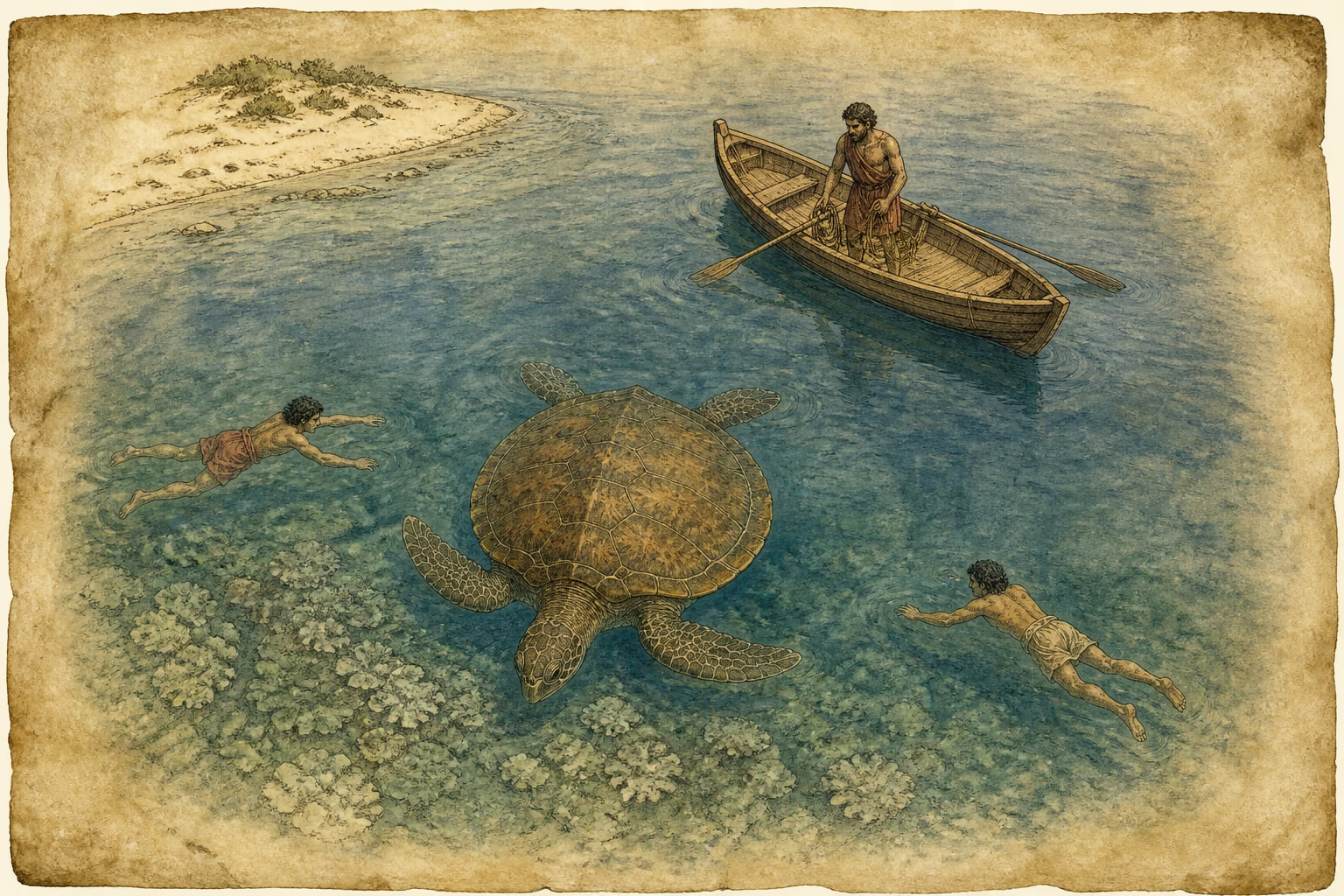
Testudines tantae magnitudinis Indicum mare emittit, uti singularum superficie habitabiles casas integant atque inter insulas Rubri praecipue maris his navigent cumbis. capiuntur multis quidem modis, sed maxime evectae in summa pelagi antemeridiano tempore blandito, eminente toto dorso per tranquilla fluitantes, quae voluptas libere spirandi in tantum fallit oblitas sui, ut solis vapore siccato cortice non queant mergi invitaeque fluitent opportunae venantium praedae. ferunt et pastum egressas noctu avideque saturatas lassari atque, ut remeaverint matutino, summa in aqua obdormiscere; id prodi stertentium sonitu. turn adnatare tacite leniterque singulis ternos; a duobus in dorsum verti, a tertio laqueum inici supinae atque ita e terra a pluribus trahi. in Phoenicio mari haut ulla difficultate capiuntur ultroque veniunt stato tempore anni in amnem Eleutherum effusa multitudine.
Dentes non sunt testudini, set rostri margines acuti, superna parte inferiorem claudente pyxidum modo. in mari conchyliis vivunt, tanta oris duritia, ut lapides comminuant, in terrain egressae herbis. pariunt ova avium ovis similia ad centena numero eaque defossa extra aquas et cooperta terra, pavita hac pectore et complanata, incubant noctibus. educunt fetus annuo spatio. quidam oculis spectandoque ova foveri ab iis putant, feminas coitum fugere, done mas festucam aliquam inponat aversae. Trogodytae cornigeras habent, ut in lyra adnexis cornibus latis, sed mobilibus, quorum in natando remigio se adiuvant; chelium id vocatur, eximiae testudinis, sed rarae. namque scopuli praeacuti Chelonophagos terrent, Trogodytae autem, ad quos adnant, ut sacras adorant. sunt et terrestres, quae ob id in operibus chersinae vocantur, in Africae desertis, qua parte maxime sitientibus harenis squalent, roscido, ut creditur, umore vi- >ventes. neque aliud ibi animal provenit.
English · Bostock & Riley 1855–57
The Indian Sea produces turtles of such vast size, that with the shell of a single animal they are able to roof a habitable cottage; and among the islands of the Red Sea, the navigation is mostly carried on in boats formed of these shells. They are to be caught in many ways; but they are generally taken when they have come up to the surface of the water just before midday, a season at which they experience great delight in floating on the calm surface, with the back entirely out of the water. Here the delightful sensations which attend a free respiration beguile them to such a degree, and render them so utterly regardless of their safety, that their shell becomes dried up by the heat of the sun, so much so, indeed, that they are unable to descend, and, having to float against their will, become an easy prey to the fishermen. It is said also, that they leave the water at night for the purpose of feeding, and eat with such avidity as to quite glut themselves: upon which, they become weary, and the moment that, on their return in the morning, they reach the sea, they fall asleep on the surface of the water. The noise of their snoring betrays them, upon which the fishermen stealthily swim towards the animals, three to each turtle; two of them, in a moment, throw it on its back, while a third slings a noose around it, as it lies face upwards, and then some more men, who are ready on shore, draw it to land.
In the Phœnician Sea they are taken without the slightest difficulty, and, at stated periods of the year, come of their own accord to the river Eleutherus, in immense numbers. The turtle has no teeth, but the edge of the mouth is sharp, the upper part shutting down over the lower just like the lid of a box. In the sea it lives upon shell-fish, and such is the strength of its jaws, that it is able to break stones even; when on shore, it feeds upon herbage. The female turtle lays eggs like those of birds, one hundred in number; these she buries on the dry land, and covering them over with earth, pats it down with her breast, and then having thus rendered it smooth, sits on them during the night. The young are hatched in the course of a year. Some persons are of opinion that they hatch their eggs by means of the eyes, by merely looking at them, and that the female refuses to have any intercourse with the male until he has placed a wisp of straw upon her back. The Troglodytæ have turtles with horns, which resemble the branches of a lyre; they are large, but moveable, and assist the animal like so many oars while swimming. The name of this fine, but rarely-found turtle, is “chelyon;” for the rocks, from the sharpness of their points, frighten away the Chelonophagi, while the Troglodytæ, whose shores these animals frequent, worship them as sacred. There are some land turtles also, the shells of which, used for the purposes of art, are thence called by the name of “chersinæ;” they are found in the deserts of Africa, in the parts where the scorched sands are more especially destitute of water, and subsist, it is believed, upon the moisture of the dews. No other animal is to be found there.