LIBER IX · CAPUT 13
THOSE WHICH ARE COVERED WITH HAIR, OR HAVE NONE, AND HOW THEY BRING FORTH. SEA-CALVES, OR PHOCÆ
Latine · Mayhoff 1906
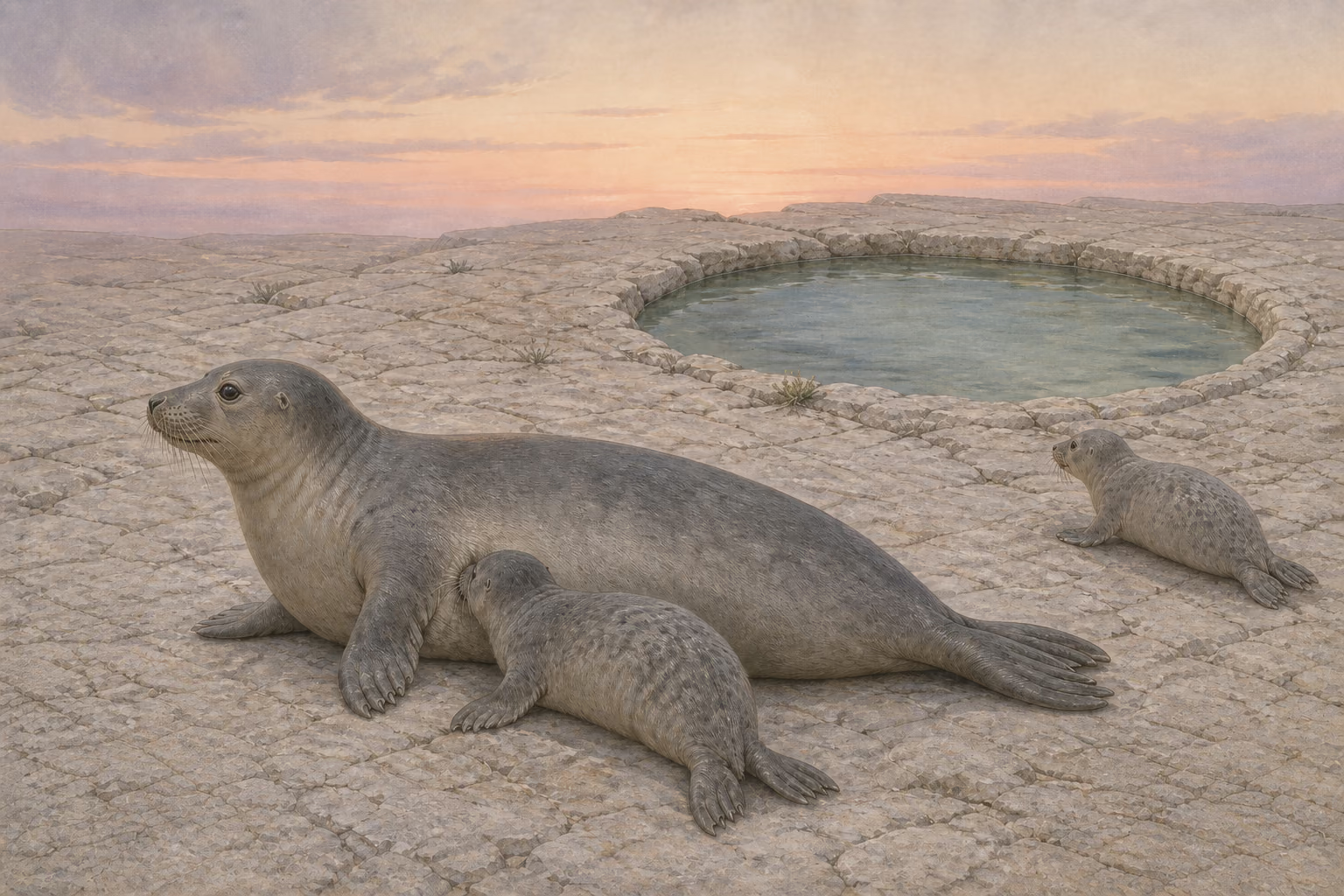
Quae pilo vestiuntur, animal pariunt, ut pristis, ballaena, vitulus. hic parit in terra, pecudum more secundas partus reddit. initu canum modo cohaeret; parit nonnumquam geminis plures, educat mammis fetum. non ante duodecimum diem deducit in mare, ex eo subinde adsuefaciens. interficiuntur difficulter nisi capite eliso. ipsis in sono mugitus—unde nomen vituli—, accipiunt tamen disciplinam vocemque pariter et iussu populum salutant incondito fremitu, nomine vocati respondent. nullum animal graviore somno premitur. pinnis, quibus in mari utuntur, humi quoque vice pedum serpunt. pelles eorum etiam detractas corpori sensum aequorum retinere tradunt semperque aestu maris recedente inhorrescere, praeterea dextrae pinnae vim soporiferam inesse somnosque adlicere subditam capiti.—
English · Bostock & Riley 1855–57
Those aquatic animals which are covered with hair are viviparous, such, for instance, as the pristis, the balæna, and the sea-calf. This last brings forth its young on land, and, like the sheep, produces an after-birth. In coupling, they adhere after the manner of the canine species; the female sometimes produces even more than two, and rears her young at the breast. She does not take them down to the sea until the twelfth day, and after that time makes them become used to it by degrees. These animals are killed with the greatest difficulty, unless the head is cut off at once. They make a noise which sounds like lowing, whence their name of “sea-calf.” They are susceptible, however, of training, and with their voice, as well as by gestures, can be taught to salute the public; when called by their name, they answer with a discordant kind of grunt. No animal has a deeper sleep than this; on dry land it creeps along as though on feet, by the aid of what it uses as fins when in the sea. Its skin, even when separated from the body, is said to retain a certain sensitive sympathy with the sea, and at the reflux of the tide, the hair on it always rises upright: in addition to which, it is said that there is in the right fin a certain soporiferous influence, and that, if placed under the head, it induces sleep.