LIBER IX · CAPUT 20
CLASSIFICATION OF FISHES, ACCORDING TO THE SHAPE OF THE BODY
Latine · Mayhoff 1906
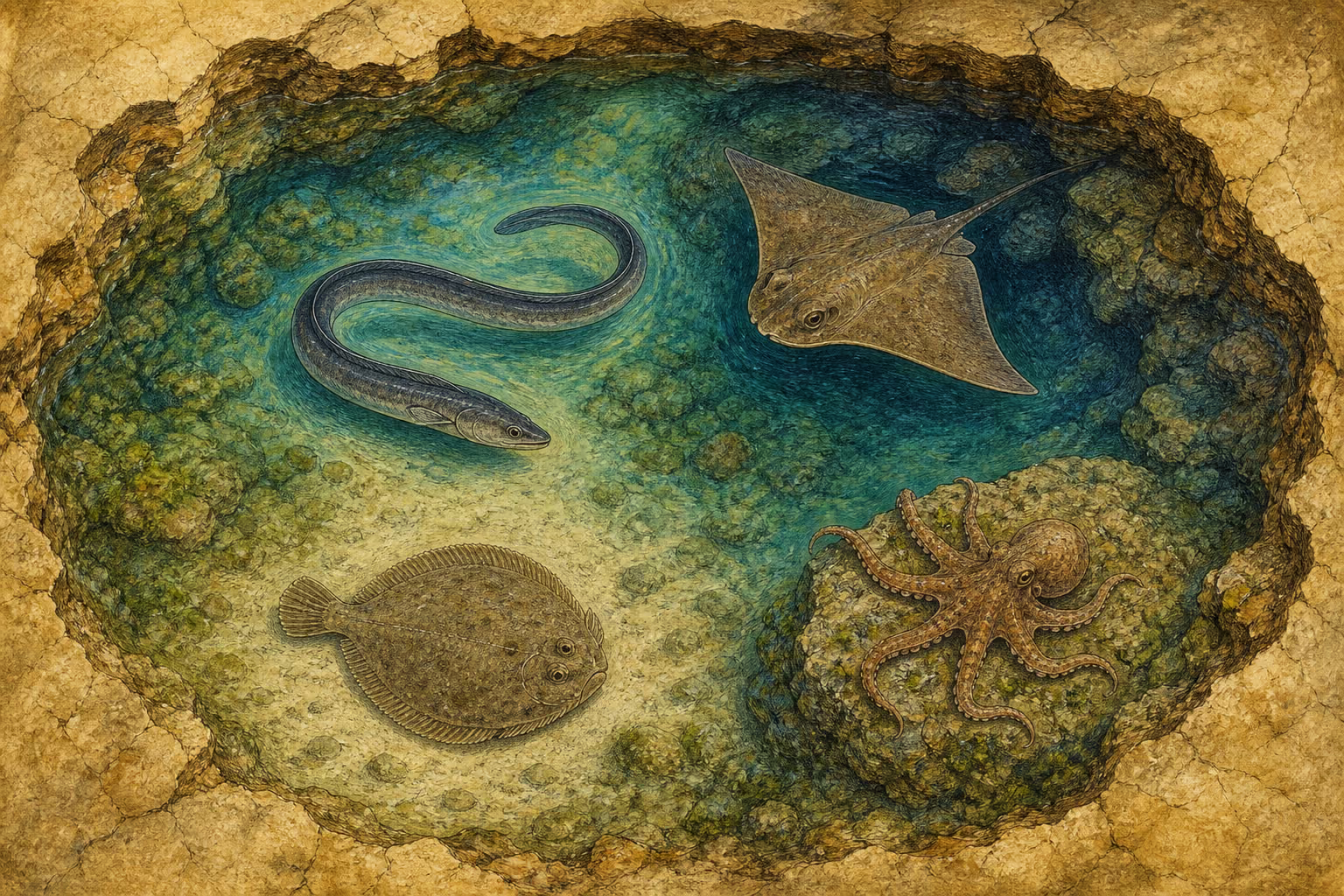
Marinorum alii sunt plani, ut rhombi, soleae ac passeres, qui ab rhombis situ tantum corporum differunt— dexter hic resupinatis est illis, passeri laevus —, alii longi, ut murena, conger. ideo pinnarum quoque fiunt discrimina, quae pedum vice sunt datae piscibus, nullis supra quaternas, quibusdam binae, aliquis nullae. in Fucino tantum lacu piscis est qui octonis pinnis natat. binae omnino longis et lubricis, ut anguillis et congris, allis nullae, ut murenis, quibus nec branchiae. haec omnia flexuoso corporum inpulsu ita mari utuntur, ut serpentes terra, et in sicco quoque repunt; ideo etiam vivaciora talia. et e planis aliqua non habent pinnas, ut pastinacae — ipsa enim latitudine natant — et quae mollia appellantur, ut polypi, quoniam pedes illis pinnarum vicem praestant.
English · Bostock & Riley 1855–57
Some sea-fish are flat, such, for instance, as the rhombus, the sole, and the sea-sparrow; which last only differs from the rhombus in the lateral position of the body. The rhombus lies with the right side upwards, while in the sea-sparrow the left side is uppermost. Some sea-fish, again, are long, as the muræna and the conger.
Hence it is that there is a difference, also, in the fins of fish, which have been given them to serve in place of feet, none having more than four, some two only, and others none. It is in Lake Fucinus only that there is a fish found that has eight fins for swimming. Those fishes which are long and slimy, have only two at most, such, for instance, as eels and congers: others, again, have none, such as the muræna, which is also without gills. All these fish make their way in the sea by an undulatory motion of the body, just as serpents do on land; on dry land, also, they are able to crawl along, and hence those of this nature are more long-lived than the others. Some of the flat-fish, also, have no fins, the pastinacæ, for instance—for these swim broad-wise—those, also, which are known as the “soft” fish, such as the polypi, for their feet serve them in stead of fins.