LIBER IX · CAPUT 28
FISHES WHICH HAVE NO BLOOD.—FISHES KNOWN AS SOFT FISH
Latine · Mayhoff 1906
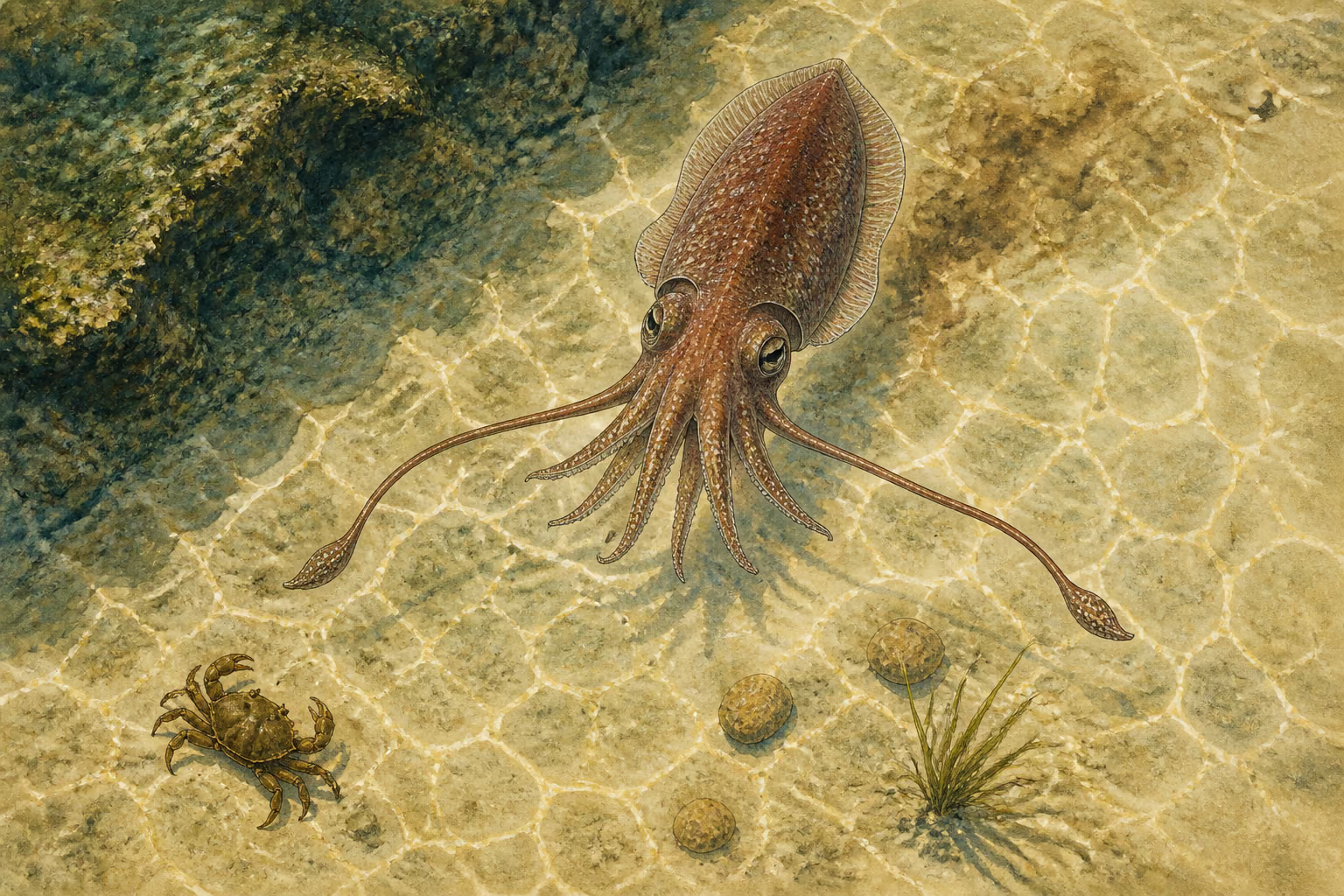
Piscium sanguine carent de quibus dicemus. sunt autem tria genera: primum quae mollia appellantur, dein contecta crustis tenuibus, postremo testis conclusa duris. mollia sunt lolligo, saepia, polypus et cetera generis eius. his caput inter pedes et ventrem, pediculi octoni omnibus. saepiae et lolligini pedes duo ex his longissimi et asperi, quibus ad ora admovent cibos et in fluctu se velut ancoris stabiliunt, cetera cirri, quibus venantur.
English · Bostock & Riley 1855–57
The varieties of fish which we shall now mention are those which have no blood: they are of three kinds —first, those which are known as “soft;” next, those which have thin crusts; and, lastly, those which are enclosed in hard shells. The soft fish are the loligo, the sæpia, the polypus, and others of a similar nature. These last have the head between the feet and the belly, and have, all of them, eight feet: in the sæpia and the loligo two of these feet are very long and rough, and by means of these they lift the food to their mouth, and attach themselves to places in the sea, as though with an anchor; the others act as so many arms, by means of which they seize their prey.